Bicycle Crunch
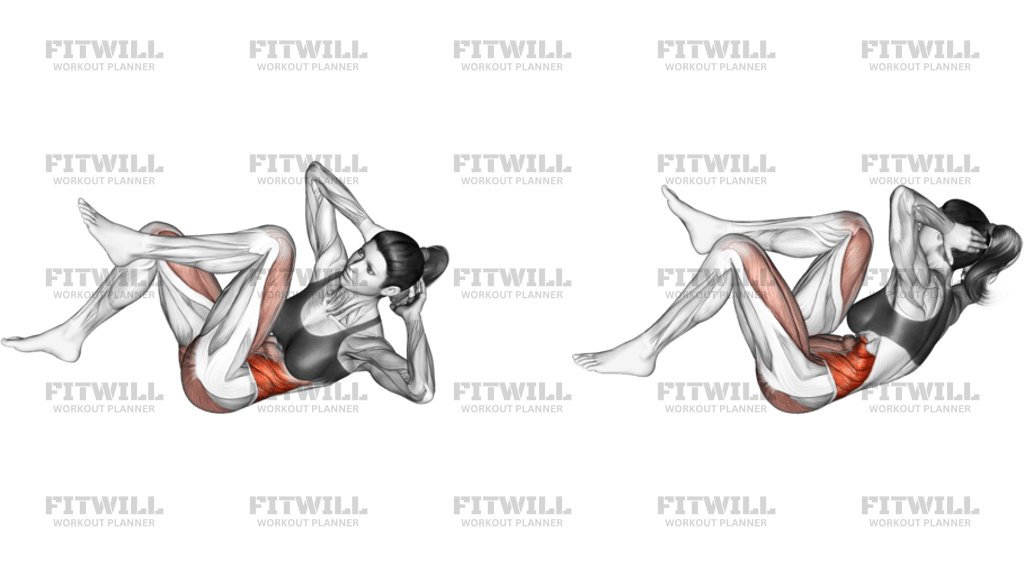
Bicycle Crunch is a bodyweight floor exercise that combines a crunch with alternating torso rotation. It is usually used to train the abs through a long, controlled rep that asks the trunk to flex, twist, and stabilize at the same time. Compared with a basic crunch, Bicycle Crunch demands more coordination because one side of the body is shortening while the other leg extends away from the torso.
The exercise is especially useful when you want the front of the abdomen and the obliques to work together instead of in isolation. The repeated cross-body pattern also challenges the hip flexors and deep stabilizers that keep the pelvis from tipping as the legs switch. That makes the movement a good fit for core circuits, athletic conditioning, and bodyweight sessions where you want a clear abdominal burn without external load.
Setup matters because Bicycle Crunch is easy to turn into a neck exercise if the start position is sloppy. Lie on your back, bring the knees up, and keep the hands light behind the head with the elbows open so the shoulders can rotate freely. The low back should stay gently pressed into the floor, because that position keeps the rib cage down and prevents the torso from arching as the legs extend.
Each repetition should feel like a controlled cross-body reach rather than a fast elbow swing. Curl the shoulders off the floor, rotate the rib cage toward the opposite knee, and extend the other leg only as far as you can while keeping the pelvis steady. The goal is to keep tension on the abs through the whole switch instead of bouncing from side to side or yanking the head forward to fake more range.
Bicycle Crunch is best when the reps look smooth, the breathing stays steady, and the lower back does not lose contact with the floor. It can be scaled easily by shortening the leg extension, slowing the tempo, or pausing at the top of each twist. If the neck, hip flexors, or low back take over, the set is usually too fast or the range is too aggressive for the current level.
[ Workout Log & Planner ]
Put your next workout in Fitwill
Keep your plan and training log ready when you are.


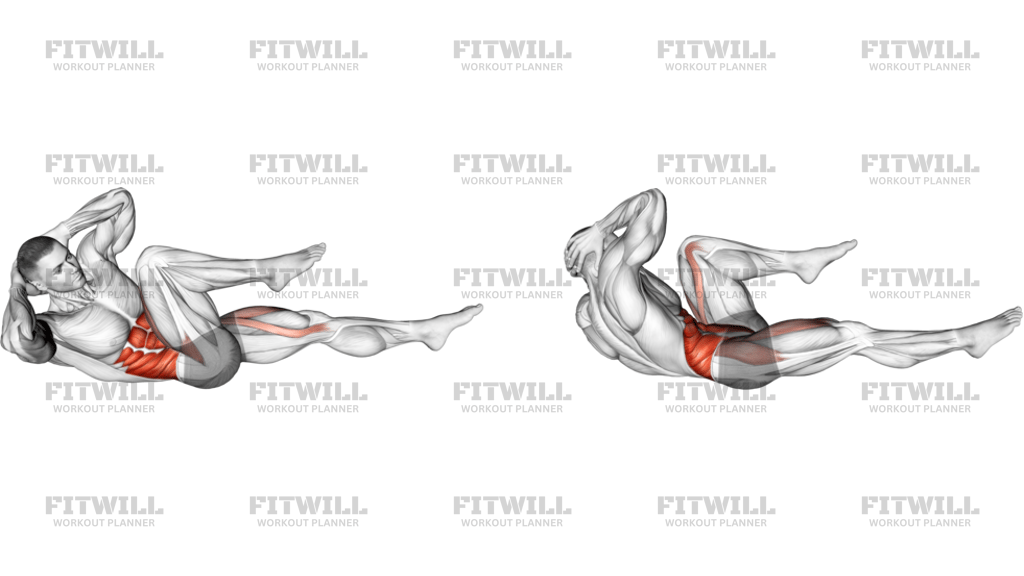
Instructions
- Lie on your back on a mat with your lower back gently pressed into the floor and both knees lifted above your hips.
- Place your fingertips lightly behind your head, keep your elbows wide, and lift your shoulders slightly off the floor.
- Tuck your chin just enough to keep the back of your neck long instead of pulling your head forward.
- Exhale and curl your right shoulder blade off the floor as you rotate your rib cage toward your left knee.
- At the same time, extend your right leg out low without letting your lower back arch.
- Switch sides by bringing the right knee in as the left leg extends and the left elbow reaches toward the right knee.
- Keep alternating sides in a smooth pedaling motion, keeping the twist driven by your trunk rather than by your elbows.
- Use a smaller range or higher knee position if your low back starts to lift or your neck begins to strain.
- Finish the set by lowering your shoulders and feet to the floor under control.
Tips & Tricks
- Keep your elbows open so you rotate the torso instead of collapsing the hands toward your face.
- Think about bringing the opposite shoulder toward the opposite knee, not the elbow alone.
- Lower the extended leg only as far as you can keep your ribs down and your low back flat.
- If your hip flexors cramp, shorten the leg extension and keep the non-working knee a little closer to the body.
- Move slowly enough that your shoulders stay off the floor through the switch from side to side.
- Exhale on each twist to help keep the rib cage from flaring and the trunk from rushing the rep.
- Stop before your head starts pulling on the neck; the hands should guide the head, not drag it.
- Use a smaller range if your pelvis rocks from side to side instead of staying quiet.
- A pause at the top of each twist makes Bicycle Crunch harder without needing extra load.
Frequently Asked Questions
What muscles does Bicycle Crunch work?
Bicycle Crunch mainly trains the rectus abdominis and obliques, with the hip flexors and deep trunk stabilizers helping to control the leg switch.
Should My Elbows Touch My Knees In Bicycle Crunch?
No. The twist matters more than forcing contact, and pulling hard for a touch usually turns Bicycle Crunch into a neck-driven movement.
Why Does My Neck Hurt During Bicycle Crunch?
Neck pain usually means you are pulling on your head or tucking the chin too hard. Keep the hands light, elbows open, and let the shoulders curl from the abs instead.
How Low Should My Legs Go In Bicycle Crunch?
Only as low as you can keep the low back pressed into the floor. If the back arches, raise the working leg a little higher and shorten the range.
Is Bicycle Crunch Good For Beginners?
Yes, if you slow it down and use a smaller range. Beginners often do better with the knees higher and a shorter twist until the trunk stays steady.
What Is The Biggest Mistake In Bicycle Crunch?
The most common mistake is rushing the pedal motion and letting momentum swing the legs. Keep the movement deliberate so the abs do the switching.
Can I Keep My Feet Higher In Bicycle Crunch?
Yes. A higher leg position is a useful regression if your low back lifts or your hip flexors take over before the abs do.
How Can I Make Bicycle Crunch Harder Without Weights?
Slow the switching speed, add a brief pause at each twist, or extend the straight leg a little farther while keeping the pelvis still.