Single Leg Stand
Single Leg Stand is a bodyweight balance drill built around holding your posture on one leg while the other leg stays lifted and relaxed. The exercise asks your ankle, foot, hip, and trunk to organize the body without a big movement pattern, so the quality of the hold matters more than how long you can wobble through it. It is especially useful when you want cleaner single-leg control for walking, running, jumping, or any lower-body work that depends on stable alignment.
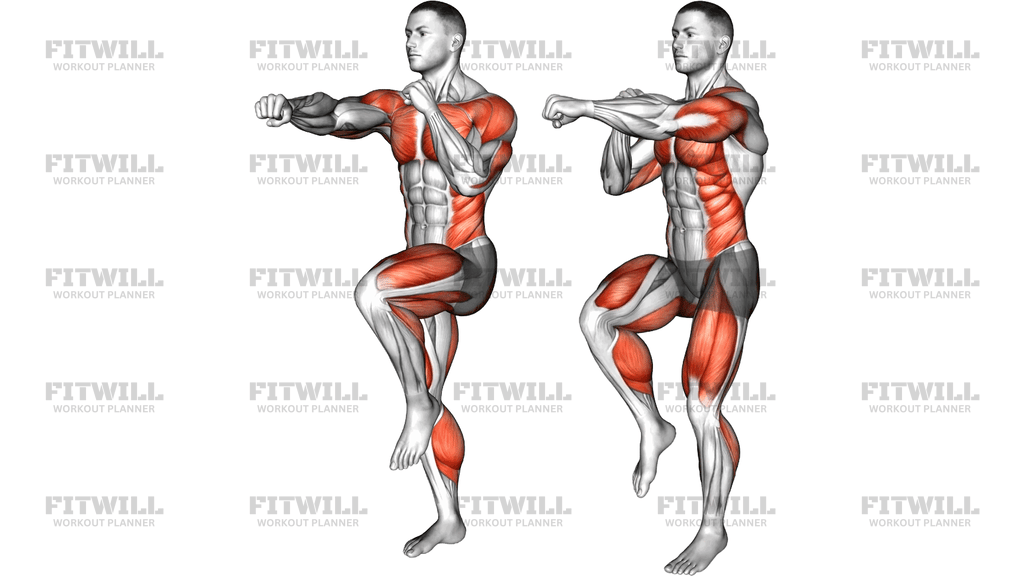
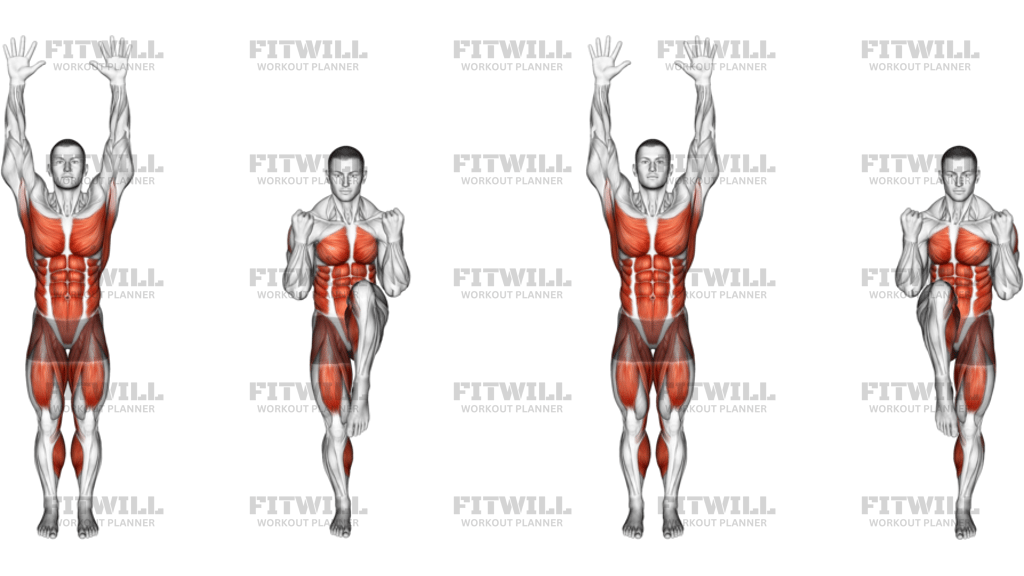
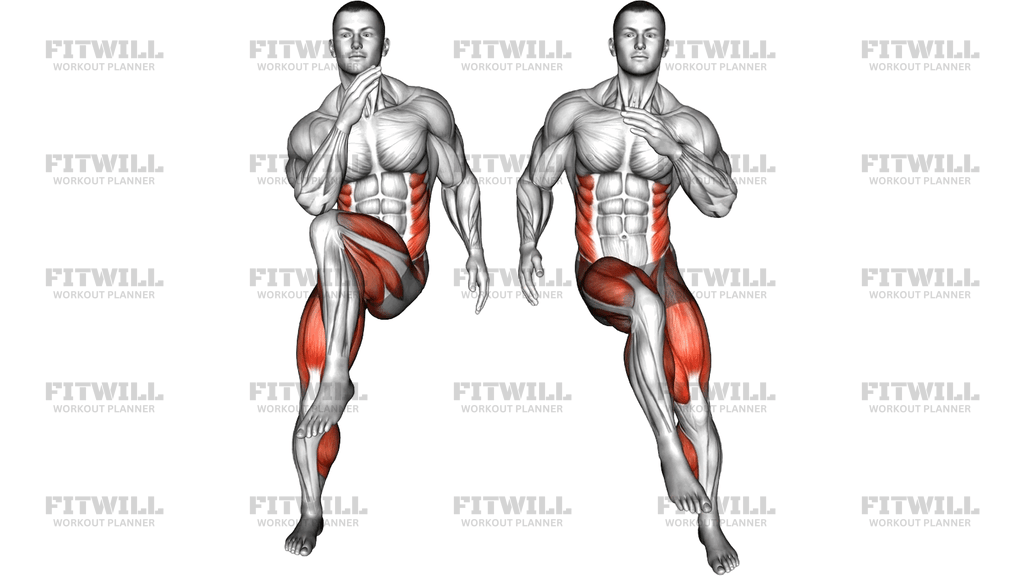
The visible position in the image is simple but demanding: one foot stays planted, the standing knee remains softly unlocked, the pelvis stays level, and the torso stays tall while the free leg bends and floats off the floor. That combination trains the small stabilizers around the ankle and hip along with the core muscles that keep the ribs stacked over the pelvis. If the foot collapses, the knee caves inward, or the hip shifts out to the side, the hold gets harder and the drill stops teaching good control.
Set up carefully before you start each rep. Root the standing foot into the floor, find a steady gaze point, and lift the opposite foot only as high as you can maintain balance and alignment. From there, breathe normally and make small corrections instead of large compensations. The goal is not to freeze rigidly; it is to stay tall, quiet, and balanced while the standing side does the work. A slight bend in the standing knee and a light reach of the arms can help if you are still learning the pattern.
This movement fits well in a warm-up, athletic prep block, rehab-style session, or accessory circuit where you want to improve coordination and control before heavier lower-body training. It is also easy to progress without changing the exercise name: hold longer, reduce hand support, turn the head, close the eyes, or stand on a less stable surface only after you can keep the pelvis level and the foot tripod steady. Use the drill to build repeatable balance, not to chase speed or fatigue.
[ Workout Log & Planner ]
Put your next workout in Fitwill
Keep your plan and training log ready when you are.


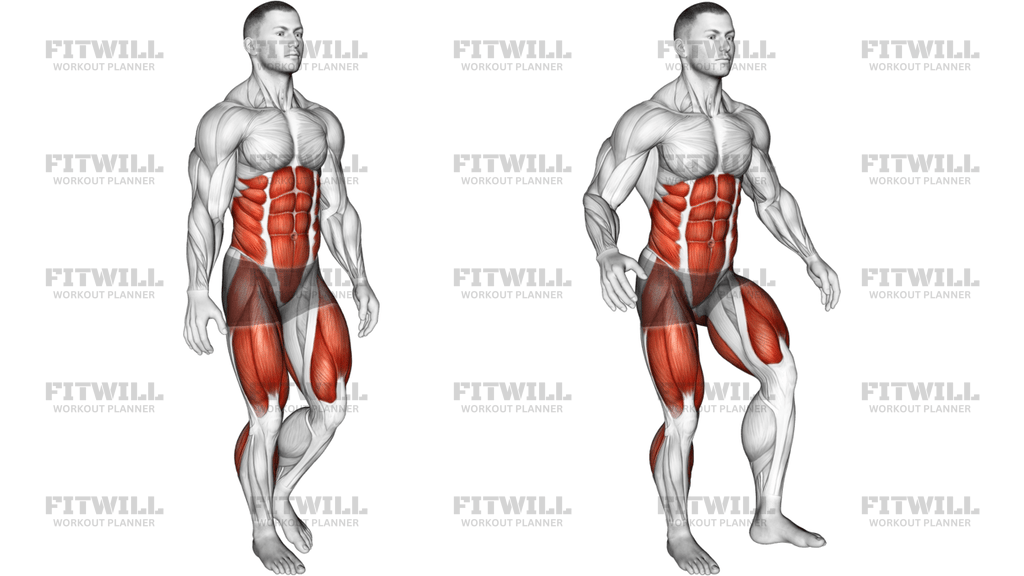
Instructions
- Stand tall with your feet under your hips and pick a fixed point to look at.
- Shift your weight onto one foot and root that foot into the floor through the heel, big toe, and little toe.
- Lift the opposite foot off the ground and bend that knee so the free leg hangs quietly beside or slightly in front of you.
- Keep your standing knee softly bent instead of locked out.
- Stack your ribs over your pelvis and keep your chest level rather than leaning to one side.
- Hold the balance position without letting the standing hip drift, the arch collapse, or the knee cave inward.
- Breathe slowly and stay relaxed in the shoulders and jaw while you stabilize.
- Lower the lifted foot back to the floor under control, reset, and repeat on the other leg.
Tips & Tricks
- Press evenly through the standing foot instead of rolling onto the outside edge or gripping hard with the toes.
- Keep a soft bend in the standing knee; locking it out usually makes the ankle wobble more.
- A tiny forward lean from the ankles is better than bending at the waist or dumping the ribs forward.
- If you are unstable, let the free toes hover close to the floor for a light safety tap instead of forcing a full hold.
- Keep the pelvis level so one hip does not hike up while the other side drops.
- Use the mirror or a forward gaze point to spot drifting shoulders, trunk sway, or knee collapse.
- Short holds with perfect alignment are more useful than long holds with constant hopping.
- Progress by removing hand support, not by rushing the drill or turning it into a hop.
Frequently Asked Questions
What muscles does Single Leg Stand train?
It primarily challenges the ankle, foot, hip stabilizers, and core muscles that keep you balanced on one leg.
Is Single Leg Stand a good beginner exercise?
Yes. Beginners can use a wall, fingertip support, or a shorter hold while they learn to keep the pelvis level and the standing foot steady.
Should my standing knee stay straight or bent?
Keep a soft bend. A locked knee makes it harder to control the ankle and usually increases wobble.
What is the biggest form mistake in this exercise?
Letting the standing knee cave inward or letting the hip drop on the lifted-leg side are the most common control breakdowns.
How long should I hold each rep?
Hold long enough to own the position with good posture. For many people that means 10 to 30 seconds per side, or shorter if form starts to slip.
Can I use a wall or rack for support?
Yes. Light fingertip support is a good way to keep the drill strict while you build balance and foot control.
Where should I feel the exercise most?
You should feel the standing foot, ankle, outer hip, and deep core working to keep you upright and steady.
How do I make Single Leg Stand harder?
Progress by reducing hand support, holding longer, closing the eyes briefly, or adding a small head turn once your base position is solid.