Dumbbell Bent-Over Alternate Rear Delt Fly
Dumbbell Bent-Over Alternate Rear Delt Fly is a rear-shoulder isolation exercise performed from a hip hinge with one dumbbell lifting at a time. It places most of the work on the posterior deltoids while the upper back helps keep the torso steady and the shoulder blades controlled. Because the movement is done one arm at a time, it is useful when you want clean rear-delt tension without the bounce and body English that often show up in bilateral fly variations.
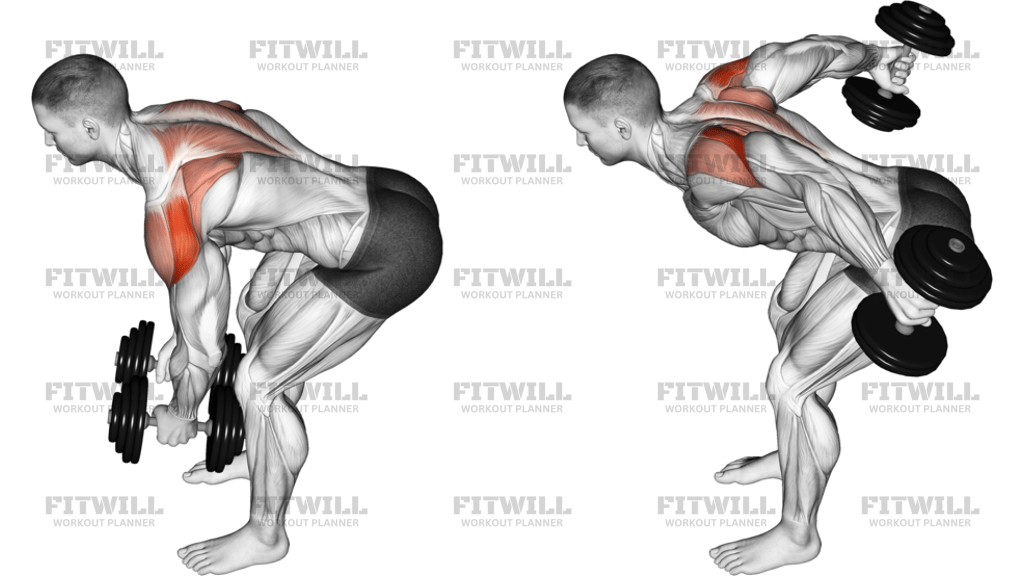
The bent-over position matters as much as the arm path. If your torso is too upright, the dumbbell turns into a partial side raise and the traps tend to take over. If you hinge too loosely or round through the upper back, the shoulder starts chasing the weight instead of guiding it. A solid setup gives the rear delt a better line of pull: hips back, knees soft, spine long, chest angled toward the floor, and the free arm hanging still while the working arm opens out to the side.
In the rep itself, the elbow should travel slightly out from the body in a wide arc instead of pulling straight up behind you. The goal is not to heave the dumbbell high, but to move it until the rear shoulder is fully shortened and the upper arm is roughly in line with the torso. Keeping the wrist quiet and the neck relaxed helps the arm do the work instead of the upper traps, lower back, or momentum. Breathing should stay simple and rhythmic so the hinge and trunk position do not change rep to rep.
This exercise is commonly used as accessory work after pressing, rowing, or other compound upper-body lifts, especially when lifters want better rear-delt development, shoulder balance, or upper-back detail. It can also be a good option for beginners who need a lighter, more controlled rear-delt pattern before moving to heavier reverse flys. The main safety point is to keep the hinge stable and the load light enough that the torso does not rotate as you alternate sides.
For most lifters, the best version is the one that keeps the chest quiet, the neck long, and the dumbbell path smooth. If you feel the movement mostly in the upper traps or lower back, the weight is usually too heavy or the hinge has drifted. A cleaner set with a modest range of motion is more valuable here than chasing a high swing or forcing the dumbbell above shoulder level.
[ Workout Log & Planner ]
Put your next workout in Fitwill
Keep your plan and training log ready when you are.


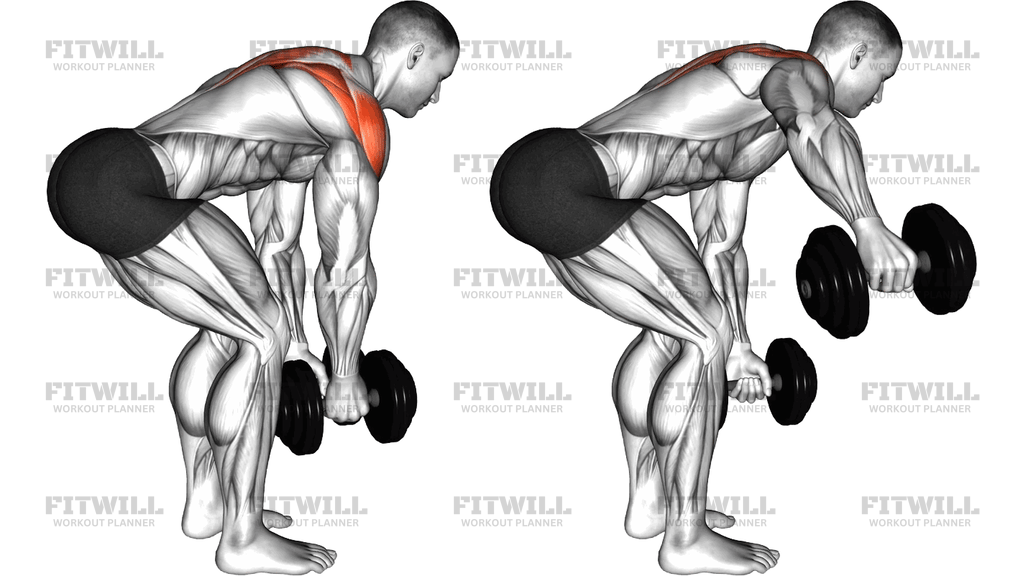
Instructions
- Stand with your feet about hip-width apart and hinge forward until your torso is close to parallel with the floor, holding a dumbbell in each hand with your arms hanging under your shoulders.
- Keep a soft bend in both knees, push your hips back, and lock in a long neutral spine so your chest stays angled down instead of rising as you lift.
- Let one arm hang still while the other starts below the shoulder line, with the elbow slightly bent and the wrist neutral.
- Lift the working dumbbell out and slightly back in a wide arc, leading with the elbow until the rear shoulder is fully shortened and the dumbbell reaches about shoulder height or just below it.
- Keep the opposite dumbbell quiet near the floor and avoid twisting your torso to help the rep along.
- Lower the dumbbell slowly back to the hanging position under control, keeping tension in the rear delt instead of dropping the weight.
- Alternate sides on the next rep and keep the same torso angle, shoulder position, and range of motion on both arms.
- Exhale as you raise the dumbbell and inhale as you lower it, keeping the breathing steady enough that your hinge does not shift.
- Finish the set by lowering both dumbbells, then stand up by driving through the hips instead of straightening the back first.
Tips & Tricks
- If your upper traps fire before your rear delts, stop the lift a little lower and keep your shoulders away from your ears.
- Use a lighter pair of dumbbells than you would for a two-arm reverse fly; the alternating pattern makes cheating easier if the load is too heavy.
- Keep the chest pointing toward the floor the whole time. When the torso rises, the movement turns into a loose rear-delt shrug.
- Lead with the elbow, not the hand, so the arm opens in a smooth arc instead of yanking the dumbbell straight up.
- A brief pause near the top helps expose sloppy momentum and makes the rear delt do more of the work.
- Do not let the free arm swing across your body; it should hang quietly so the working side stays honest.
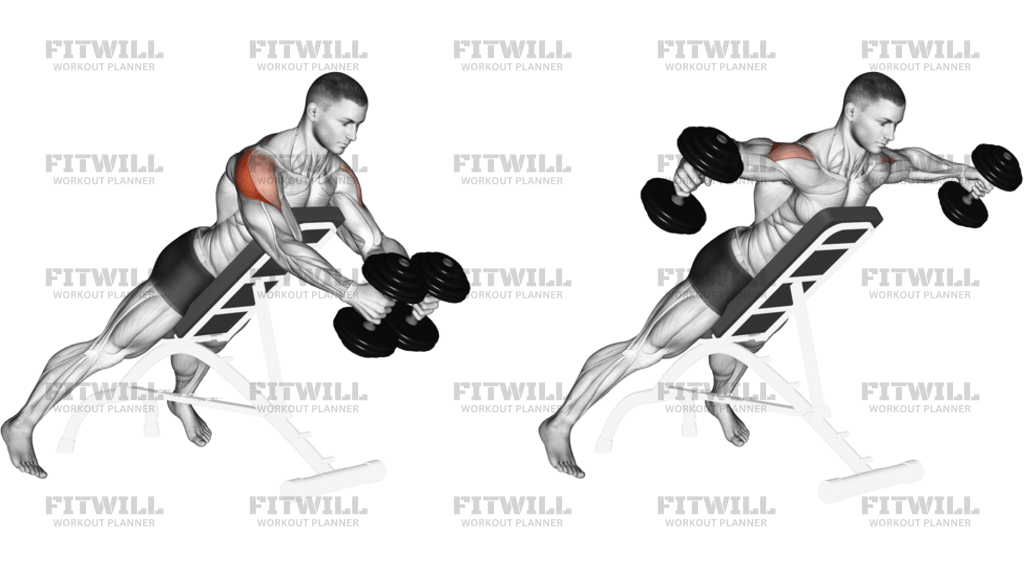
- If your lower back gets tired before your shoulders, use a higher hinge angle or support your chest on an incline bench for the same arm path.
- Keep the wrist neutral instead of curling the dumbbell upward, which usually shifts tension into the forearm and front of the shoulder.
- Small, strict reps are usually better here than chasing a huge range that forces the shoulder blades to hike up.
- Stop the set when you start rotating through the ribs or hips, because that usually means the rear delt has stopped being the limiter.
Frequently Asked Questions
What does Dumbbell Bent-Over Alternate Rear Delt Fly train?
It mainly trains the rear delts, with help from the rhomboids and mid traps to keep the shoulder moving cleanly while you stay hinged over.
Why do it one arm at a time instead of both arms together?
Alternating sides makes it easier to focus on one rear delt at a time and usually reduces torso cheating, especially when the weight gets challenging.
How bent over should I be for Dumbbell Bent-Over Alternate Rear Delt Fly?
Your torso should be close to parallel with the floor or at least hinged enough that the dumbbells hang under your shoulders. If you stand too upright, the traps usually take over.
Should my palm face down or in during the rep?
A neutral wrist with the thumb neither aggressively down nor forced up is usually the safest option. The priority is a smooth rear-delt arc, not a rigid hand position.
How high should I raise the dumbbell?
Raise it until the rear shoulder is fully working and the upper arm is about in line with the torso. Going higher usually turns the rep into a shrug.
What are the most common mistakes with this exercise?
The biggest mistakes are twisting the torso, using too much weight, and shrugging the shoulder toward the ear instead of opening the arm out to the side.
Is Dumbbell Bent-Over Alternate Rear Delt Fly good for beginners?
Yes, as long as the dumbbells are light and the hinge stays stable. Beginners often learn rear-delt control faster with this variation than with heavier reverse flys.
Can I substitute an incline bench version if my lower back gets tired?
Yes. A chest-supported incline bench rear delt fly keeps the same rear-shoulder path while taking most of the stress off the lower back.
Where should I feel Dumbbell Bent-Over Alternate Rear Delt Fly?
You should feel it mostly in the back of the shoulder, with some work from the upper back. If the front of the shoulder or neck dominates, the load or setup needs to change.