Dumbbell Low Fly
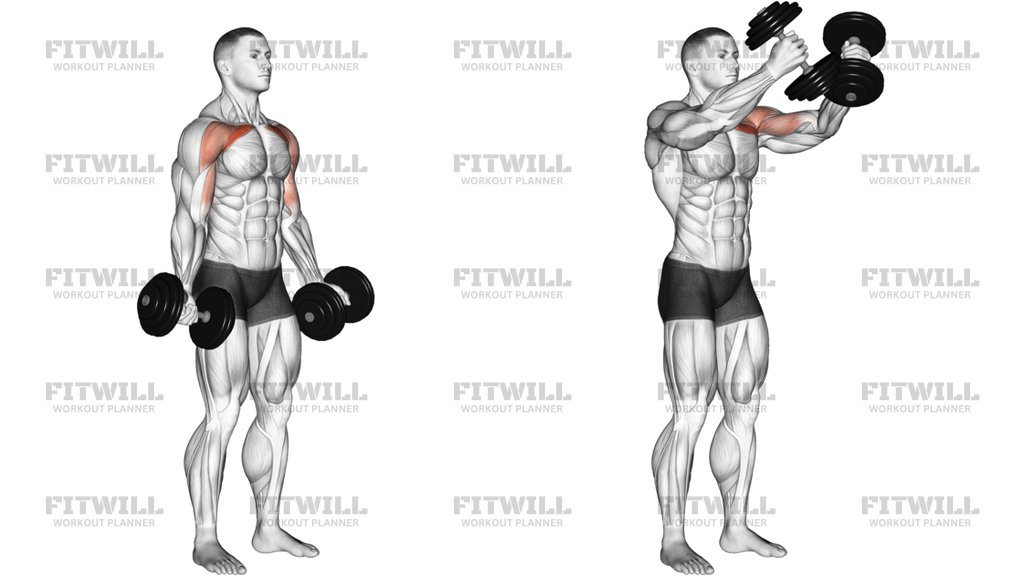
Dumbbell Low Fly is a standing low-to-high chest exercise that uses a pair of dumbbells to train the pecs through a controlled sweeping arc. The movement starts with the weights hanging low by your sides and finishes with the hands lifted forward and slightly upward, so the exercise asks the chest, front shoulders, and triceps to coordinate without letting the torso turn into the driver. It is a simple-looking lift, but the line of pull is demanding enough that small setup errors show up quickly.
The setup matters because the lift gets more difficult as the dumbbells travel farther from the body. A tall stance, quiet ribs, and soft elbows keep the load on the intended muscles instead of the lower back and traps. With a light to moderate load, Dumbbell Low Fly can be a useful accessory movement for lifters who want a chest-focused pattern that still challenges shoulder control. It also works well when you want a standing option that keeps the upper body honest without a bench or cable station.
The best reps follow a smooth upward arc rather than a straight front raise. Think about bringing the hands up and inward together, as if you were closing a wide, shallow curve in front of your body. The chest should feel like it is helping guide the arms; if the shoulders take over or the neck starts to tighten, the weight or range is too aggressive. A clean rep looks calm and deliberate, not explosive.
Because the movement is long-levered, quality matters more than load. Keep the dumbbells moving under control on the way down, and do not lean back to finish the top position. A slight bend in the elbows, steady breathing, and a still torso help keep tension where it belongs while protecting the shoulders from sloppy repetition. If the dumbbells start drifting overhead, the exercise stops feeling like a chest drill and starts becoming a shoulder compensation pattern.
Dumbbell Low Fly fits well as accessory work after your main press or as a lighter chest finisher when you want focused tension without heavy loading. It is especially useful for lifters who need a standing option that reinforces chest and anterior shoulder coordination. If the front of the shoulder feels pinchy, shorten the range and keep the hands a little lower than shoulder height. When it is done well, the movement feels controlled, precise, and easy to repeat from one rep to the next.
[ Workout Log & Planner ]
Put your next workout in Fitwill
Keep your plan and training log ready when you are.


Instructions
- Stand tall with your feet about hip-width apart and hold a dumbbell in each hand beside your thighs, palms facing inward and elbows softly bent.
- Stack your ribs over your pelvis, set your shoulders down and slightly back, and keep your wrists straight before the first rep starts.
- Brace your midsection and begin the lift by sweeping the dumbbells forward in a low-to-high arc instead of swinging them straight out in front.
- Bring the weights up together until your hands reach roughly lower-chest to shoulder height, keeping the elbows slightly bent the whole time.
- Squeeze the chest at the top without shrugging your shoulders or leaning backward to chase extra height.
- Lower the dumbbells along the same arc until they return to the starting position beside your thighs under control.
- Keep the tempo smooth on both directions and exhale as the weights rise, then inhale as they lower.
- Reset your posture after each rep so the next repetition starts from a still torso and a quiet neck.
Tips & Tricks
- Use lighter dumbbells than you would for a curl or shoulder raise; the long lever makes this movement feel much harder than it looks.
- Think about drawing a shallow arc toward your upper chest, not punching the weights straight forward.
- If your traps take over, lower the shoulders before each rep and stop shrugging at the top.
- Keep the elbow bend fixed so the set stays chest-led instead of turning into a swinging front raise.
- Do not lean back to finish the rep; if you need momentum, the load is too heavy.
- A slower lowering phase keeps tension on the pecs and helps prevent the dumbbells from dropping past the start position.
- Stop the lift a little below shoulder height if the front of the shoulder feels pinched or crowded.
- Keep the wrists stacked over the forearms so the dumbbells do not roll back in your hands as fatigue builds.
Frequently Asked Questions
What muscles does Dumbbell Low Fly work most?
The main target is the chest, with the front shoulders and triceps helping control the lift. Your core also works to stop the torso from leaning back.
Is Dumbbell Low Fly more like a fly or a front raise?
It sits between the two, but the goal is a chest-led low-to-high sweep rather than a straight front raise. If the dumbbells travel in a clean arc, you are closer to the intended pattern.
How high should I raise the dumbbells?
Most lifters should stop around lower-chest to shoulder height. Going much higher usually turns the exercise into more of a shoulder movement than a chest-focused fly.
Can beginners do Dumbbell Low Fly?
Yes, as long as the load is light and the torso stays still. Beginners usually benefit from short sets and a smaller range until the arc feels smooth.
Why do I feel Dumbbell Low Fly in my shoulders more than my chest?
That usually means the path is too high, the weight is too heavy, or your shoulders are shrugging at the top. Lower the dumbbells slightly and keep the chest lifted without leaning back.
Should my elbows stay locked?
No. Keep a soft bend and hold that angle from start to finish so the movement stays controlled and the shoulders are not forced into a hard lever position.
How heavy should I go on Dumbbell Low Fly?
Use a lighter pair than you would for most pressing work. If you need to swing the dumbbells or arch hard to finish the set, the load is too high.
What is the biggest mistake to avoid?
The biggest mistake is turning it into a standing swing by leaning back and throwing the weights upward. Keep the ribs stacked and let the arms travel in a controlled arc.