Band Bench Press
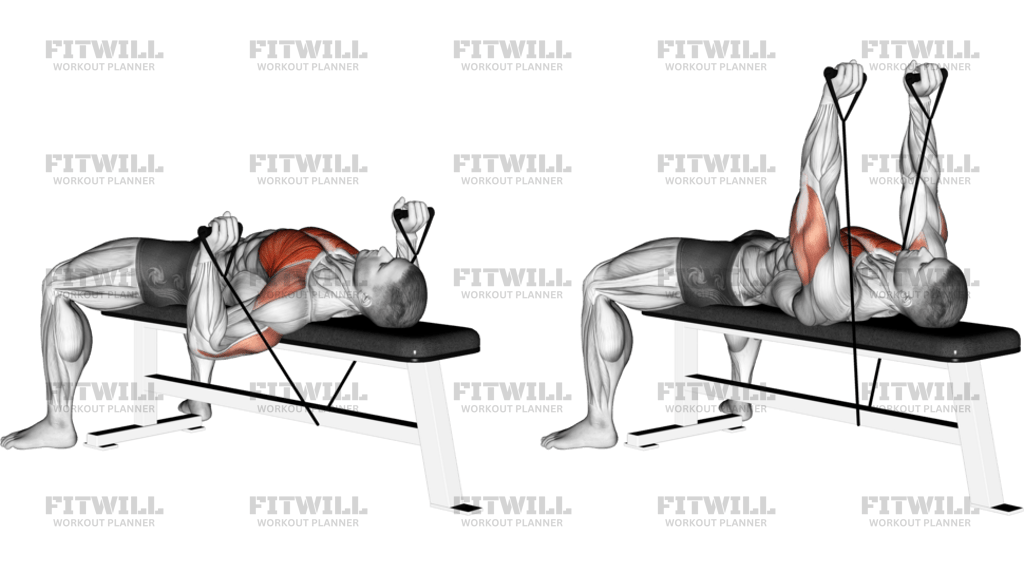
Band Bench Press is a flat-bench pressing exercise that uses a resistance band anchored low under the bench to load the chest through the press. In the image, the lifter lies on the bench with the shoulders pinned back, feet planted, and the band running from under the bench to the hands. That setup matters because the band gets tighter as you press up, so the top half of the rep demands the most control and the most chest, front delt, and triceps effort.
This movement is useful when you want a press that is easier to set up than a barbell bench but still gives you a clear horizontal pressing pattern. The primary work goes to the pectorals, with the anterior deltoids and triceps brachii helping to finish the lockout. Because the band increases resistance as the hands move away from the chest, the rep feels smooth off the bottom and progressively harder as the arms straighten.
Good execution starts with a stable bench position. Keep the upper back set, shoulder blades tucked down and back, and feet flat enough to stop your body from sliding toward the anchor point. The band should stay centered in the hands or handles, and the wrists should stack over the elbows so the force travels straight through the press instead of leaking into the shoulders.
Press the hands in a slight arc from the chest to a position over the midline of the torso or shoulders, depending on the bench and band angle. Keep the elbows from flaring straight out, and lower the band under control until the hands return to chest level. The return phase should be deliberate because the band wants to snap you back faster than a free weight would, and that can pull the shoulders out of position.
Use Band Bench Press for accessory chest work, home training, warm-ups before heavier pressing, or higher-rep hypertrophy sets when you want continuous tension without loading the joints as heavily as a barbell. It is also a practical option when you want a press that is easy to scale by changing band length, band thickness, or body position. Beginners can use it, but only if they can keep the bench setup tight and control the band on both the way up and the way down.
[ Workout Log & Planner ]
Put your next workout in Fitwill
Keep your plan and training log ready when you are.


Instructions
- Lie on a flat bench with the band anchored low under the bench, one end in each hand or handle, and place your feet flat on the floor.
- Set your upper back on the pad, pull your shoulder blades back and down, and keep your chest tall without arching your lower back off the bench.
- Start with your hands at chest level and your wrists stacked over your elbows so the band tension stays even on both sides.
- Brace your torso, then press the band upward in a smooth arc until your arms are nearly straight over your chest or shoulders.
- Keep your elbows at a moderate angle instead of flaring them straight out to the sides as you drive to the top.
- Squeeze your chest and triceps at the top for a brief moment, then do not let the band yank your hands backward.
- Lower the band slowly until your hands come back to the sides of your chest and your upper arms are again under control.
- Breathe out as you press and inhale on the way down while keeping your ribs from popping up.
- Reset each rep with your shoulders still pinned to the bench and repeat for the planned set.
Tips & Tricks
- If the band pulls your hands behind the line of your chest, move the anchor point a little closer so the bottom position is not overstretched.
- Keep your wrists vertical over your forearms; bent wrists waste tension and make the band feel unstable.
- Use a grip that lets the handles or band sit directly over the heel of the palm rather than in the fingers.
- Do not bounce the band off the chest position; the return should be smooth enough that the shoulders stay packed on the bench.
- A slight elbow tuck usually feels better than a wide flare because it keeps the press path in the chest and triceps instead of the front shoulder.
- If your hips rise or you slide on the bench, the band is likely too heavy or the setup is too far from the anchor point.
- Pause the top only long enough to feel the lockout; holding too long can turn the set into a shoulder endurance drill.
- Use higher reps when the goal is band tension and chest fatigue, and keep the reps clean rather than chasing an aggressive load.
Frequently Asked Questions
What muscle does Band Bench Press target most?
The chest is the main target, especially the pectorals, with the front delts and triceps helping finish the press.
Can beginners perform this exercise?
Yes. It is beginner-friendly if the band is light enough that you can keep your shoulders pinned to the bench and control the return.
Where should the band be anchored?
The band should run from a low anchor under the bench so the resistance rises as you press toward lockout.
How wide should my elbows be?
Keep them at a moderate angle from your torso. Flaring them straight out shifts stress toward the shoulders and makes the press less stable.
Why does the top of the rep feel harder?
The band stretches more as your hands move away from the anchor, so the resistance increases near the top of the press.
Do I need a big lower-back arch like a powerlifting bench press?
No. Keep a natural chest-up position with the shoulders set, but do not force a large arch or lift your hips off the bench.
Is this a good substitute for a barbell bench press?
It can be a useful substitute for home training or lighter accessory work, but it will not feel identical because the resistance curve is different.
What should I do if the band snaps me back too fast?
Slow the lowering phase and use a lighter band or shorter setup until you can control both directions without the shoulders drifting forward.