Smith Wide-Grip Decline Bench Press
Smith Wide-Grip Decline Bench Press is a decline pressing variation built around a fixed bar path and a chest-biased setup. Lying on a decline bench inside the Smith machine lets you press with less balance demand than a free-weight bench press, so you can focus on bar path, grip width, and tension through the lower chest and triceps. The wider grip shifts more of the work toward the pecs while still recruiting the front delts and arms as strong assisting muscles.
The decline angle changes where the bar lands and how the shoulders feel through the bottom half of the rep. A good setup keeps the upper back pinned to the bench, the shoulder blades retracted and depressed, and the wrists stacked over the elbows so the fixed track of the Smith bar does not force the shoulders into an awkward position. With the bench centered correctly under the bar, each rep should touch low on the chest and press back to full extension without bouncing or losing tension.
This movement is useful when you want to load the chest hard with a repeatable path and a stable body position. It can be a strong primary press for lifters who respond well to decline work, or an accessory after a flat or incline press when you want extra chest volume with less stabilization fatigue. Because the machine removes some balance requirements, it can also be easier to learn than a free barbell decline press, but the fixed track still demands careful shoulder and elbow alignment.
Good reps are controlled from the unrack to the rerack. Lower the bar under control to the lower chest or upper sternum line, keep the elbows from flaring excessively, and press with a smooth drive that finishes above the shoulders without losing the bench contact points. If the bottom position pinches the shoulders or the wrists drift backward, reduce the load, adjust the bench position, or narrow the grip slightly until the press feels solid and repeatable.
Fitwill
Log Workouts, Track Progress & Build Strength.
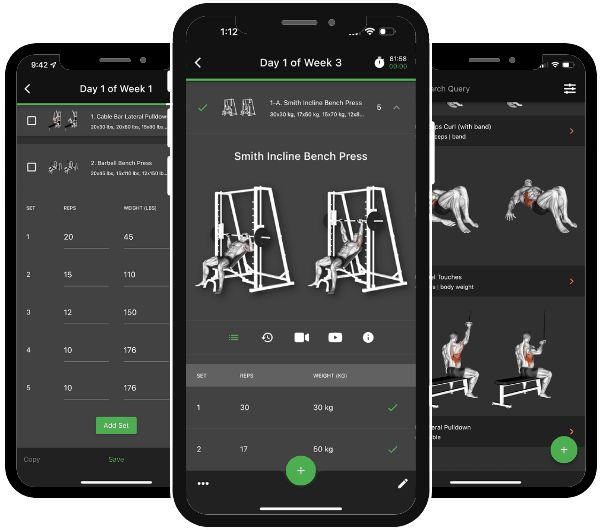
Achieve more with Fitwill: explore over 5000 exercises with images and videos, access built-in and custom workouts, perfect for both gym and home sessions, and see real results.
Start your journey. Download today!


Instructions
- Set a decline bench inside the Smith machine so the bar tracks over your lower chest, then lie back with your head lower than your hips and your feet secured under the foot pads or rollers.
- Take a wide grip just outside shoulder width, wrap your thumbs around the bar, and stack your wrists over your elbows before you unrack.
- Pin your shoulder blades down and together against the bench, brace your midsection, and unrack the bar to straight arms over the chest line.
- Lower the bar in a controlled line until it reaches the lower chest or upper sternum area, keeping the elbows slightly tucked rather than flared hard to the sides.
- Pause briefly without bouncing off the chest so the bottom position stays tight and intentional.
- Press the bar upward along the fixed Smith track, driving through the chest and triceps until the elbows are fully extended without shrugging the shoulders forward.
- Keep your upper back and glutes planted on the bench, and avoid lifting your hips or shifting your head as you press.
- Breathe in on the descent, exhale as you press through the sticking point, and rerack the bar only after you have full control at the top.
Tips & Tricks
- Set the bench far enough forward that the bar touches the lower chest without forcing your shoulders to overreach at the bottom.
- Use a grip that is wide but still lets your forearms stay close to vertical near the chest.
- Keep your wrists straight; if they bend back, the press will feel unstable and the triceps will take over early.
- Do not bounce the bar off the chest, because the Smith track makes that habit even easier to turn into joint stress.
- Think about spreading the bar apart on the way down to keep the upper back tight and the pecs engaged.
- If your shoulders feel crowded, shorten the range slightly or narrow the grip before you add more weight.
- Drive the bar up smoothly instead of trying to accelerate the first inch off the chest with momentum.
- Use a load that lets you control the descent for the full rep; this movement should feel stable, not forced.
Frequently Asked Questions
What muscles does Smith Wide-Grip Decline Bench Press emphasize most?
It mainly targets the lower and mid chest, with the triceps and front delts helping throughout the press.
Why use a decline bench instead of a flat bench in the Smith machine?
The decline angle shifts more tension toward the pecs and often makes the bottom position feel more shoulder-friendly for some lifters.
How wide should my grip be on the bar?
Use a grip just outside shoulder width. Wide enough to bias the chest, but not so wide that your wrists and shoulders lose alignment at the bottom.
Where should the bar touch on each rep?
Aim for the lower chest or upper sternum area, depending on your bench angle and arm length, and keep the touch controlled.
Can beginners use this exercise safely?
Yes, if they start light, use the Smith catches, and keep the shoulder blades pinned so the bar path stays predictable.
What is the most common form mistake?
Letting the elbows flare too hard or bouncing the bar off the chest usually turns the press into a shoulder-heavy, sloppy rep.
How is this different from a free-weight decline bench press?
The Smith machine gives you a fixed path, which reduces balance demands but also makes bench placement and grip width more important.
What should I do if the bottom position hurts my shoulders?
Reduce the range slightly, narrow the grip a bit, and make sure the bench is centered so the bar comes down to a natural chest line.