Back Extension On Exercise Ball
Back Extension On Exercise Ball is a prone posterior-chain exercise performed with the hips and abdomen supported by a stability ball. It is used to train the spinal erectors and the muscles that help you hold a stronger, more upright torso position, while the glutes and hamstrings help control the body as you move through extension and return to neutral. The ball changes the exercise in a useful way: it lets the trunk move freely while demanding constant balance and body awareness, so every rep depends on clean positioning instead of brute force.
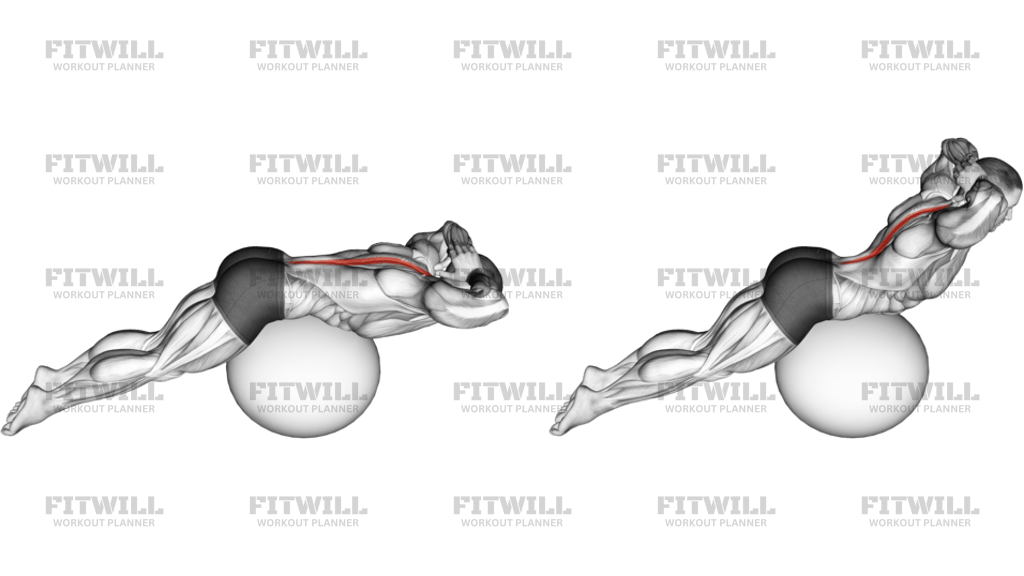
The setup matters because the ball has to sit under the lower abdomen and pelvis, not too high on the ribs and not so low that you lose leverage. In the image, the feet stay planted wide enough to stay stable while the hands are lightly supporting the head. That position helps keep the neck from cranking forward and lets the torso move as one long line. If the ball is in the wrong spot, the rep turns into a wobble or a hip-driven swing instead of a controlled back extension.
Perform the movement by lowering the chest with control until the trunk folds over the ball, then extending the back until the shoulders and upper torso rise to a long, neutral line with the legs. The finish should feel like a firm contraction through the low back and upper back, not a hard arch into the spine. The best repetitions are smooth, deliberate, and identical from the first rep to the last, with no jerking off the bottom and no overextension at the top.
This exercise is a good option when you want to build posterior-chain strength, improve trunk endurance, or add a lighter accessory movement after heavier hinges, squats, or deadlift variations. It also works well for beginners because the ball reduces load compared with floor-based back extensions, but the movement still punishes sloppy setup. Start conservatively and use only the range you can hold without twisting, shrugging, or swinging your legs.
Safety comes from staying organized: keep the neck relaxed, keep the ribs from flaring hard at the top, and stop the lift when your body is in line rather than forcing extra height. If your lower back feels pinched, shorten the range and make sure the ball is supporting the pelvis correctly. The goal is controlled spinal extension and a stable return to the start, not maximum range or speed.
[ Workout Log & Planner ]
Put your next workout in Fitwill
Keep your plan and training log ready when you are.


Instructions
- Place a stability ball under your lower abdomen and pelvis, then walk your feet back until your body is balanced in a long prone line.
- Plant your toes on the floor with your feet about hip-width apart and let your legs stay long behind you for support.
- Bring your hands lightly to the sides of your head, or keep them crossed over your chest if you need less upper-body leverage.
- Brace your midsection so your ribs stay controlled and your lower back does not start the rep by sagging.
- Lower your chest and torso over the ball in a slow, controlled arc until your trunk folds forward around the ball.
- Drive your torso back up by extending through the back until your shoulders, hips, and legs form one long line.
- Pause briefly at the top without throwing your head back or arching past neutral.
- Lower yourself back over the ball under control and keep the movement smooth instead of bouncing off the bottom.
- Exhale as you lift, inhale as you lower, and repeat for the planned number of repetitions.
Tips & Tricks
- If the ball sits too far under your ribs, the lift will feel cramped; slide it lower so your pelvis can hinge freely.
- Keep your elbows wide and your chin slightly tucked so your hands do not pull your neck through the rep.
- Think about lifting the sternum, not throwing the chest upward; the top position should still look long and controlled.
- Squeeze the glutes as you rise so the lower back is not doing all of the work by itself.
- Use a smaller range if your hips wobble on the ball or your legs start kicking to help the lift.
- Do not bounce off the bottom; a slow return builds much better control on the ball.
- If you feel the exercise in your neck, reduce the hand pressure behind the head or cross your arms over your chest.
- Keep your toes anchored and feet wide enough that you can stay centered on the ball through every rep.
Frequently Asked Questions
What does Back Extension On Exercise Ball train?
It primarily trains the spinal erectors and the muscles that extend the torso, with glutes and hamstrings helping stabilize the position.
Where should the ball sit for this exercise?
The ball should be under your lower abdomen and pelvis so you can hinge at the hips and extend the trunk without feeling jammed into your ribs.
Should my hands stay behind my head the whole time?
They can, but keep them light. If your neck feels strained, cross your arms over your chest or keep your fingertips only touching the sides of your head.
How high should I lift at the top?
Lift only until your torso is in line with your legs. Going higher usually turns the rep into a low-back arch instead of a controlled back extension.
Can beginners do back extensions on a stability ball?
Yes. The ball makes it beginner-friendly as long as the setup is stable and the range stays small and controlled.
Why do my legs keep wanting to lift during the rep?
That usually means the ball is too high or you are trying to use momentum. Keep the feet anchored, narrow the range, and rise more slowly.
What is the biggest mistake with this movement?
Overextending at the top is the most common problem. Finish in a long neutral line instead of cranking the spine backward.
When should I use this exercise in a workout?
It works well as accessory posterior-chain work after bigger lifts, or as a lighter control exercise in a core or trunk-stability session.