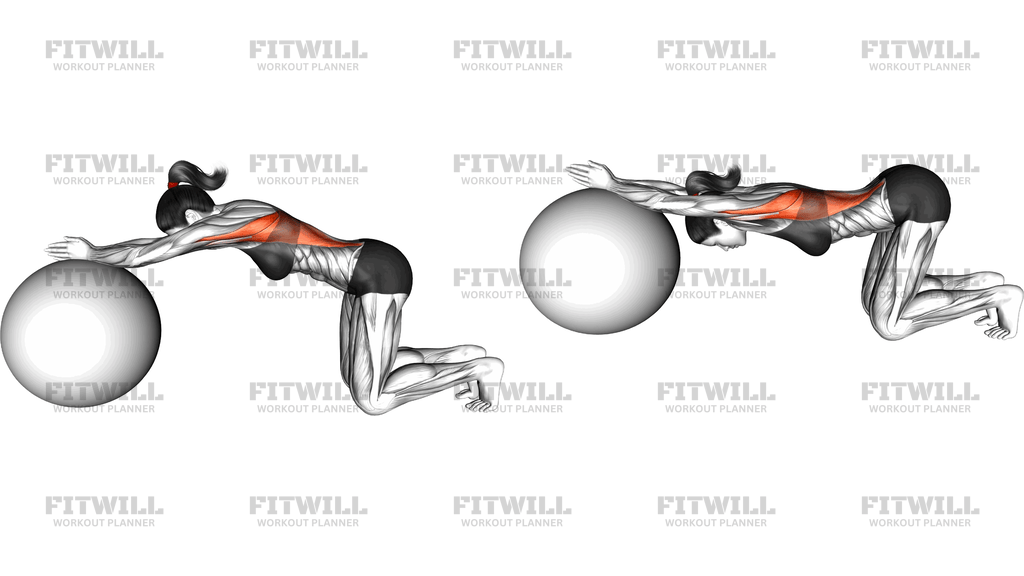
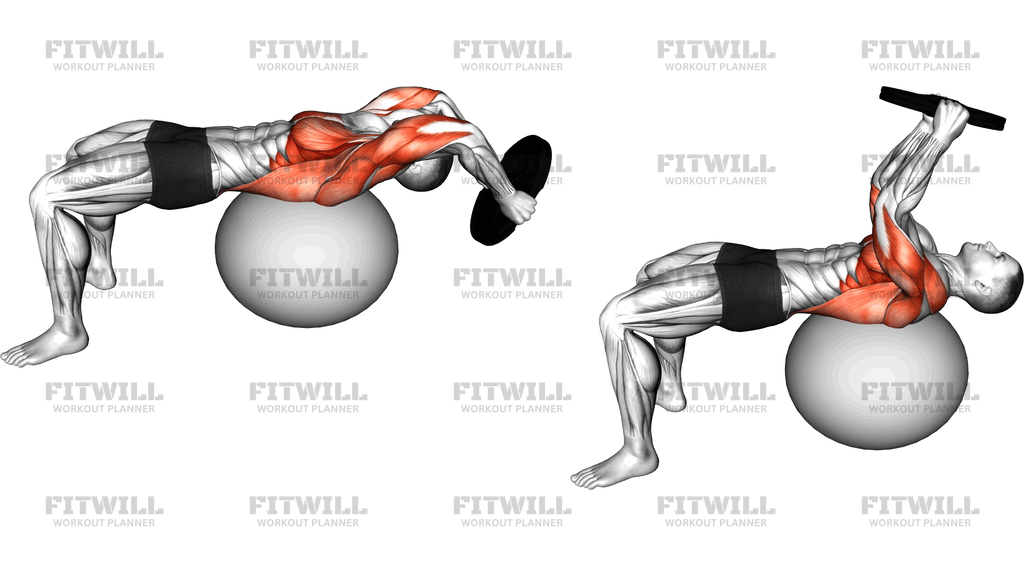
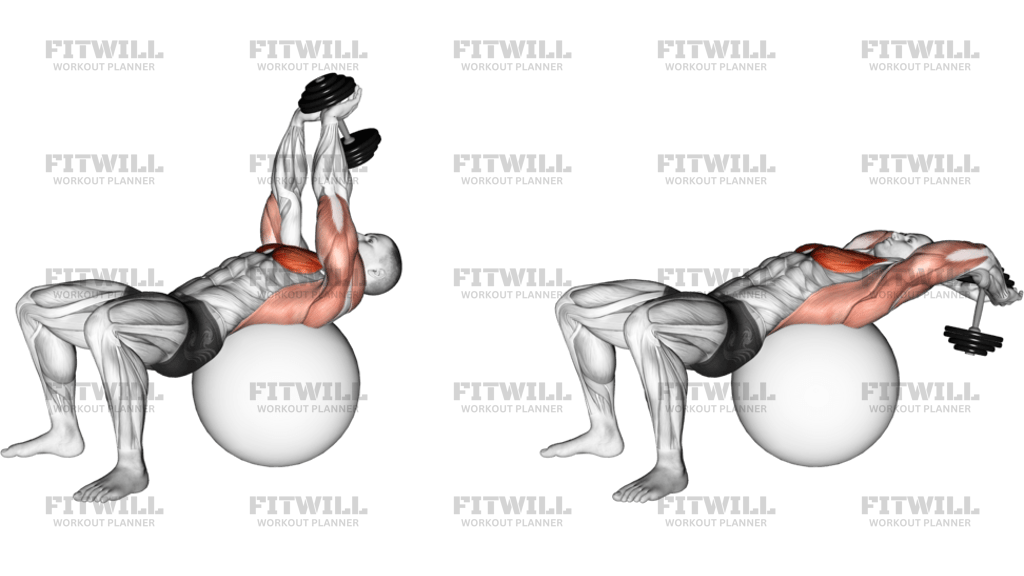
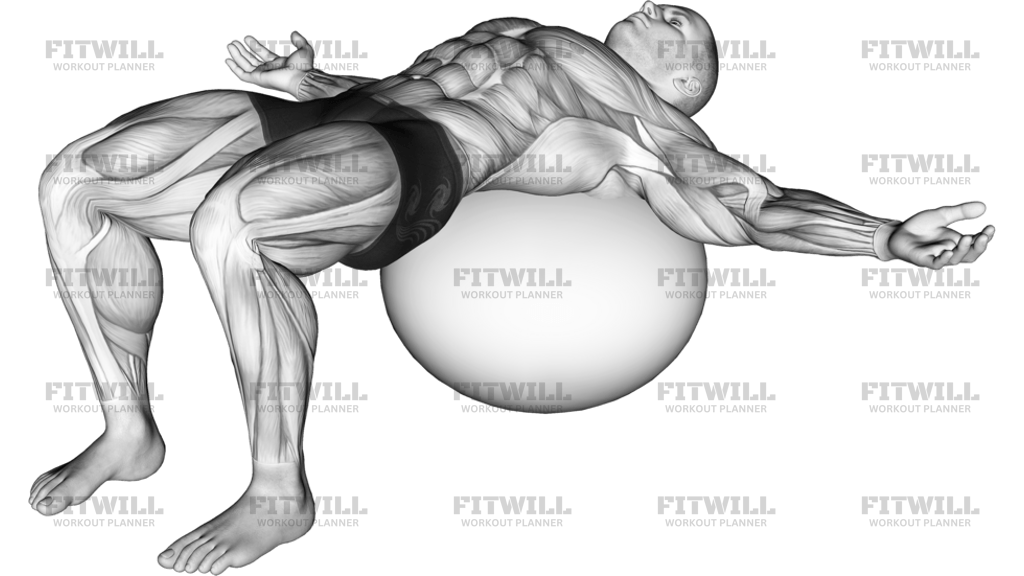
Exercise Ball Alternating Arm Ups
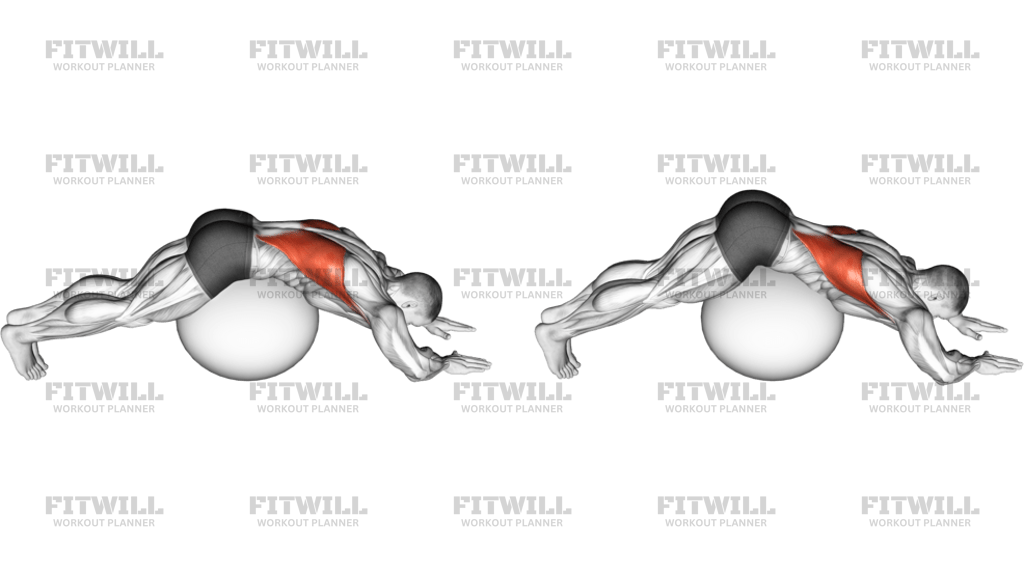
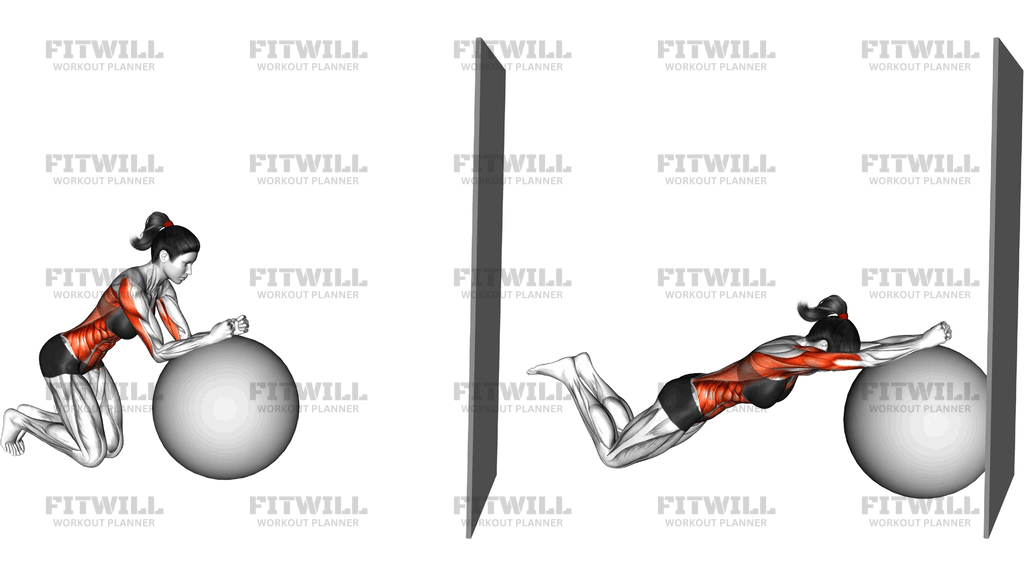
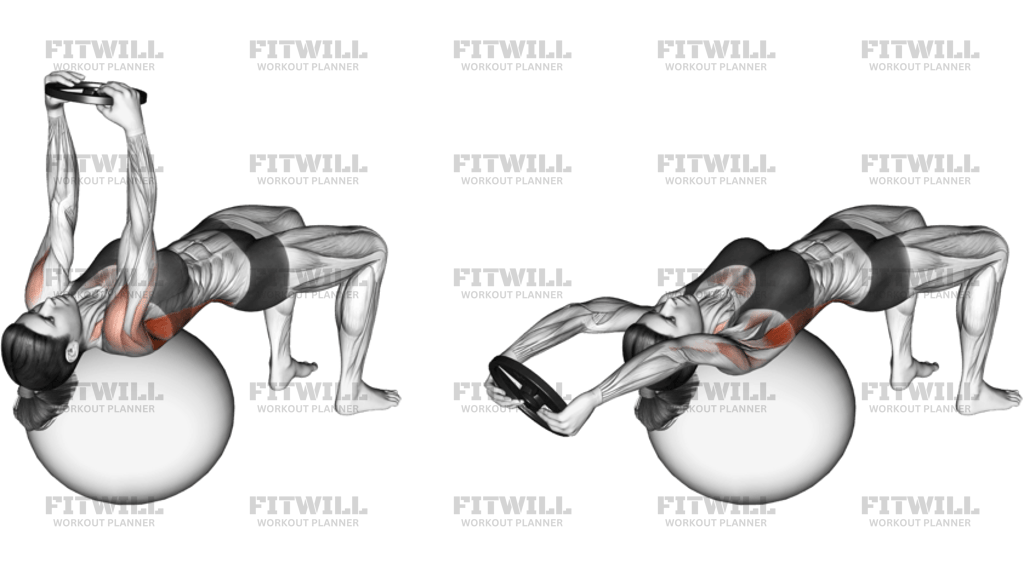
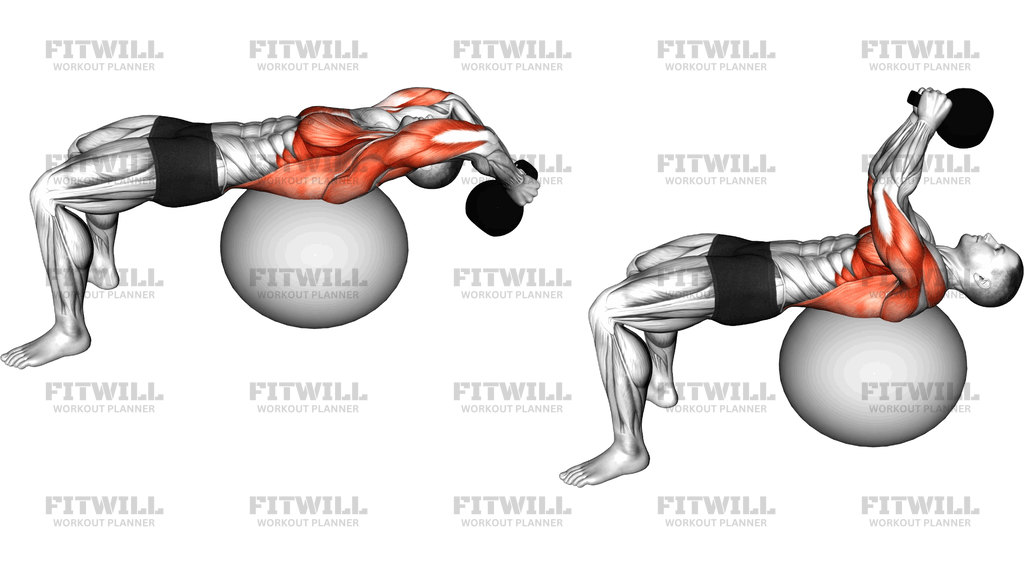
Exercise Ball Alternating Arm Ups is a prone stability-ball exercise that asks you to hold your torso long and steady while one arm lifts at a time. The ball supports the chest and abdomen, so the movement is less about brute force and more about keeping the upper back, shoulders, and trunk organized while each arm reaches through its own range. It is a good choice when you want controlled work for the back side of the body without loading the spine heavily.
The main training effect comes from the upper back and lats, with the rear shoulders, arms, and core helping keep the body from twisting on the ball. In practice, that means the exercise rewards clean positioning more than big range or speed. If your ribs flare, your hips swing, or the ball rolls under you, the target muscles lose tension and the repetition turns into a balance drill instead of a controlled back movement.
The setup matters because the ball has to be placed far enough under the torso to let you stay stable, but not so far forward that your lower back collapses. Most lifters do best when the ball sits under the lower chest and stomach, with the feet spread wide enough to create a steady base. From there, the shoulders can alternate without the rest of the body drifting side to side.
On each rep, think about reaching one arm long while keeping the opposite side quiet. The lifting arm should travel smoothly instead of snapping up, and the lowering arm should return under control before the next side takes over. Breathing should stay steady and deliberate, with the trunk staying braced enough that the ball does not wobble every time an arm changes position.
Exercise Ball Alternating Arm Ups fits well as accessory work, a warmup for pulling sessions, or a light corrective-style drill when you want upper-back activation and body control. It is especially useful for people who need better scapular control, cleaner trunk alignment, or a low-load way to practice alternating arm action from a prone position. Keep the effort honest, the tempo smooth, and the range strict so each rep looks the same from start to finish.
[ Workout Log & Planner ]
Put your next workout in Fitwill
Keep your plan and training log ready when you are.


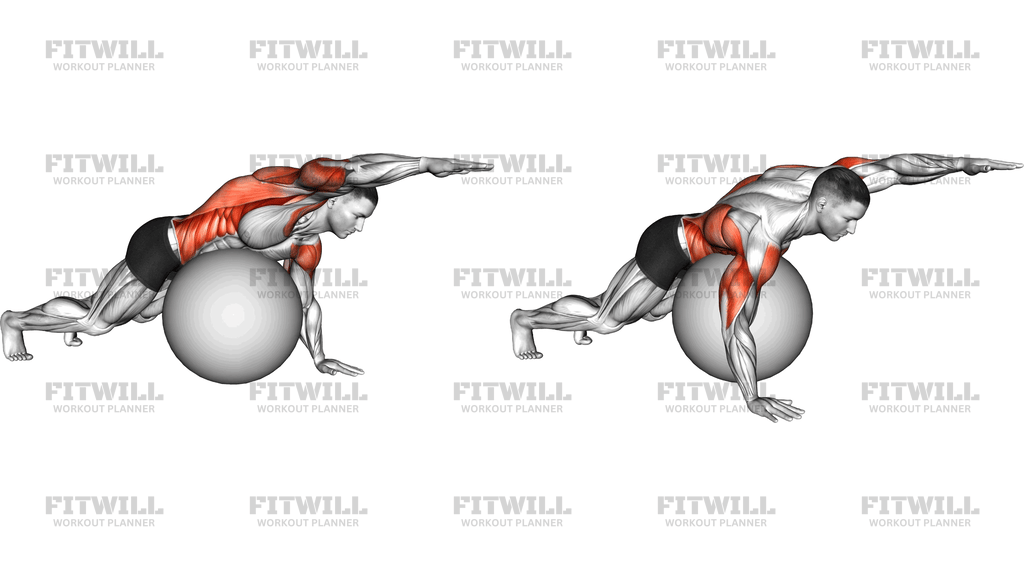
Instructions
- Place a stability ball under your lower chest and stomach, then walk your feet back until your torso is long and your toes can keep you balanced.
- Plant your toes wide on the floor and let your hips rest lightly on the ball without letting your lower back sag.
- Reach both arms long from the shoulders with your palms angled down or slightly in, and keep your neck in line with your spine.
- Brace your abs and glutes before the first rep so the ball stays still when one arm begins to move.
- Lift one arm smoothly to shoulder height or slightly higher while keeping the other side of your torso quiet.
- Pause for a moment at the top, then lower that arm under control while the opposite arm stays long and steady.
- Alternate sides on the next rep, keeping the same body position instead of rolling from one shoulder to the other.
- Continue for the planned reps and step off the ball carefully once the set is finished.
Tips & Tricks
- Set the ball under your lower chest, not your hips, so the lift comes from the upper back instead of from rocking forward.
- Keep your feet wide enough that the ball feels anchored; a narrow stance makes each arm change pull you off balance.
- Think about reaching the working hand long rather than yanking it up fast. A slow lift keeps tension on the back of the shoulder and upper back.
- If your ribs flare every time an arm rises, shorten the range and keep the arm a little lower.
- Do not let the head chase the hand. Keep your gaze down and your neck long so the upper back does the work.
- Use a brief pause at the top if the movement feels too easy; it makes the alternating pattern much harder without adding load.
- Keep the pelvis square to the floor. Any twisting usually means the rep is too fast or the ball is too far forward.
- Stop the set when the ball starts sliding or when one side can no longer match the other side's tempo.
Frequently Asked Questions
What muscles does Exercise Ball Alternating Arm Ups work?
It mainly hits the upper back and lats, with the rear shoulders, arms, core, and glutes helping keep the body steady on the ball.
Where should the stability ball sit for Exercise Ball Alternating Arm Ups?
Place the ball under your lower chest and stomach so your torso is supported but still long enough for each arm to lift without your hips collapsing.
Should my feet be close together or wide in Exercise Ball Alternating Arm Ups?
Keep your feet wide enough to steady the ball. A wider base makes it much easier to alternate arms without swaying.
Can beginners do Exercise Ball Alternating Arm Ups?
Yes, if they keep the range small and move one arm at a time. The key is staying balanced on the ball instead of chasing height.
What is the biggest mistake in Exercise Ball Alternating Arm Ups?
Twisting the torso or letting the lower back sag. If that happens, the ball is probably too far forward or the reps are moving too fast.
How high should I raise my arm in Exercise Ball Alternating Arm Ups?
Lift only as high as you can without rolling off the ball or arching your back. For most people, shoulder height is enough.
Is Exercise Ball Alternating Arm Ups a good warmup movement?
Yes. It works well as a light activation drill before rows, pulldowns, or other pulling work because it wakes up the upper back without heavy loading.
What should I do if the ball keeps shifting during the set?
Widen your feet, shorten the arm range, and place the ball a little farther back under your torso. The set should feel stable before the arms start alternating.
Does Exercise Ball Alternating Arm Ups need extra weight?
No. The instability of the ball usually makes bodyweight enough. If you add load, it should be very light and only after you can keep the torso still.