Dumbbell Pullover Hip Extension On Exercise Ball
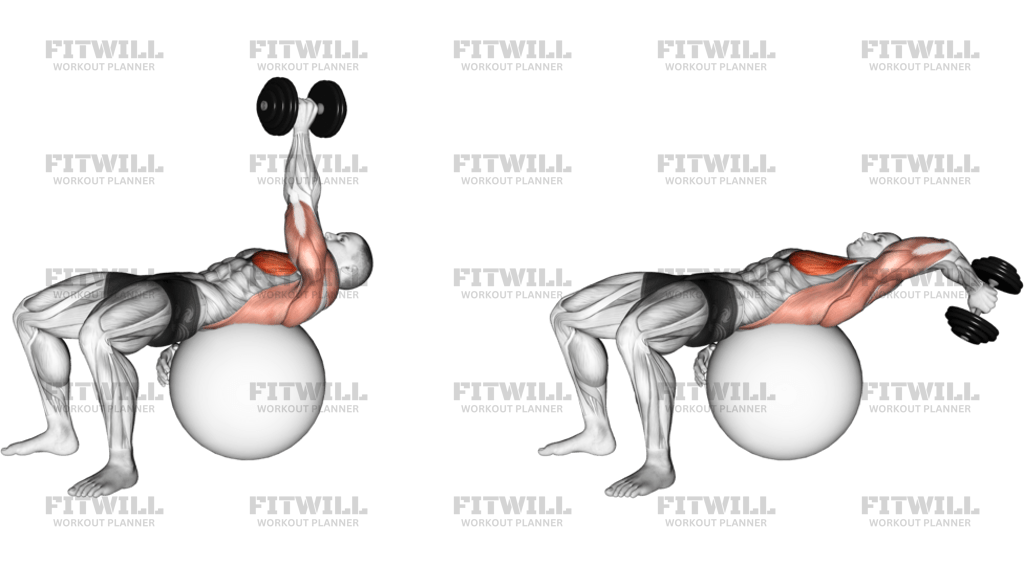
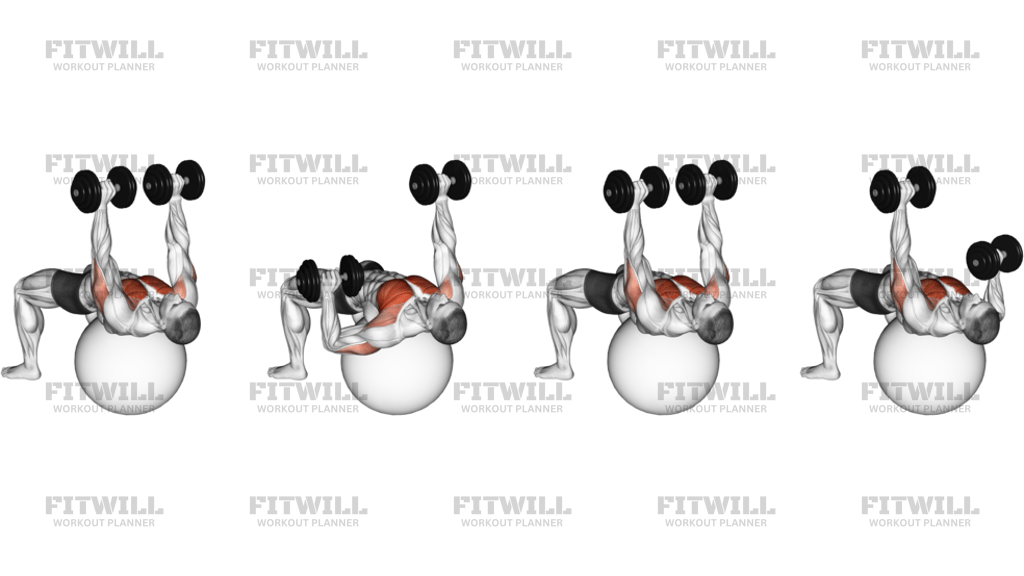
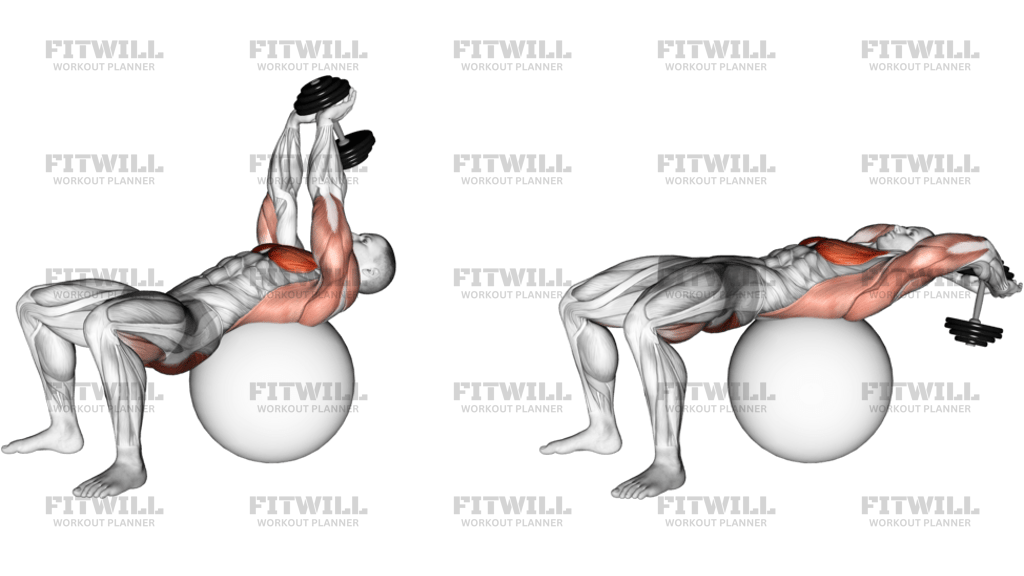
Dumbbell Pullover Hip Extension On Exercise Ball combines a stability-ball bridge with a dumbbell pullover, so the set is as much about body control as it is about shoulder motion. Your upper back rests on the ball, your feet stay planted, and your hips stay lifted while you move the weight in a long arc from above your chest to behind your head. That bridge position turns the exercise into a demanding full-body hold instead of a simple upper-body isolation drill.
The hip extension component makes glutes and hamstrings work hard to keep the pelvis level while the dumbbell travels. At the same time, the pullover path asks the lats, chest, serratus, and triceps to control the shoulder joint through a large range. The result is a useful strength movement for lifters who want more trunk stiffness, posterior-chain endurance, and shoulder control in one exercise.
The setup matters more here than on a standard pullover because the ball can move if your feet are too narrow or your hips are too low. Place the ball under your upper back and shoulder blades, not under your lower back, then plant your feet wide enough that you can keep your bridge steady. Hold the dumbbell with both hands and keep a soft bend in the elbows so the load stays centered and the shoulders do not have to absorb a jerky lockout.
Each repetition should feel like two coordinated actions: the hips stay strong and still while the arms trace a smooth overhead arc. Lower the dumbbell only as far as you can keep the ribs down, the neck relaxed, and the ball stable beneath you. If the lower back arches or the ball starts to roll, shorten the range and reduce the load before adding more distance.
This exercise is best used when you want more than a basic pullover or glute bridge. It fits well in accessory work, upper-back and chest sessions, or core-focused training where controlled tension is the goal. Keep the reps deliberate, use a manageable dumbbell, and treat every rep as a test of position, not just strength.
Fitwill
Log Workouts, Track Progress & Build Strength.
Achieve more with Fitwill: explore over 9600 exercises with images and videos, access built-in and custom workouts, perfect for both gym and home sessions, and see real results.
Start your journey. Download today!




Instructions
- Lie your upper back and shoulder blades across a stability ball, plant both feet flat on the floor, and lift your hips until your torso and thighs form a strong bridge.
- Hold one dumbbell with both hands above your chest, keep your wrists stacked, and leave a soft bend in the elbows.
- Set your ribs down, squeeze your glutes, and press your heels into the floor before the first rep starts.
- Inhale and lower the dumbbell in a smooth arc behind your head while keeping your hips lifted and the ball steady.
- Stop the descent when you feel a strong stretch through the lats and chest but before your lower back starts to arch.
- Exhale and pull the dumbbell back over your face and chest by driving the upper arms forward, not by straightening the elbows harder.
- Finish with the weight back above mid-chest, glutes still tight, and the ball still under your upper back.
- Repeat for the planned reps, then lower your hips carefully to the floor before setting the dumbbell down.
Tips & Tricks
- Start lighter than you think; the long lever of the dumbbell and the unstable ball make this harder than a floor pullover.
- If your lower back arches, reduce the depth of the pullover before you reduce the bridge height.
- Keep a small elbow bend fixed through the whole rep so the movement stays in the shoulders instead of turning into a triceps press.
- Widen your foot stance if the ball drifts, especially when the dumbbell reaches the bottom of the arc.
- Let your shoulder blades move naturally on the ball, but do not shrug your neck up toward your ears.
- Pause the descent if the dumbbell starts to pull your ribs open or your hips drop out of alignment.
- Exhale as the dumbbell returns over your chest to help keep the trunk braced and the bridge steady.
- Use a slower lowering phase than lifting phase so the shoulders and rib cage stay under control.
- If your shoulders feel pinchy, shorten the arc and stop the pullover sooner behind your head.
Frequently Asked Questions
What does Dumbbell Pullover Hip Extension On Exercise Ball train?
It mainly challenges glutes and hamstrings to hold the bridge while the lats, chest, serratus, triceps, and core control the dumbbell.
Is Dumbbell Pullover Hip Extension On Exercise Ball more of a chest or back exercise?
It uses both, but the shoulder path feels most like a pullover for the lats and chest while the bridge adds a strong posterior-chain demand.
How high should my hips stay during this exercise?
Keep your hips high enough to maintain a clean bridge from shoulders to knees without turning it into a lower-back arch.
Can beginners do Dumbbell Pullover Hip Extension On Exercise Ball?
Yes, but the load should be very light at first. If the ball feels unstable, learn the pullover on a bench or floor bridge before adding more challenge.
Why do I feel Dumbbell Pullover Hip Extension On Exercise Ball in my lower back?
Usually the dumbbell is going too far behind the head or the ribs are flaring. Shorten the range and keep the pelvis tucked slightly.
What if the exercise ball keeps sliding?
Move the ball a little farther under your upper back, plant the feet wider, and press through the heels to make the bridge more stable.
Should my elbows stay locked in the pullover?
No. Keep a soft bend and hold it there so the shoulders move the weight without putting unnecessary stress on the elbows.
How heavy should I use for Dumbbell Pullover Hip Extension On Exercise Ball?
Use a weight you can lower smoothly without losing the bridge or bouncing the dumbbell. Stability matters more than load on this variation.