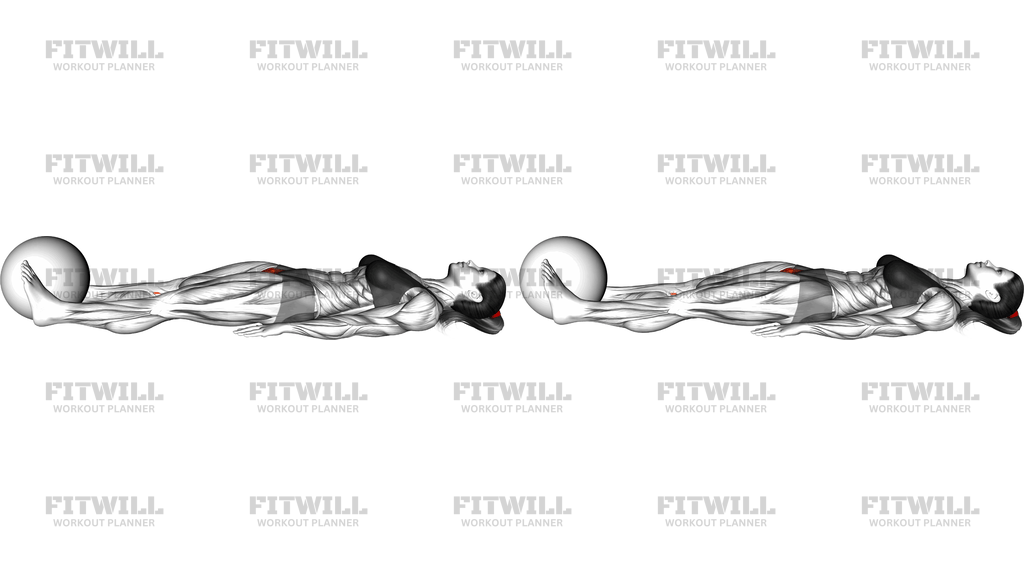
Back Relaxation
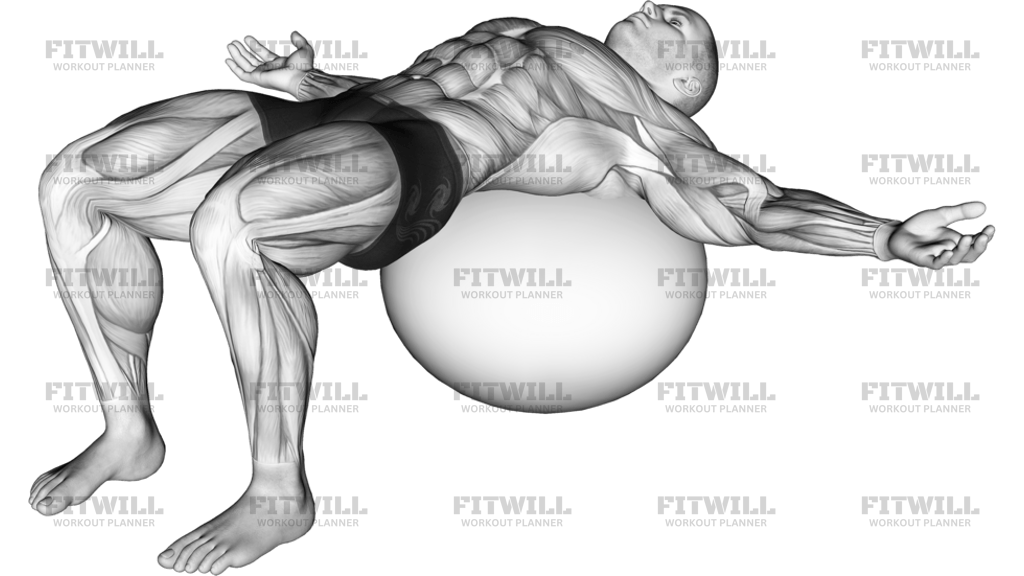
Back Relaxation is a supported stability-ball mobility drill that opens the chest, front shoulders, lats, and thoracic spine while the feet stay planted for balance. The body drapes over the ball so the upper back can extend without you having to force a deep arch on your own. It is closer to a relaxed mobility hold than to a strength exercise, and the goal is to let the rib cage, shoulders, and upper back settle into a comfortable opening position.
The setup matters because the ball controls where the stretch lands. When the ball sits under the mid-back or lower ribs, the upper spine can extend while the hips and feet keep the position stable. If the ball is too low, the lower back takes over and the stretch feels compressed instead of restorative. If it is too high, the neck and shoulders usually do too much of the work. A clean setup keeps the neck long, the chin softly tucked, and the shoulders able to relax instead of guarding.
This movement is useful after pressing work, desk posture, overhead training, or any session where the front side of the body feels tight. It can help you breathe into the sides of the ribs, restore a little extension through the upper back, and give the shoulder girdle a chance to open without a hard floor stretch. The exercise should feel gentle and supported, not like a max effort back bend.
To perform it well, settle onto the ball slowly, open the arms, and let the chest expand on the inhale. On the exhale, soften the sternum and let the ribs melt a little farther around the ball without losing control of the neck or lower back. Small position changes make a big difference here, so use the ball height, foot position, and arm angle to find a stretch that is productive but not sharp.
Treat Back Relaxation as a cooldown, recovery, or mobility reset. The best result comes from slow breathing, a stable base, and a range that you can hold without pinching in the shoulders or lumbar spine. If the stretch feels better on one side, check whether the ball is centered under the spine and whether both feet are planted evenly before assuming the exercise itself is the problem.
[ Workout Log & Planner ]
Put your next workout in Fitwill
Keep your plan and training log ready when you are.


Instructions
- Sit on the stability ball and walk your feet forward until the ball rests under your mid-back or lower ribs.
- Plant both feet flat on the floor about hip-width apart and keep your knees bent so you feel supported before leaning back.
- Lower your upper back onto the ball slowly, letting your head rest back only as far as your neck can stay long and comfortable.
- Open your arms out to the sides with your palms up, or bend the elbows if a wider chest stretch feels too aggressive.
- Keep your chin slightly tucked and your ribs soft so the stretch comes from the thoracic spine, not a forced lower-back arch.
- Inhale slowly through your nose and let the air expand the sides of your ribs and upper chest.
- Exhale and let your shoulders, chest, and sternum sink a little farther around the ball without losing your footing.
- Hold the relaxed position for the planned time or breaths, then bring your arms in, tuck your chin, and walk yourself back to sitting.
Tips & Tricks
- Place the ball under the mid-back, not the low back, or the stretch will turn into lumbar compression instead of upper-back opening.
- Keep your feet active and spread a little wider if the ball feels unstable; a shaky base makes the shoulders guard instead of relax.
- If the shoulders pinch, bend the elbows or lower the arms so the chest can open without forcing the shoulder joint.
- Use slow nasal breaths and try to feel the ribs widen into the ball on each inhale rather than simply lifting the chest.
- Do not chase a bigger arch by thrusting the hips upward; this movement should feel supported, not like a bridge.
- A small chin tuck keeps the neck from hanging back and helps the thoracic spine do the opening work.
- If you feel tingling, sharp pain, or a jammed feeling in the spine, shorten the range or exit the position immediately.
- This works best after pressing, desk work, or rowing volume when the front of the body and upper back both need a reset.
Frequently Asked Questions
What does Back Relaxation actually stretch?
It mainly opens the thoracic spine, chest, front shoulders, and lats while giving the rib cage room to expand.
Can beginners perform this exercise?
Yes. Beginners usually do best with a smaller backbend, feet planted wide, and arms kept closer to the body.
Where should the stability ball sit on my back?
Aim for the mid-back or lower ribs. If it sits too low, the lower back takes over; too high, and the neck and shoulders get crowded.
Should I keep my arms straight out to the sides?
Only if it feels comfortable. Bent elbows or a slightly lower arm angle are fine if a wide chest opening irritates the shoulders.
Is this a strength exercise or a mobility drill?
It is primarily a mobility and relaxation drill, not a strength movement.
How long should I stay in the stretched position?
Most people do well with 20 to 60 seconds or several slow breaths, as long as the position stays comfortable.
What if I feel it more in my lower back than my upper back?
Move the ball higher toward the mid-back, keep the ribs softer, and reduce the arch so the stretch shifts out of the lumbar spine.
When is the best time to use Back Relaxation?
It fits well after pressing, overhead work, rowing, or long periods of sitting when the chest and upper back need a gentle reset.