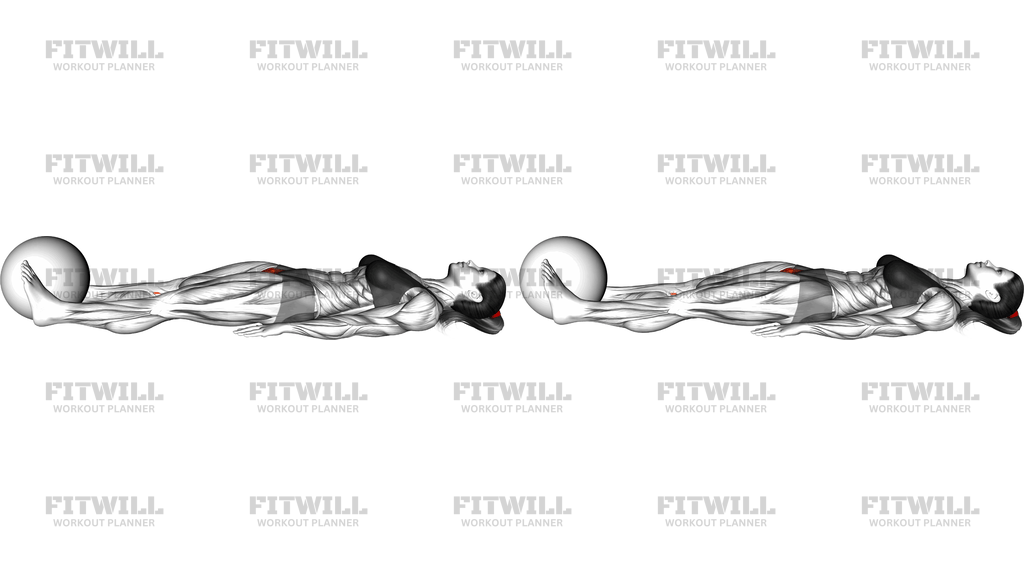
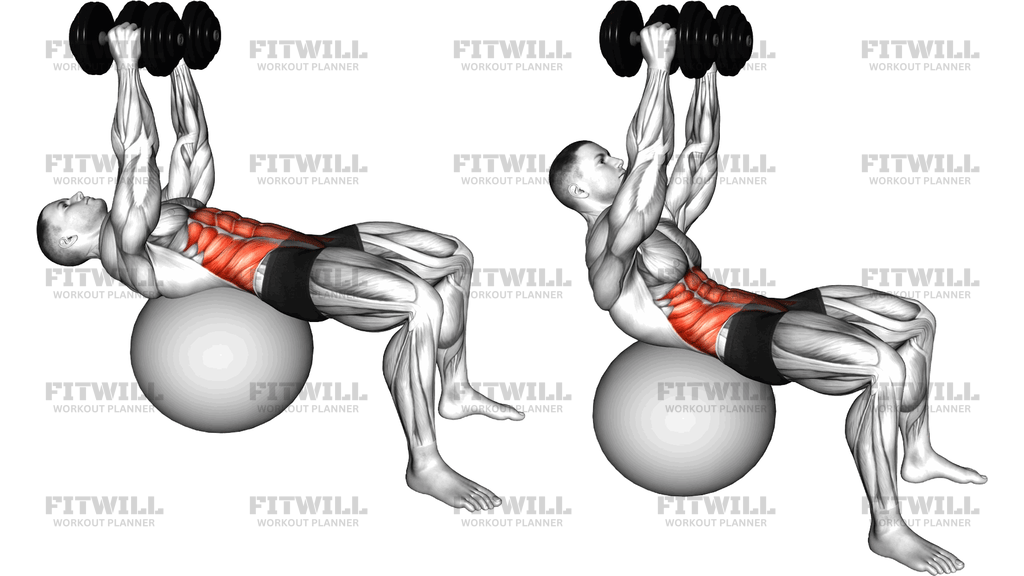
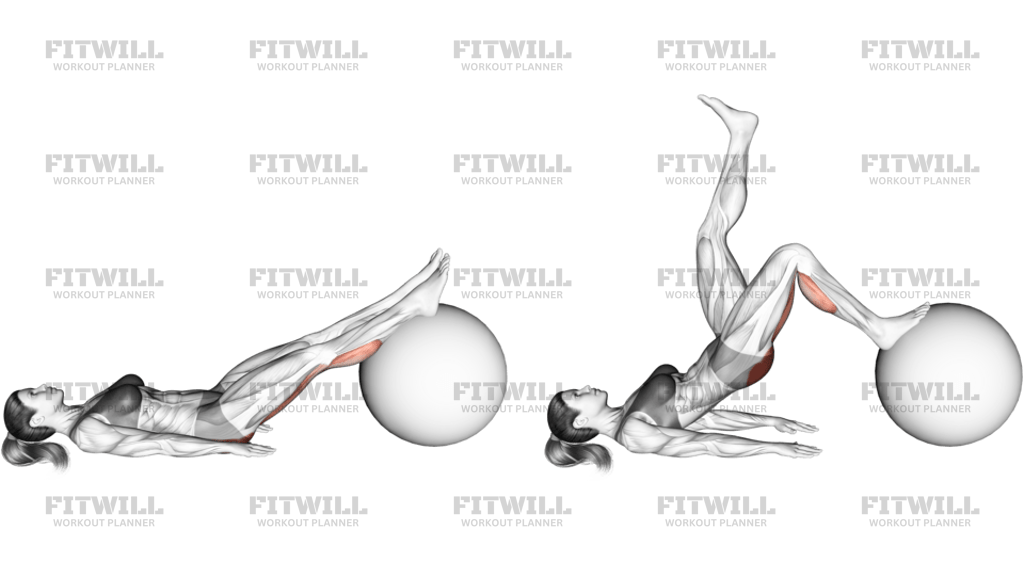
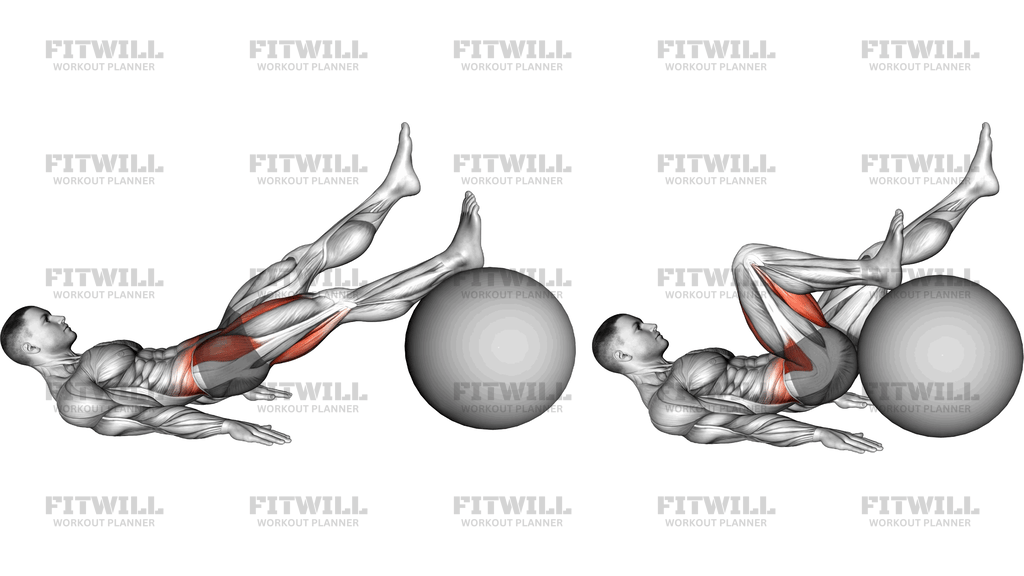
Exercise Ball Back Extension With Arms Extended
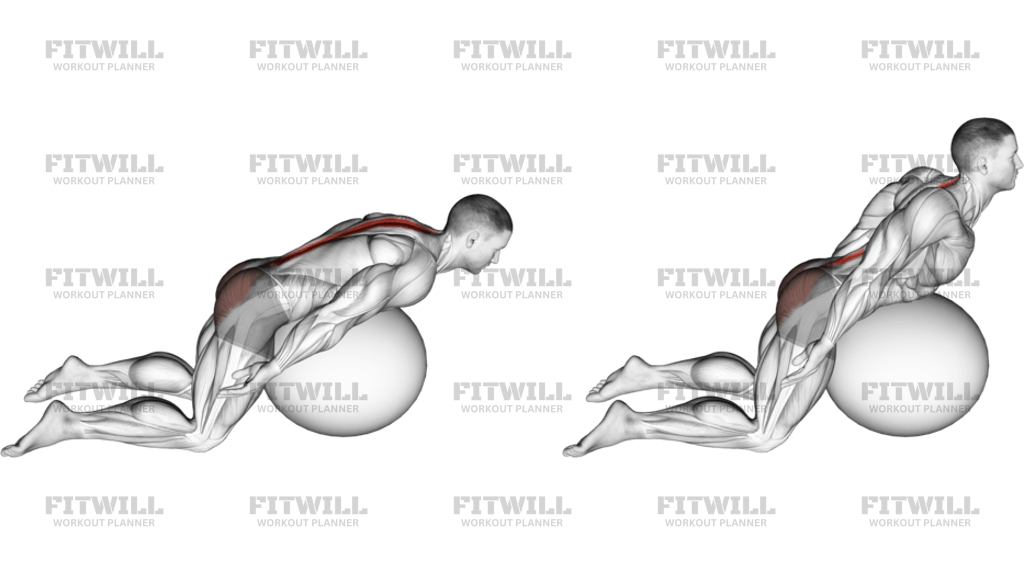
Exercise Ball Back Extension With Arms Extended is a prone back-extension exercise done over a stability ball, with the thighs and hips supported by the ball and the lower legs anchored on the floor. The movement trains the spinal erectors through the back of the trunk while the glutes, hamstrings, rear delts, and upper back help you hold position and control the lift. Because the body is draped over the ball, small changes in ball placement and trunk angle make a big difference in how smooth and useful the repetition feels.
The goal is not to fling the chest upward. Set the ball under the hips and lower abdomen so your pelvis can hinge freely, then lengthen the arms back to increase the lever arm and make the extension demand more control. That long arm position also makes the upper back work harder to keep the shoulders set and the neck long. If the ball sits too high on the stomach or too far under the chest, the movement turns into a wobble instead of a clean hip-and-spine extension.
At the top of each rep, lift the torso until the body forms a long line from the knees through the hips and shoulders, or only slightly above that line if your low back starts to pinch. Squeeze the glutes, keep the ribs from flaring, and let the head stay in line with the spine rather than craning forward. The descent should be slow and deliberate, with the trunk folding over the ball under control instead of dropping into the next rep.
This exercise is useful as accessory work for posterior-chain strength, posture, and trunk endurance. It fits well in warmups, athletic prep, rehab-style progressions, or light back-focused finishers when you want spinal extension without loading the spine with a barbell. The long lever from the extended arms makes it a good choice for athletes who need better control through the back of the body, but it is still accessible enough for beginners if the range stays small and strict.
Keep the repetition honest. A smooth set will feel like the torso is moving as one piece while the lower body stays planted and the ball stays still. If you need to heave, arch aggressively, or swing the arms to finish the rep, the ball is likely in the wrong place or the load is too ambitious. Controlled reps, a neutral neck, and steady breathing will produce more useful work than chasing height.
[ Workout Log & Planner ]
Put your next workout in Fitwill
Keep your plan and training log ready when you are.


Instructions
- Place the stability ball under your hips and lower abdomen, then kneel behind it with your shins and the tops of your feet on the floor.
- Walk your body forward until your torso lies over the ball, your chest points toward the floor, and your arms hang straight down with the palms facing in.
- Reach both arms back so they stay long beside your hips, then set your neck in line with your spine and brace your midsection.
- Press your hips lightly into the ball and lift your chest and thighs together until your torso is long and your body is nearly straight from knees to shoulders.
- Keep the ribs from flaring and avoid throwing the head up as you rise.
- Squeeze the glutes at the top and hold the extended position for a brief pause without over-arching the low back.
- Lower your torso slowly over the ball until you are back in the stretched position with control.
- Reset your brace before the next repetition and keep the ball from rolling as you repeat.
Tips & Tricks
- Move the ball a little lower on the hips if the chest feels trapped or the lower back pinches at the top.
- Keep the arms reaching back rather than pulling them up, which helps keep the torso long and the neck quiet.
- Think about lifting the sternum forward and slightly up, not cranking the rib cage into a hard arch.
- Let the glutes finish the top position so the low back is not doing all of the work.
- Keep the shins and toes anchored; if the feet slide, the ball is usually too far forward.
- Use a small range if you are new to the exercise and earn more height only when the set stays smooth.
- Exhale as you lift and inhale as you lower so the torso stays braced without losing rhythm.
- Stop the set when the arms start swinging or the ball begins to shift under your hips.
Frequently Asked Questions
What muscles does Exercise Ball Back Extension With Arms Extended work?
It mainly trains the spinal erectors, with the glutes, hamstrings, rear delts, and upper back helping to stabilize and control the lift.
Where should the ball sit for this back extension?
Place the ball under the hips and lower abdomen so your torso can hinge freely. If it sits too high on the stomach or too far under the chest, the rep usually feels unstable.
Should my arms stay fully extended the whole time?
Yes. Reaching the arms straight back makes the movement harder and helps keep the torso long instead of shortening the rep with an arm swing.
How high should I come up on each rep?
Lift until your body is in a long line from knees through shoulders, or just slightly above that line if going higher makes your low back pinch.
Is this exercise more for the lower back or the glutes?
The lower back does the main extension work, but the glutes should help finish the top position so the movement is not just a hard lumbar arch.
Can beginners use the stability ball version?
Yes, as long as the range stays small and controlled. Beginners should focus on keeping the ball still and the neck neutral before trying to lift higher.
What is the most common mistake on this exercise?
The biggest issue is jerking the chest up and flaring the ribs. That turns the rep into a swing and usually moves the stress away from the intended muscles.
How do I make the exercise harder without adding weight?
Keep the arms reaching long, pause briefly at the top, and use a slower lowering phase. A longer lever and stricter tempo both increase the demand.