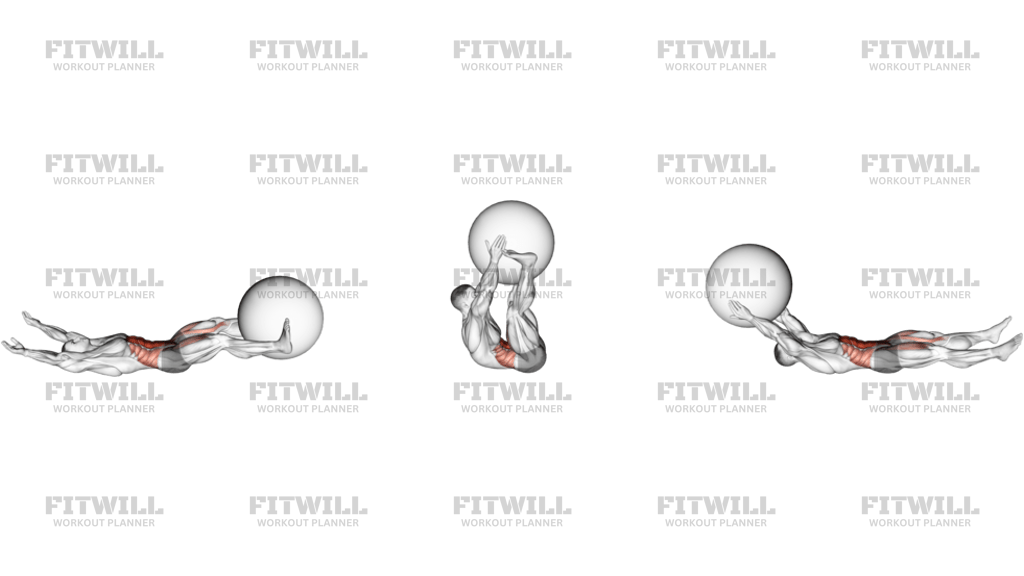
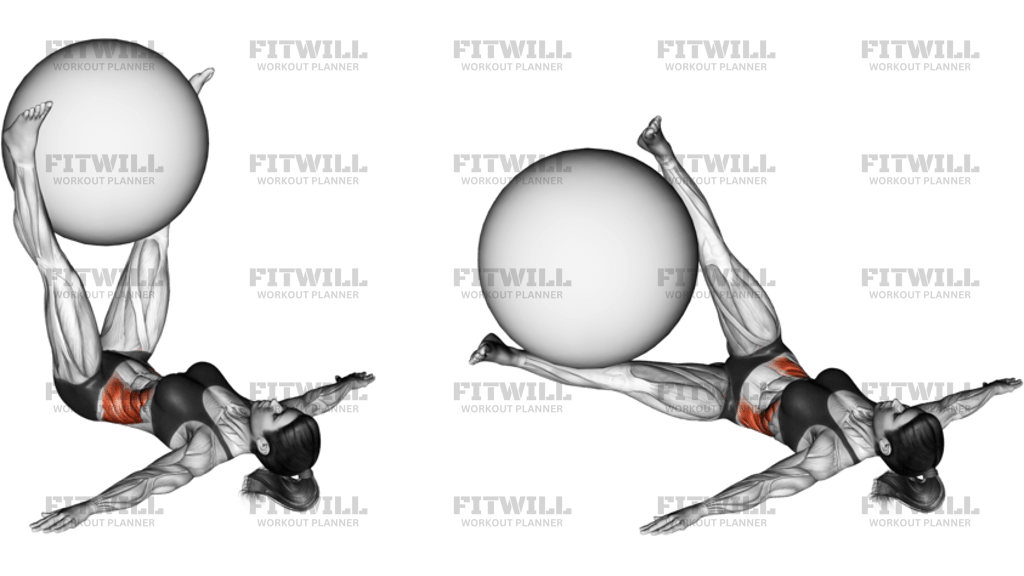
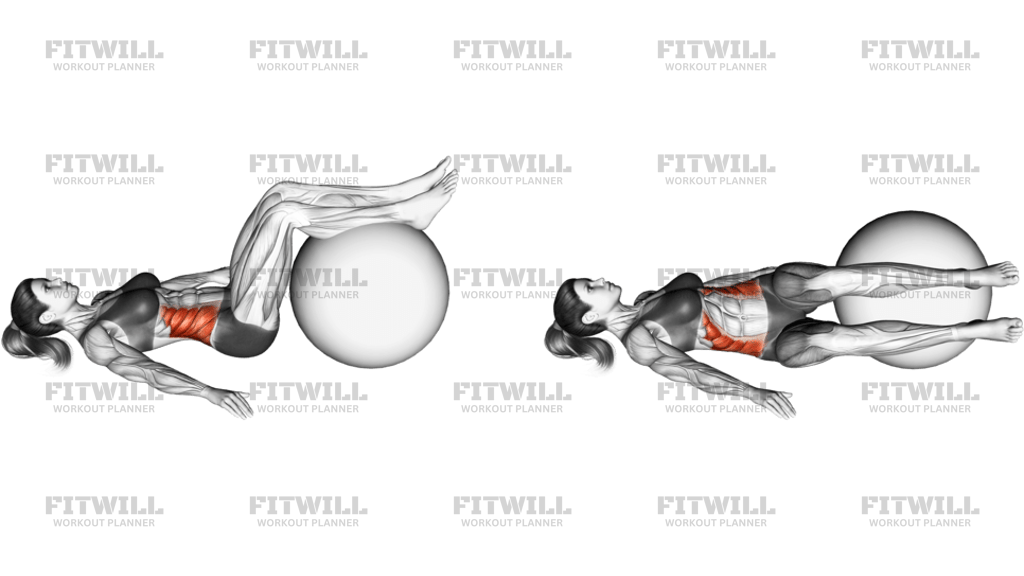
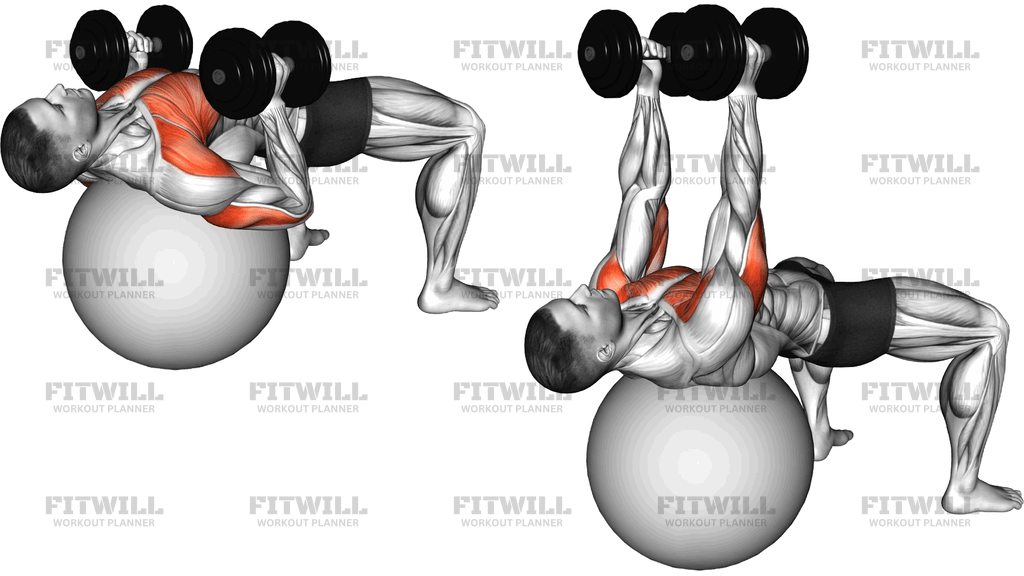
Exercise Ball Hug
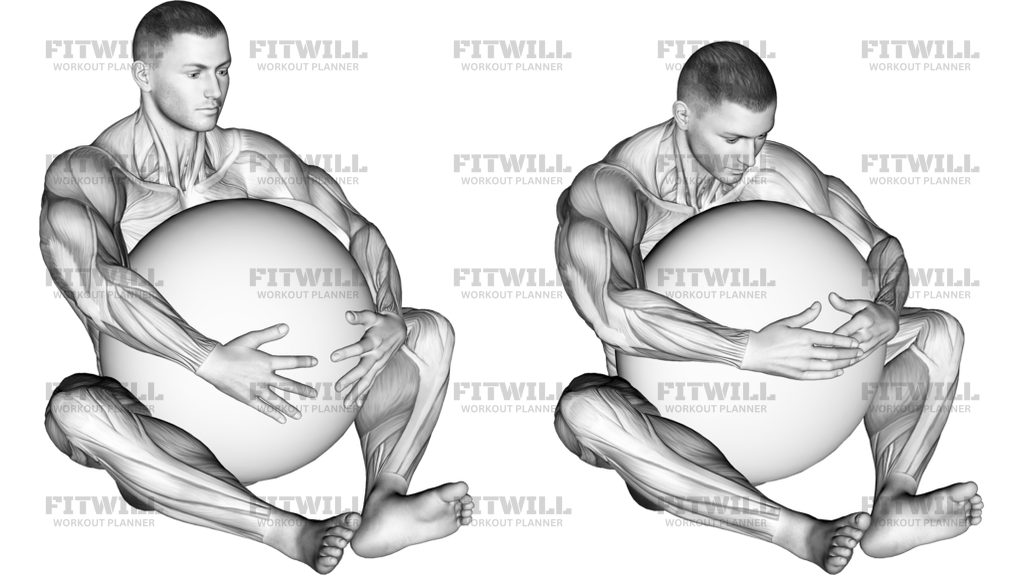
Exercise Ball Hug is a seated stability-ball squeeze that trains the chest, shoulders, arms, and trunk to work together while you keep the torso upright. The movement is simple, but the setup changes the quality of the rep: if the ball sits too high, too low, or too far from the body, you end up shrugging, leaning, or losing the squeeze through the ribs.
Use this drill as a low-load strength, warm-up, or postural control movement. Sit on the floor or a mat with the ball hugged into your chest and upper abdomen, elbows softly bent, and the shoulders set down away from the ears. The goal is not to crush the ball with your hands alone; it is to create a clean inward squeeze through the forearms, palms, chest, and upper back while the spine stays tall.
Each rep should feel like a controlled hug: brace lightly, pull the ball toward your midline, and keep the pressure even from one side to the other. Avoid leaning back, flaring the rib cage, or letting the neck jut forward. If you use short pulses, keep them small and deliberate; if you hold the squeeze, maintain steady breathing instead of holding your breath.
The exercise is useful for beginners because it does not require heavy loading, but it still exposes posture and shoulder control issues quickly. It is especially helpful when you want to practice upper-body tension without pressing or pulling a machine or barbell. The front of the shoulders and chest should feel active, with the core helping keep the body stacked.
Stop the set if the ball forces your shoulders to round aggressively, if your wrists take over the work, or if the lower back starts to arch to finish the squeeze. A good rep looks smooth, centered, and repeatable. That is the standard to keep as the set gets longer.
[ Workout Log & Planner ]
Put your next workout in Fitwill
Keep your plan and training log ready when you are.


Instructions
- Sit on the floor or a mat with your knees bent and feet planted, then pull the stability ball tightly against your chest and upper abdomen.
- Wrap your forearms and hands around the sides of the ball, keeping the elbows softly bent and the shoulders away from your ears.
- Stack your ribs over your pelvis and brace lightly so your torso stays tall instead of leaning back.
- Inhale to prepare, then squeeze the ball inward as if you are giving it a firm hug.
- Keep the pressure even through both arms and avoid twisting one shoulder forward more than the other.
- Hold the squeeze for a short pause or perform small controlled pulses, depending on the plan.
- Exhale through the working phase and keep your neck, jaw, and grip relaxed.
- Release the pressure only a few inches under control, reset your posture, and repeat for the planned reps or time.
Tips & Tricks
- Choose a ball size that lets you keep the elbows soft and the shoulders down; a ball that is too large usually forces shrugging.
- The squeeze should come from the chest and forearms, not from white-knuckling the fingers.
- Keep the ball close to the sternum; letting it drift away usually turns the rep into a shoulder raise.
- If your rib cage pops forward, shorten the squeeze and reset the pelvis before the next rep.
- Slow pulses beat fast bouncing because the goal is steady inward pressure, not momentum.
- Keep a neutral neck; looking down at the ball usually makes the upper back collapse.
- If your wrists get tired before your chest, spread the hands wider on the ball and press through the forearms.
- Use a softer ball or shorter hold if the front of the shoulders starts to pinch.
Frequently Asked Questions
What muscles does Exercise Ball Hug work?
It mainly works the chest, front shoulders, upper arms, and the core needed to keep you upright.
Is this a stretching exercise or a strength drill?
It is better treated as a light strength or isometric control drill rather than a stretch.
Should my feet stay planted while hugging the ball?
Yes. Keeping the feet grounded helps you stay tall and prevents rocking through the torso.
How hard should I squeeze the ball?
Squeeze firmly enough to feel the chest and arms working, but not so hard that your neck or wrists take over.
Can beginners do this exercise?
Yes. It is beginner-friendly because the load is light, but posture and shoulder position still matter.
What is the most common mistake with the ball?
The most common mistake is letting the shoulders shrug forward or leaning back to create a bigger squeeze.
Can I use a medicine ball instead of a stability ball?
Yes, if you want a firmer squeeze, but a smaller or softer ball is usually easier to control.
When should I stop the set?
Stop if the front of the shoulder pinches, the lower back arches, or you can no longer keep even pressure through both arms.