Calf Stretch With Rope
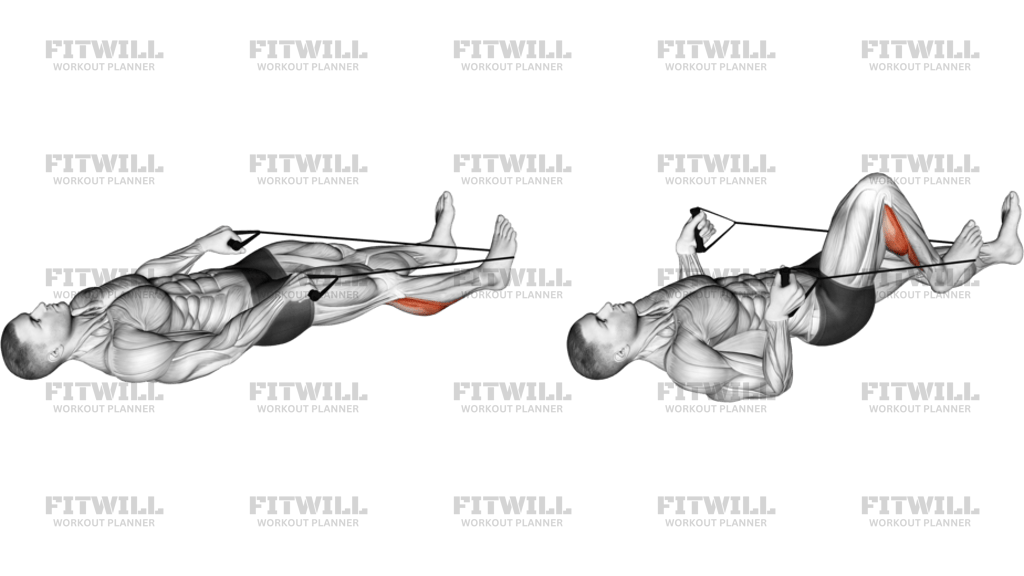
Calf Stretch With Rope is a floor-based mobility drill that uses a rope to help you pull the foot into dorsiflexion and lengthen the calf in a controlled way. It is especially useful after running, jumping, squatting, or any session that leaves the ankles feeling stiff. Because the stretch is guided by your hands instead of a machine, you can make small adjustments to the angle of the foot and the bend of the knee until the tension lands where you want it.
The main target is the calves, especially the gastrocnemius when the knee stays straighter and the soleus when the knee softens slightly. That makes Calf Stretch With Rope a practical choice for people who need better ankle mobility for walking, lunging, or lower-body training. The rope also helps you keep the foot flexed instead of letting the ankle drift into a sloppy, half-relaxed position.
Set up on a mat and loop the rope around the ball of one foot, not around the toes. Lie back with the working leg extended in front of you, then hold the rope ends with both hands so the line of pull stays steady. Keep the other leg relaxed with the knee bent or the foot planted if that makes your lower back feel more comfortable.
Once you are positioned, gently draw the toes toward the shin while keeping the heel reaching away from you. The stretch should build through the belly of the calf and into the lower calf or Achilles area without sharp pinching. If the stretch feels too high up behind the knee, slightly bend the working knee; if you want more of the upper calf, keep the knee straighter and the ankle pulled back firmly.
Use Calf Stretch With Rope as a brief reset between lower-body exercises, as part of a cooldown, or as a dedicated mobility drill when your ankles need more room for motion. The goal is not to yank on the rope and chase the biggest possible range. The goal is to create a repeatable stretch that lets you breathe, relax into the position, and come out of it without irritation.
Pay attention to the foot position and the rope tension, because those details decide whether the stretch feels targeted or messy. A smooth, even pull works better than a hard tug, and a few calm breaths at the end position usually do more than forcing extra range. If the calf or heel becomes painful rather than simply tight, back off immediately and shorten the hold.
[ Workout Log & Planner ]
Put your next workout in Fitwill
Keep your plan and training log ready when you are.


Instructions
- Lie on your back on a mat and loop the rope around the ball of one foot, then hold the rope ends with both hands.
- Extend the working leg in front of you and keep the other leg relaxed with the knee bent or the foot planted for support.
- Square your hips and keep your lower back long so the stretch comes from the ankle, not from arching the spine.
- Pull lightly on the rope until the foot is flexed and the rope is snug, then pause before adding more tension.
- Draw the toes toward the shin and keep the heel reaching away so the calf lengthens instead of the foot curling inward.
- Hold the stretch for a slow breath or two, keeping the tension firm but not painful.
- If you want more soleus emphasis, soften the working knee slightly while keeping the ankle pulled back.
- Release the rope slowly, let the foot relax, and switch sides before repeating.
Tips & Tricks
- Place the rope across the ball of the foot, not the toes, so the pull stays stable and the forefoot does not get irritated.
- Keep the heel heavy and the toes pulled back; if the foot rolls outward, the stretch will drift away from the calf.
- A straighter knee shifts more work toward the gastrocnemius, while a small knee bend usually lets you feel the deeper soleus more clearly.
- If your hamstrings feel tight, lower the working leg a little instead of forcing more rope tension.
- Use your hands to add tension gradually; a hard yank can make the ankle tense up instead of relaxing.
- Keep the opposite leg bent if your lower back wants to arch off the mat.
- This stretch should feel like strong lengthening behind the lower leg, not a sharp pull at the Achilles or behind the knee.
- Short, repeated holds are often better than one aggressive stretch when the ankles are stiff after training.
Frequently Asked Questions
What does Calf Stretch With Rope stretch most?
It mainly stretches the calves, especially the gastrocnemius when the knee stays straighter.
Why is the rope wrapped around the ball of the foot?
That placement gives you a steady line of pull and lets you flex the ankle without cranking on the toes.
Should my knee stay straight in Calf Stretch With Rope?
Keep it mostly straight for more upper-calf emphasis, or soften it slightly if you want more soleus work.
How long should I hold each stretch?
A controlled 20 to 40 second hold works well for most people, as long as the tension stays smooth and pain-free.
Can I do Calf Stretch With Rope after running?
Yes, it is a good cooldown choice after running, jumping, or leg training when the ankles and calves feel tight.
What if I feel the stretch in my hamstrings more than my calf?
Lower the leg a little and keep the knee long, then focus on pulling the toes back instead of lifting the whole leg higher.
Is this safe if my Achilles feels sensitive?
Use a lighter pull and avoid forcing the end range; if the heel or Achilles feels sharp instead of stretched, back off.
What is the easiest way to make Calf Stretch With Rope gentler?
Bend the working knee a little less, reduce rope tension, and keep the hold shorter until the ankle tolerates more range.