Exercise Ball On The Wall Calf Raise
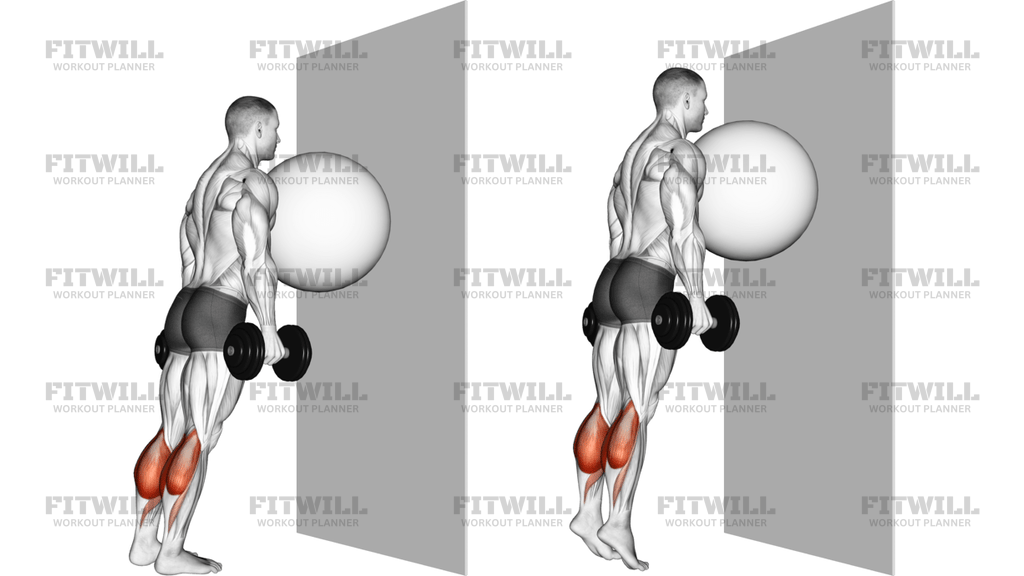
Exercise Ball On the Wall Calf Raise is a standing calf raise performed with a stability ball pressing your upper torso into a wall while you hold dumbbells at your sides. The ball gives you a fixed point of contact, which helps keep the chest tall, the ribcage stacked, and the body from drifting forward as you move through the ankle joint.
The exercise primarily trains the calves, especially the gastrocnemius when the knees stay mostly straight, with the soleus and smaller stabilizers helping control the lift and lower phase. The wall and ball do not do the work for you; they simply give you cleaner feedback so the calves can produce tension without the rep turning into a hip swing or a bounce.
Setup matters here. The ball should sit between your chest or upper abdomen and the wall, with your feet under your hips or slightly narrower, heels grounded, and the dumbbells hanging quietly by your sides. From that position, you can keep pressure into the ball, stay tall through the spine, and let the ankles do the work instead of arching the lower back or leaning your body weight into the wall.
Each rep should rise onto the balls of the feet under control, pause briefly at the top, then lower slowly until the heels return to the floor or the deepest pain-free stretch you can control. Because the movement is small, the details matter: keep the knees from bending and rebounding, keep the toes planted, and let the heel travel straight up and down rather than rolling outward or inward.
This version is useful as accessory calf work, a lower-leg finisher, or a controlled warmup before running, jumping, or leg training. It is also a practical choice for beginners because the wall and ball help teach balance and torso position while still loading the calves directly. Choose a load that lets you keep continuous control, a stable contact point on the ball, and a full range of motion without bouncing.
[ Workout Log & Planner ]
Put your next workout in Fitwill
Keep your plan and training log ready when you are.


Instructions
- Stand facing a wall and place a stability ball between your upper torso and the wall, then hold a dumbbell in each hand at your sides.
- Set your feet about hip-width apart with your heels flat, knees nearly straight, and your torso tall against the ball.
- Press your chest or upper abdomen lightly into the ball so it stays pinned to the wall without collapsing your posture.
- Grip the dumbbells firmly and let your arms hang straight, keeping your shoulders down instead of shrugging.
- Exhale, brace your midsection, and drive through the balls of your feet to lift both heels off the floor.
- Keep the ankles moving straight up as you rise; do not let the knees bend, the hips shift forward, or the ankles roll outward.
- Pause at the top on the balls of the feet and squeeze the calves before lowering under control.
- Return slowly until the heels touch down or reach a controlled stretch, then reset your balance before the next rep.
Tips & Tricks
- Keep steady pressure into the ball so you stay upright instead of drifting away from the wall.
- Think about lifting the heels straight up, not rocking onto the toes and shifting the body forward.
- Use a slow lower phase; calf raises get sloppy fast when the descent turns into a drop.
- Keep the knees almost locked but not jammed back hard, so the calf contraction stays clean.
- If the dumbbells pull you off balance, reduce the load before you shorten the range of motion.
- Let the heels come all the way back down between reps if your goal is full ankle range and not just partial pulses.
- If the ball is too high on the chest, it can force a forward lean; set it where you can stay tall and stacked.
- Stop the set when you start bouncing through the ankles or using the wall to push yourself upward.
Frequently Asked Questions
What muscles does the Exercise Ball On the Wall Calf Raise work?
It mainly trains the calves, with the gastrocnemius doing most of the work when the knees stay straight and the soleus helping control the ankle motion.
Why use a stability ball against the wall for calf raises?
The ball gives you a fixed contact point that helps keep the torso tall and reduces body sway, which makes it easier to keep the calves doing the work.
Where should the ball sit during the exercise?
Place it between your upper torso or chest and the wall so you can stay upright without crushing the ball or leaning forward hard into it.
Should my knees bend during the raise?
Keep the knees nearly straight and consistent. Too much knee bend shifts the set away from the calf emphasis and often turns the movement into a bounce.
How far should I lower each repetition?
Lower until the heels return to the floor or to a controlled, pain-free stretch. The descent should stay smooth instead of dropping into the bottom.
Can beginners do this calf raise?
Yes. The wall and ball make it easier to learn balance and posture, and beginners can start with light dumbbells or even bodyweight.
What is the most common form mistake?
Most people bounce through the ankles, let the hips drift forward, or use the wall to help them cheat the lift instead of keeping a clean vertical calf raise.
How should I hold the dumbbells?
Hold them quietly at your sides with straight arms so they add loading without pulling you out of position or making you shrug.