Barbell Palms Down Wrist Curl Over A Bench
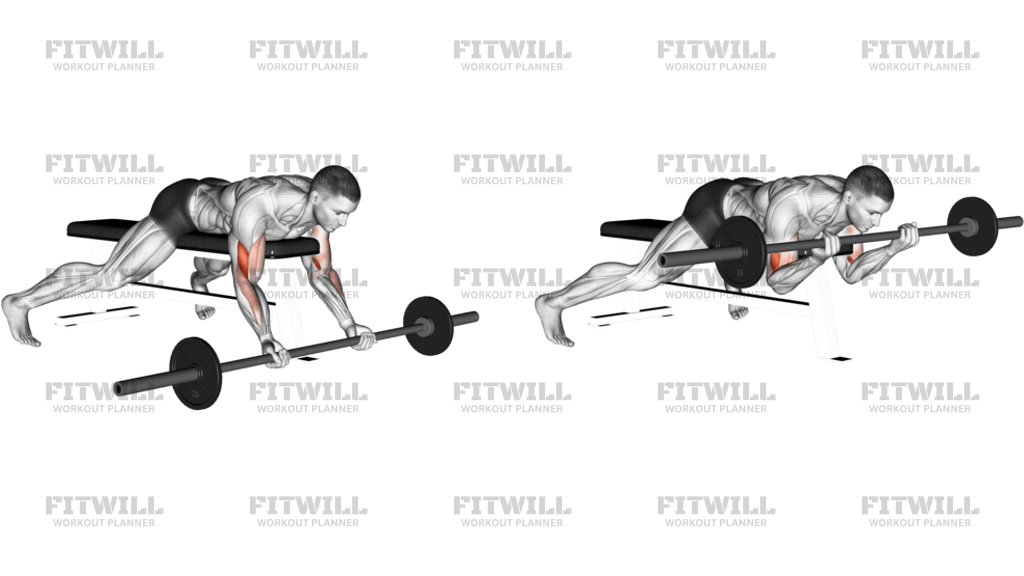
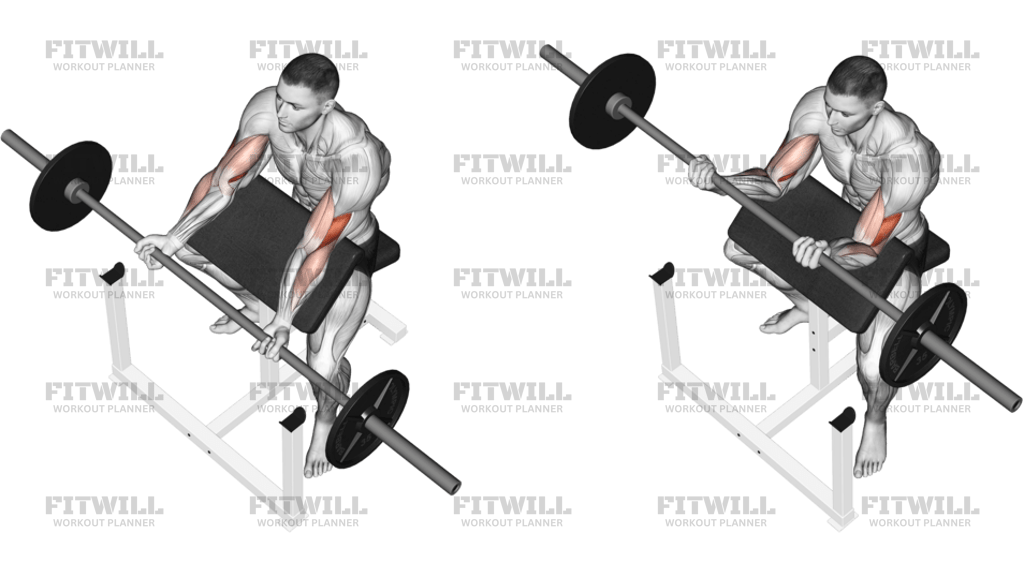
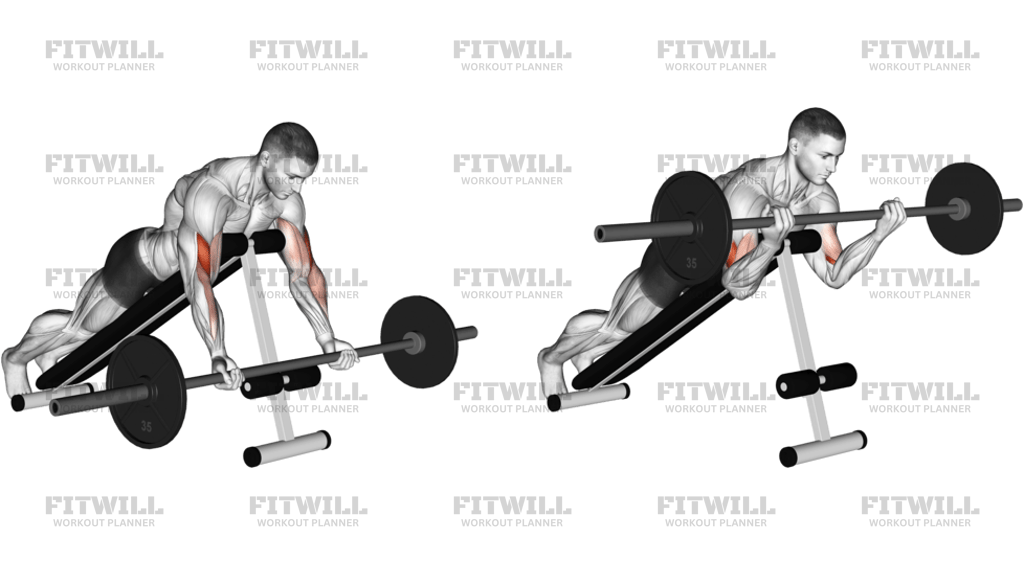
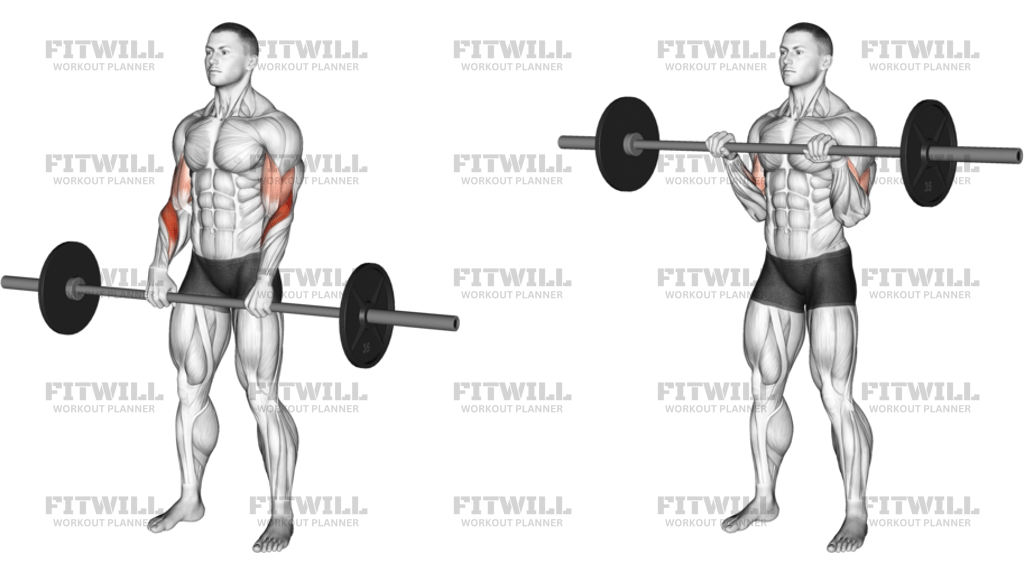
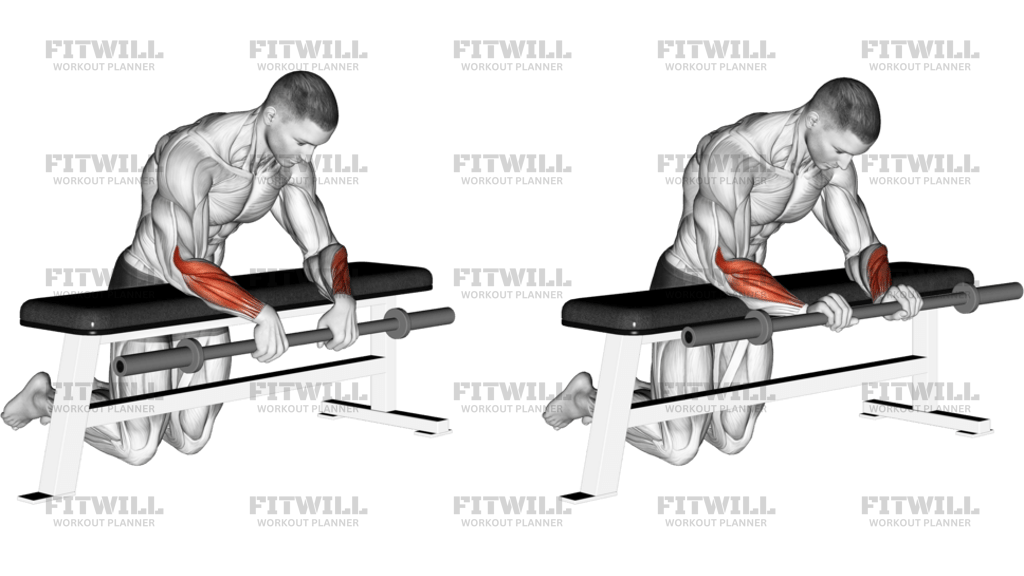
Barbell Palms Down Wrist Curl Over A Bench is a strict forearm isolation exercise that uses a pronated barbell grip and bench support to train the muscles that extend the wrist. The setup in the image shows the lifter kneeling close to the bench with the forearms braced on the pad and the hands hanging just beyond the edge so the wrists can move freely. That bench contact matters: it keeps the upper arms quiet and lets the wrists do the work instead of turning the set into a cheat movement.
This variation is especially useful when you want to build forearm endurance, wrist control, and balanced arm development without loading the shoulders or trunk heavily. The main technical emphasis is on the wrist extensors and the brachioradialis, with the biceps and surrounding forearm muscles helping stabilize the elbow and grip. In training plans, it fits well as accessory work after bigger pulling or gripping exercises, or as a low-fatigue forearm finisher.
The rep should look small and deliberate. Starting with the bar held in an overhand grip, let the wrists hinge so the knuckles drop and the bar rolls slightly toward the fingers, then curl the hands back up by lifting the knuckles toward the forearms. The forearms stay planted on the bench the entire time. If the bar starts drifting into the palms, the elbows lift, or the shoulders rock forward, the load is too heavy or the setup is too loose.
Bench height and body position change how clean the repetition feels. Kneeling behind the bench, sit close enough that the forearms are fully supported but the wrists still clear the pad edge. A stable torso and quiet upper arm position keep tension on the target muscles and reduce strain on the elbows. The exercise is usually performed for moderate to higher reps because the range is short and the local forearm burn arrives quickly.
Use it when you want direct wrist work with minimal equipment and a clear resistance curve. It is beginner friendly if the load is light and the range stays pain-free, but it still rewards patience and precision. Stop the set if the wrists start to ache sharply, the bar slips in the hands, or the motion turns into a shoulder-driven lift instead of a controlled wrist curl.
[ Workout Log & Planner ]
Put your next workout in Fitwill
Keep your plan and training log ready when you are.


Instructions
- Kneel behind the bench and place both forearms flat on the pad with your wrists hanging just past the front edge.
- Hold the barbell with an overhand grip and let it rest in your hands with the knuckles facing down.
- Keep your elbows and upper arms planted on the bench so only the wrists move.
- Lower the bar by letting the wrists hinge down and the bar roll slightly toward the fingers.
- Curl the bar back up by lifting the knuckles toward the forearms until the wrists are fully extended.
- Pause briefly at the top without bouncing or shrugging the shoulders.
- Return under control to the bottom position and keep tension on the forearm extensors.
- Breathe out as you curl up and breathe in as you lower the bar.
- Reset your grip between reps if the bar starts sliding.
Tips & Tricks
- Keep the forearms heavy on the pad; if your elbows float, the bench is no longer doing its job.
- Use a light barbell first, because the lever arm makes this movement feel harder than it looks.
- Let the bar travel toward the fingertips on the way down so the wrist extensors get a full lengthened position.
- Do not turn the rep into a forearm raise by lifting the shoulders or rocking the torso forward.
- A short pause at the top usually gives a better forearm contraction than forcing a bigger range.
- If the wrists ache on the bottom half, reduce the range slightly and keep the hands moving in a smooth arc.
- Keep the grip firm enough to control the bar, but avoid crushing it so hard that the forearms fatigue before the wrists.
- Higher reps work well here because the movement is small and the target muscles fatigue locally very fast.
Frequently Asked Questions
What does Barbell Palms Down Wrist Curl Over A Bench work most?
It mainly targets the wrist extensors and the forearm muscles that control wrist extension.
Why are the forearms resting on the bench?
The bench locks the upper arms in place so the wrists do the work instead of the shoulders or elbows helping.
Should my palms face down the whole time?
Yes. The overhand grip is what shifts the emphasis toward the wrist extensors and makes this a reverse wrist curl variation.
How far should the bar move over the bench?
The motion is small and controlled. Let the wrists hinge through a comfortable arc rather than chasing a big range with extra body movement.
Can beginners do this exercise?
Yes, as long as the bar is light and the wrists stay pain-free. It is a simple accessory movement that rewards control more than strength.
What is a common mistake with the barbell grip?
Letting the bar sit too deep in the palm or squeezing so hard that the wrists cannot move smoothly are both common problems.
What rep range makes sense for this movement?
Moderate to higher reps are usually best because the range is short and the forearms fatigue quickly.
Can I swap in dumbbells instead of a barbell?
Yes. Dumbbells can work well if you want a simpler setup or if the barbell feels awkward on your wrists.