Barbell Palms Up Wrist Curl Over A Bench
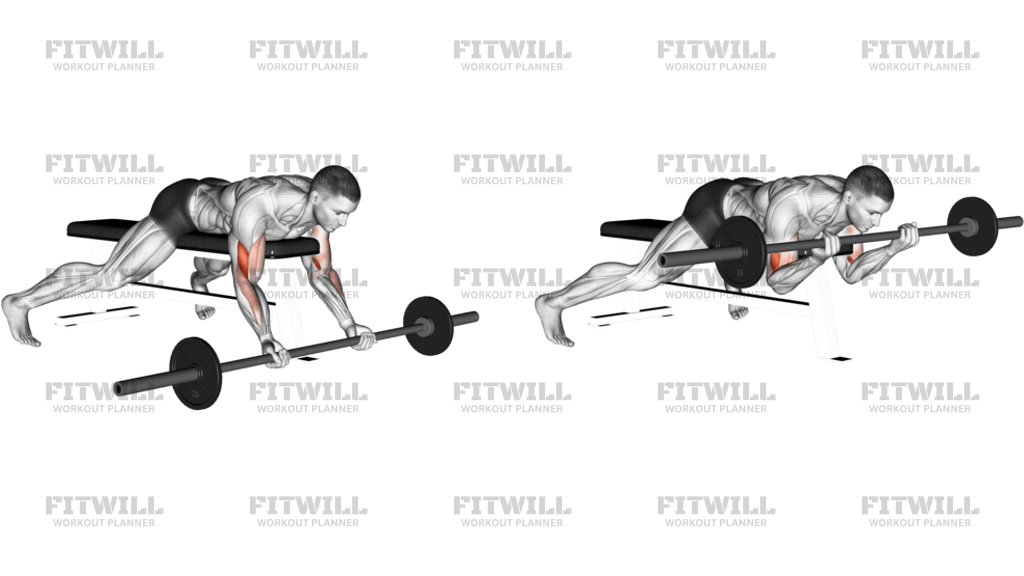
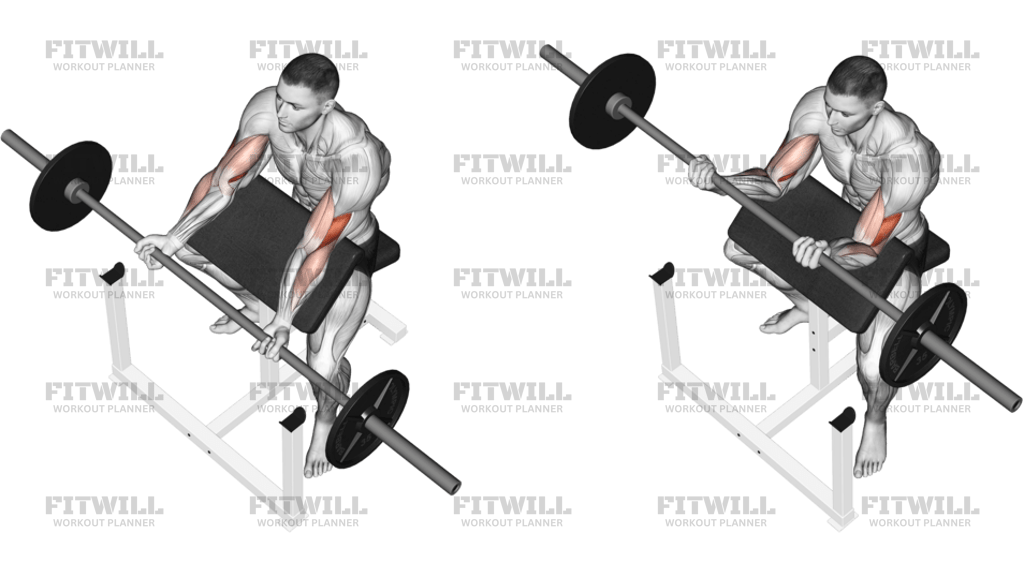
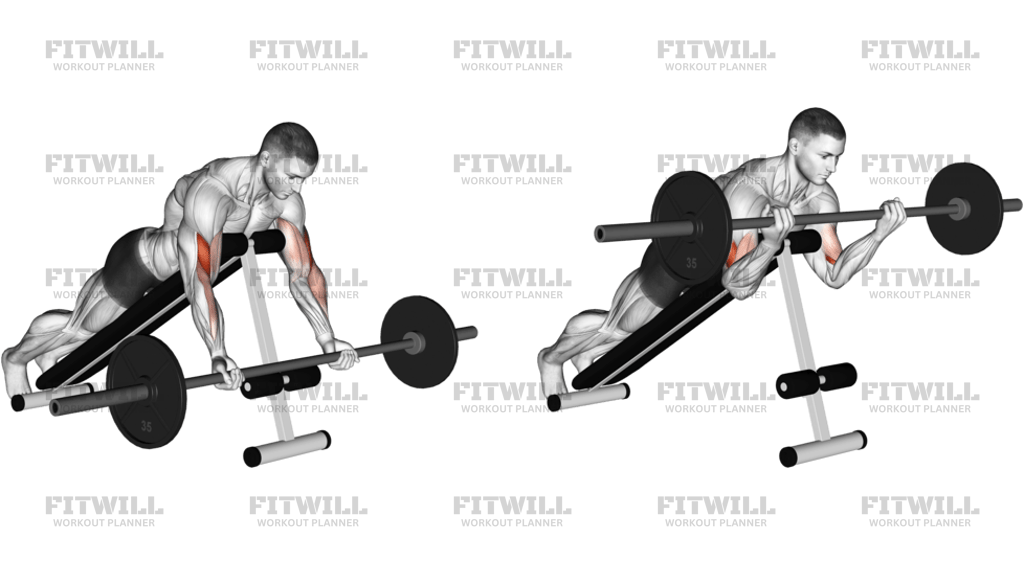
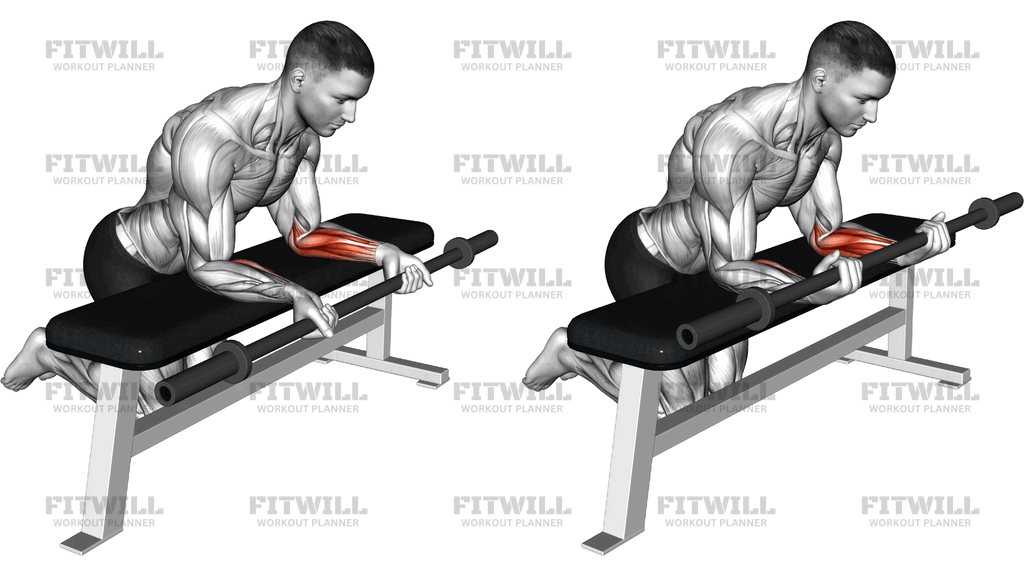
Barbell Palms Up Wrist Curl Over a Bench is a supported forearm isolation exercise that trains wrist flexion with the forearms braced on a bench and the barbell hanging under the hands. In the image, the lifter kneels behind the bench, leans the forearms onto the pad, and lets the wrists move freely past the front edge so the forearm muscles can do the work instead of the shoulders or torso.
This movement is built to load the wrist flexors through a small but very specific range. Because the elbows and forearms are supported, the exercise asks for patience and precision: the bar should roll into the fingers on the way down, then be curled back into the palm by closing the wrists, not by shrugging, rocking, or pulling with the arms. That support makes it useful for direct forearm development, grip-related strength work, and accessories that complement pulling sessions.
The bench setup matters because it locks the upper body in place and changes the line of force. Keep the forearms flat and stable, with the wrists just beyond the pad so the bar can travel through full wrist flexion and extension. If the bench is too high, the wrists lose freedom; if the shoulders drift forward or the body slides, the set turns into a whole-body compensation drill instead of a forearm isolation exercise.
Use a slow, deliberate tempo and stop the descent before the bar pulls the wrists into a painful stretch. On each rep, open the hand slightly as the bar lowers, then close the fingers and curl the bar back into the palms while the forearms stay planted. Exhale as you curl up, inhale as you lower, and keep the elbows quiet. The goal is a clean burn in the wrist flexors, not a bigger load or a bigger body swing.
Barbell Palms Up Wrist Curl Over a Bench fits well as accessory work after back training, arm work, or any session where you want direct forearm volume. It is usually beginner-friendly when loaded lightly and performed with strict control, but the small joints involved make ego lifting a bad trade. If the wrists ache in an irritated way, shorten the range, reduce the load, or choose a different forearm movement until the tissue tolerates the pattern comfortably.
[ Workout Log & Planner ]
Put your next workout in Fitwill
Keep your plan and training log ready when you are.


Instructions
- Kneel behind a flat bench and place both forearms across the pad with your wrists and hands hanging just past the front edge.
- Hold a barbell with an underhand grip so the bar rests in your palms and your wrists can flex freely below the bench.
- Keep your chest close to the bench, shoulders quiet, and elbows pinned to the pad before the first rep begins.
- Let the bar roll slightly toward your fingers as you lower it, allowing the wrists to open under control.
- Curl the bar back up by closing your hands and flexing the wrists until the knuckles lift and the forearms contract hard.
- Pause for a brief squeeze at the top without letting the shoulders or torso help.
- Lower the bar slowly back to the bottom position while keeping the forearms planted on the bench.
- Breathe out as you curl up and breathe in as you lower, then repeat for the planned reps.
Tips & Tricks
- Keep the forearms fully supported on the bench; if your elbows drift off the pad, the set becomes much less specific to the wrist flexors.
- Let the bar settle deeper into the fingers at the bottom, then re-close the hand to finish the curl instead of trying to lift with the whole arm.
- Use a narrow enough bench position that your wrists can hang freely past the edge without the plates or sleeves hitting the pad.
- Stop the lowering phase before the wrists feel sharply stretched or pinched; this exercise should feel like tension, not joint compression.
- Keep the shoulders relaxed and down so you do not turn the rep into a front-delt or biceps effort.
- A lighter bar is usually better here because wrist flexors respond well to clean reps and long tension, not to cheating for load.
- Move slowly enough that you can feel the forearm muscles shorten on the way up and lengthen on the way down.
- If your hands start to slide on the bar, reset your grip rather than squeezing harder and losing wrist position.
- Stop the set when you can no longer keep the forearms flat against the bench and the wrists moving alone.
Frequently Asked Questions
What does Barbell Palms Up Wrist Curl Over a Bench train most?
It primarily trains the wrist flexors in the forearms, with the forearms supported so the wrists do most of the work.
Why are my forearms resting on the bench?
The bench supports the elbows and forearms so you can isolate wrist flexion instead of turning the movement into a standing curl.
Should the bar move in my fingers during the rep?
Yes, a small roll toward the fingers on the way down is normal. Re-close the hand and curl the bar back into the palm on the way up.
What is the most common mistake with this exercise?
Letting the elbows lift off the pad or using the shoulders to help the bar up. Keep the forearms planted and let the wrists do the movement.
Can beginners use Barbell Palms Up Wrist Curl Over a Bench?
Yes. Start light and learn the wrist path first, because the small joints around the wrist need a controlled load.
Where should I feel the top of the rep?
You should feel a hard squeeze through the inner forearm and wrist flexors, not a shrug in the shoulders or a pull in the biceps.
How heavy should I load the barbell?
Heavy enough to challenge the forearms, but light enough that you can keep the wrists moving smoothly through the full range.
What if the stretch at the bottom feels uncomfortable?
Shorten the range of motion, reduce the load, or stop just before the wrist reaches an irritated position.