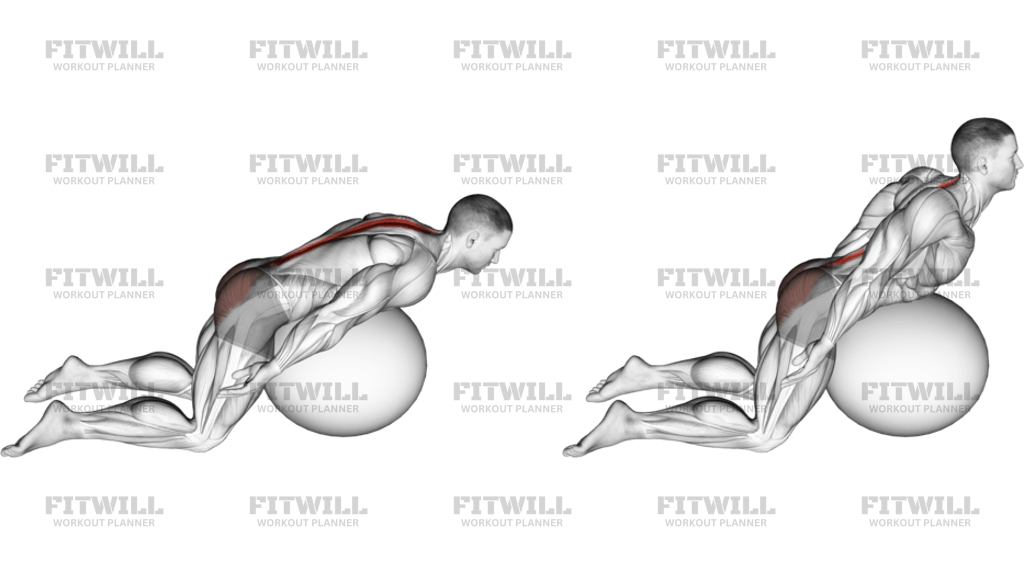
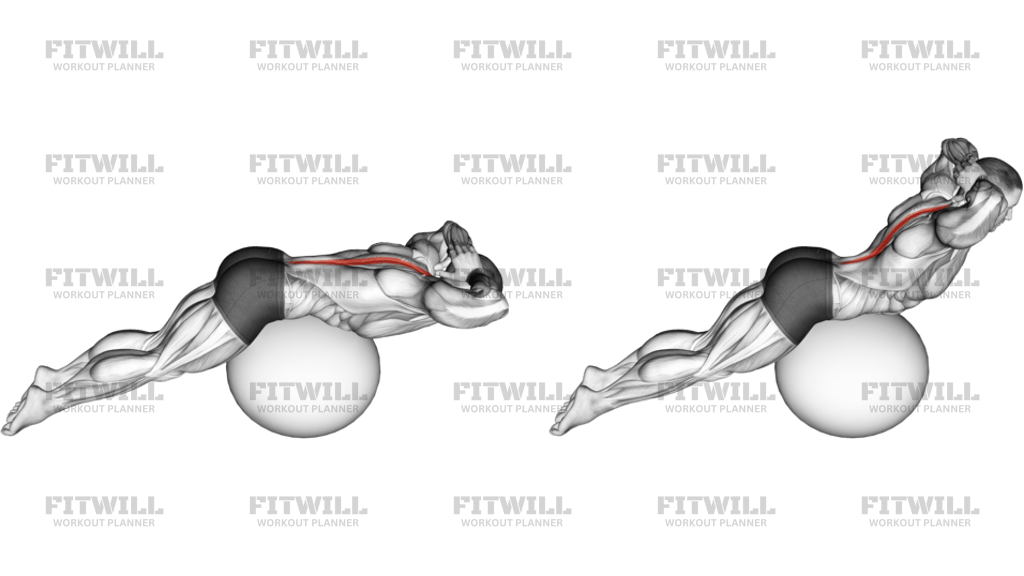
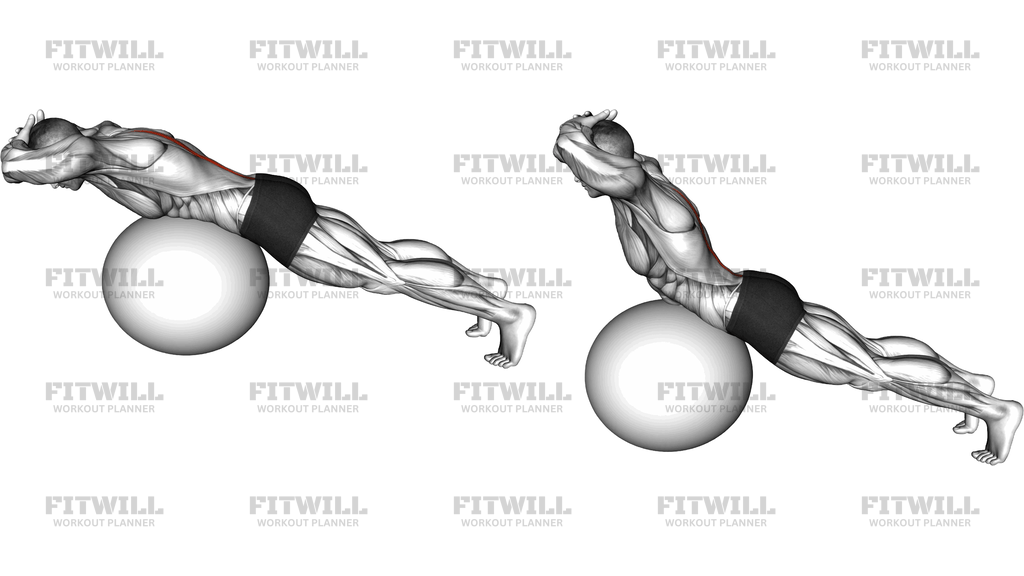
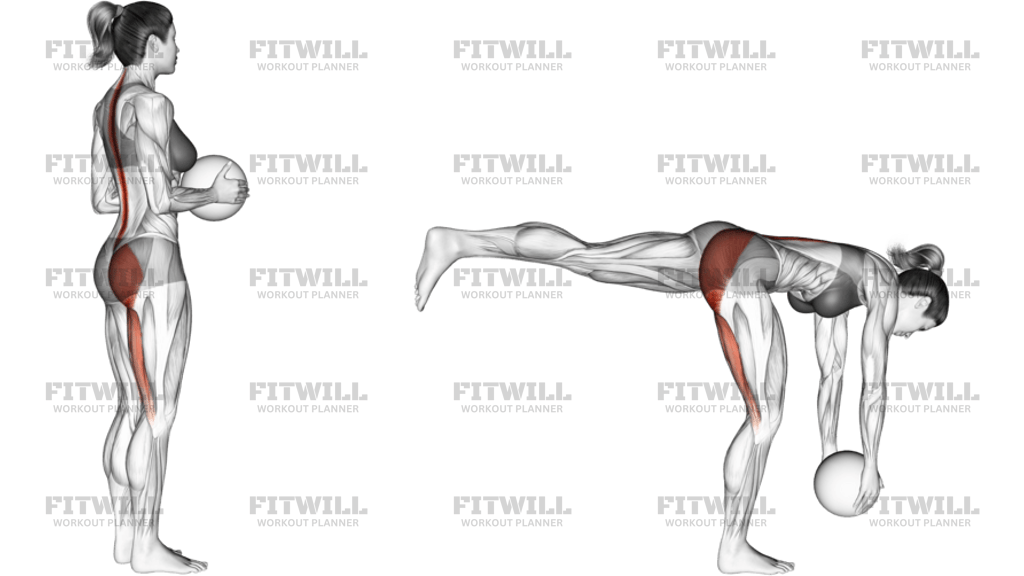
Exercise Ball One Legged Diagonal Kick Hamstring Curl
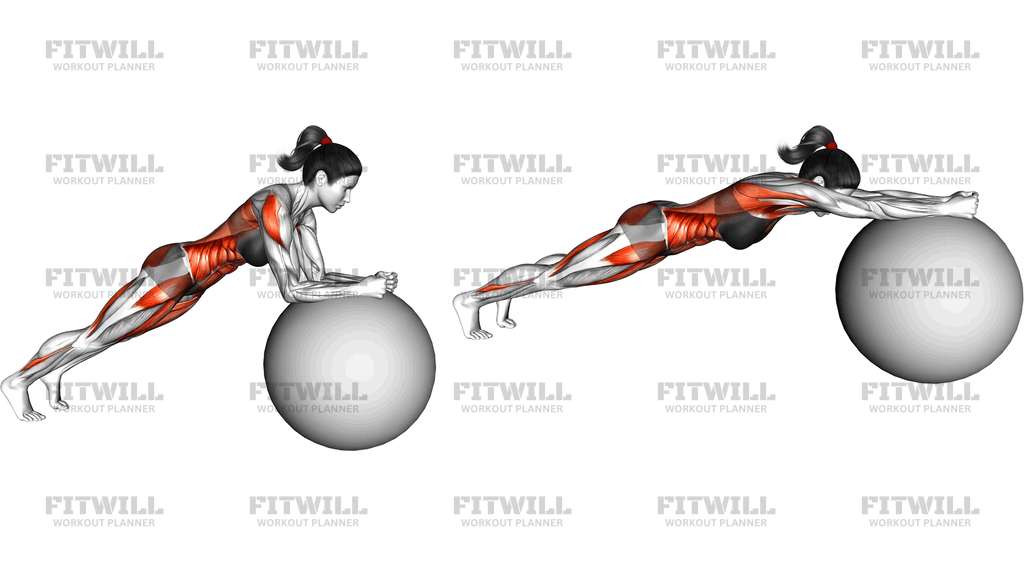
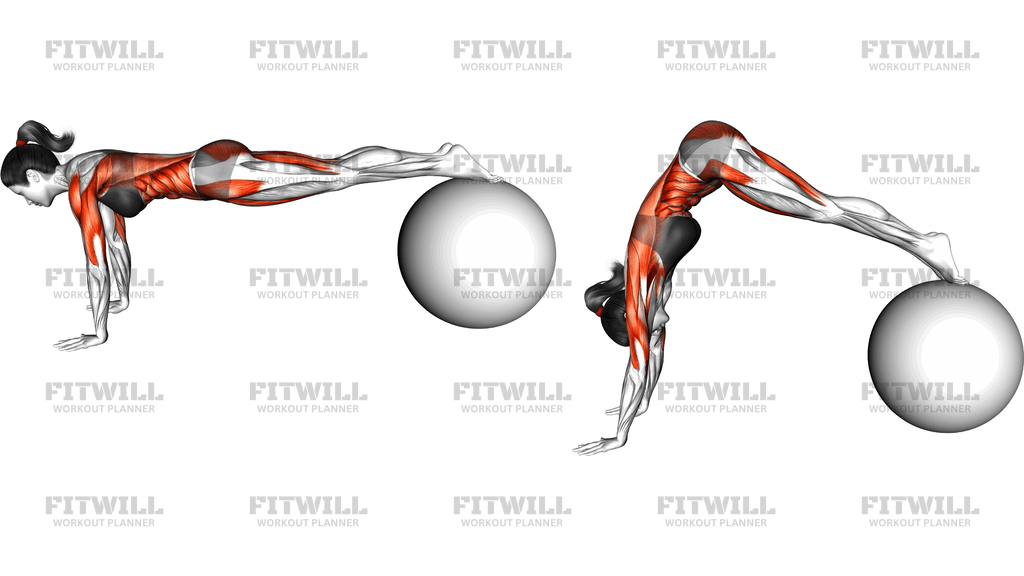
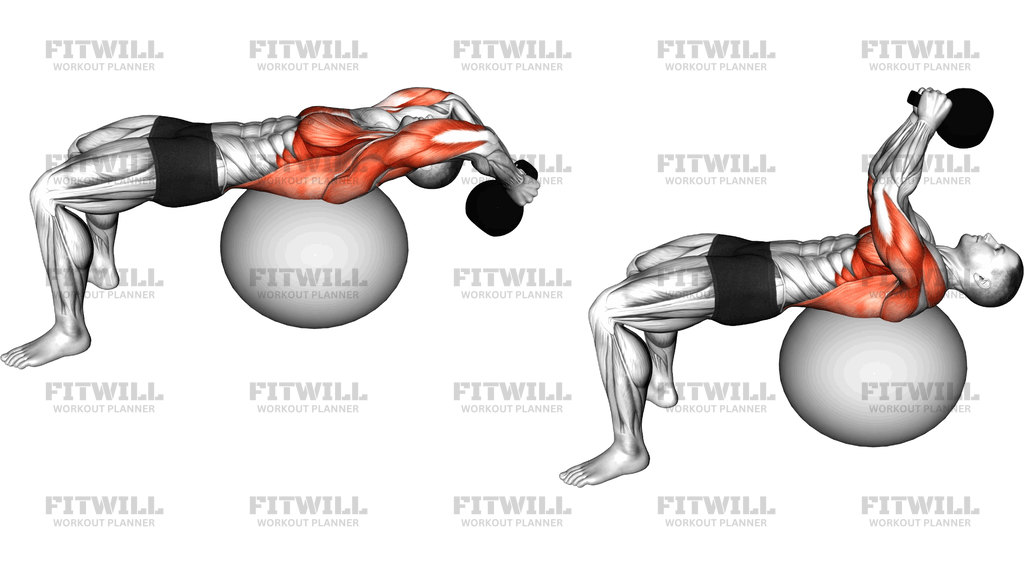
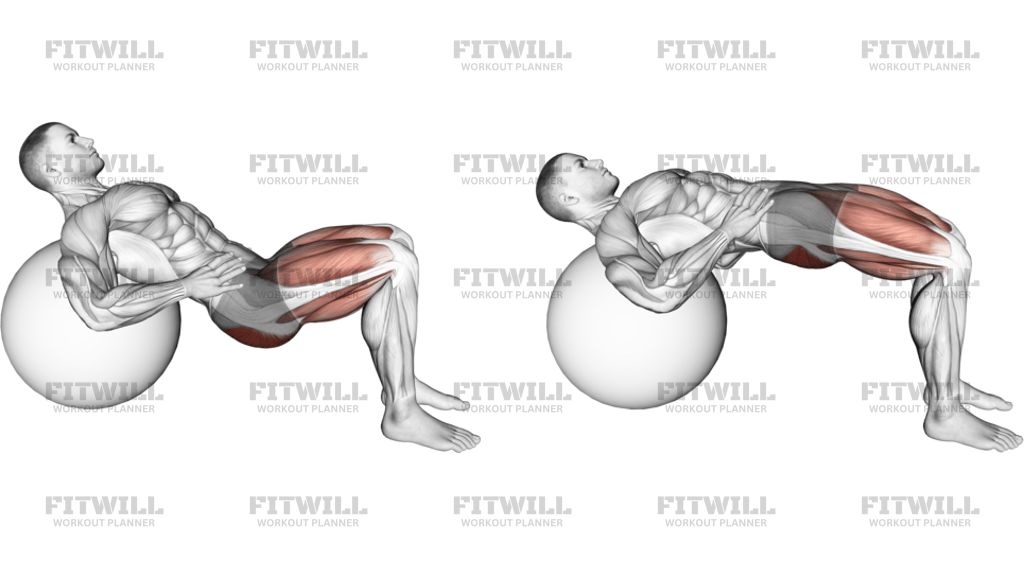
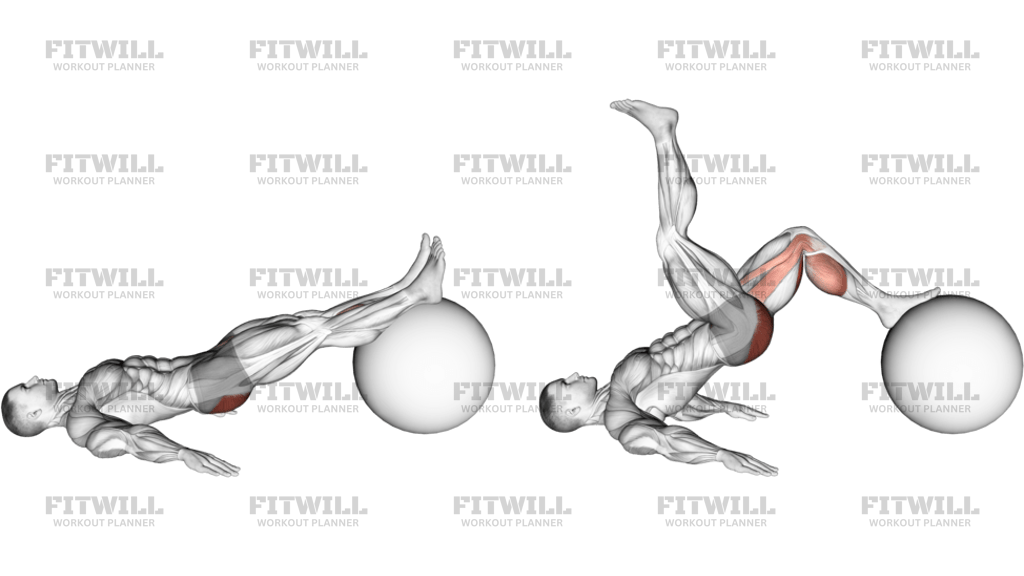
Exercise Ball One Legged Diagonal Kick Hamstring Curl is a single-leg posterior-chain exercise performed with the heel on a stability ball while the torso stays supported on the floor. The image shows a bridge position with one foot working on the ball and the other leg lifted, which puts the load on the glutes and hamstrings while the core keeps the pelvis from twisting.
This movement is best thought of as a bridge, curl, and controlled return. You lift the hips into extension, pull the ball in with the working heel, then guide it back out without letting the lower back take over. The diagonal emphasis comes from keeping the working leg and hip line controlled instead of letting the ball drift straight or the pelvis rotate. That makes the rep harder on the hamstrings and more demanding on anti-rotation control.
Because the exercise is done with one leg at a time, setup matters more than speed. The planted heel should stay on the ball, the lifted leg should not drop the hips, and the ribs should stay down so the torso does not over-arch. If the ball rolls too fast or the hips sag, the hamstrings lose tension and the movement turns into a lower-back compensation drill. Clean reps should feel smooth, deliberate, and slightly unstable in a way that you can still control.
Use this exercise when you want unilateral hamstring work with a strong glute and core component, especially in accessory work, athletic preparation, or lower-body training focused on control. It is useful for learning how to keep hip extension while the leg moves, which carries over to sprinting, jumping, and other single-leg tasks. The best load is not external weight but body position, tempo, and precision.
The safest version is the one you can keep square through the pelvis, with the lifted leg quiet and the working heel doing the pulling. If you feel cramping in the hamstring, shorten the range and slow the return. If the low back is doing the work, lower the hips slightly and reset the brace before the next rep.
[ Workout Log & Planner ]
Put your next workout in Fitwill
Keep your plan and training log ready when you are.


Instructions
- Lie on your back with one heel centered on the stability ball and the other leg lifted off the floor, then set your arms out wide for support.
- Press the working heel into the ball, tighten your glutes, and lift your hips until your shoulders, hips, and working knee form a long line.
- Keep the lifted leg quiet and the ribs down so the pelvis stays level instead of rolling toward one side.
- Pull the ball toward your hips by bending the working knee and dragging the heel back through the ball.
- As you curl in, keep the foot tracking on a controlled diagonal rather than letting the ball drift straight or wobble out of line.
- Squeeze the glute at the top of the curl without over-arching your lower back.
- Extend the leg back out slowly until the heel returns to the long, bridge position.
- Lower the hips only if needed to reset, then repeat for the planned reps before switching sides.
Tips & Tricks
- Keep the working heel on the center of the ball so the curl stays smooth instead of sliding off to one edge.
- If the ball moves too much, reduce the bridge height first; a lower hip position is better than a shaky high bridge.
- The lifted leg should stay active, but it should not kick so hard that it twists the pelvis.
- Think about dragging the ball back with the heel, not pushing it with the toes.
- Pause for a second in the curled position if you want more hamstring tension and less bounce.
- Stop the rep before your lower back takes over; this movement should feel like hip extension, not spinal extension.
- Use a slower return than pull-in so the hamstrings stay under tension through the lengthened phase.
- If hamstrings cramp, shorten the range and keep the ball closer to your hips at the top.
Frequently Asked Questions
What muscles do Exercise Ball One Legged Diagonal Kick Hamstring Curl work most?
The main work goes to the glutes and hamstrings, with the core helping keep the pelvis level on the ball.
Is the lifted leg supposed to stay straight or bent?
Keep it lifted and controlled, usually straight or softly bent, so it does not help drive the curl or twist the hips.
Where should my heel sit on the stability ball?
Place the heel near the center of the ball so the working leg can pull the ball in without slipping off to one side.
Why does this exercise feel different from a regular ball hamstring curl?
The single-leg setup removes a lot of support, so the glutes, hamstrings, and core have to control rotation and keep the pelvis steady.
Should I feel this more in my hamstring or glute?
Both are involved, but the hamstring usually gives the strongest pull sensation while the glute helps keep the hips lifted.
What is the most common mistake on the ball?
Letting the hips drop or rotate as the ball comes in is the biggest error, because it shifts the load away from the working leg.
Can beginners do this exercise safely?
Yes, but it is an advanced bodyweight variation, so beginners should start with short ranges and a slow tempo.
How do I make the diagonal kick part cleaner?
Keep the working leg and pelvis aligned as the ball moves, and avoid letting the foot or knee drift so far that the hips rotate.