Exercise Ball Prone Leg Raise
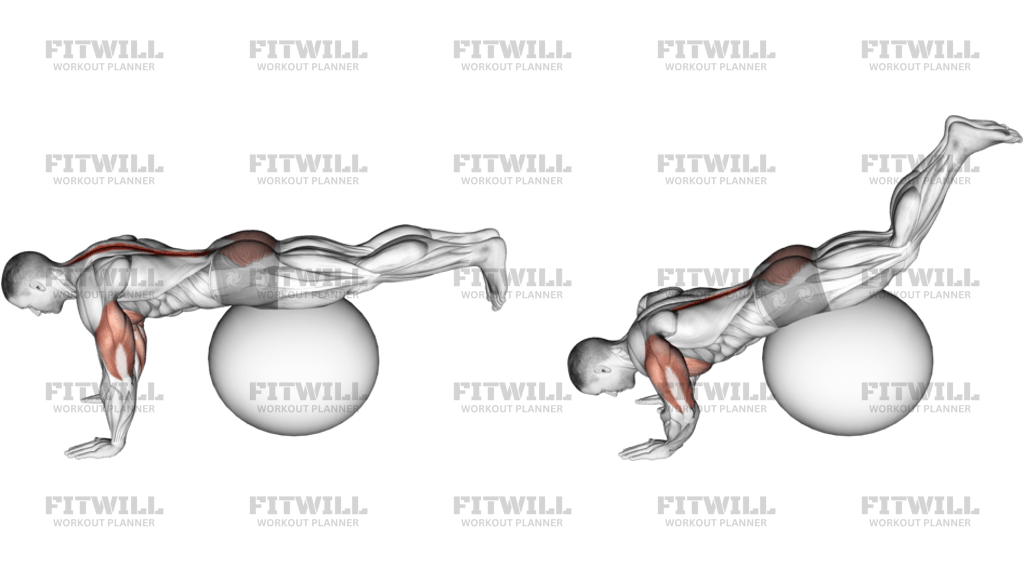
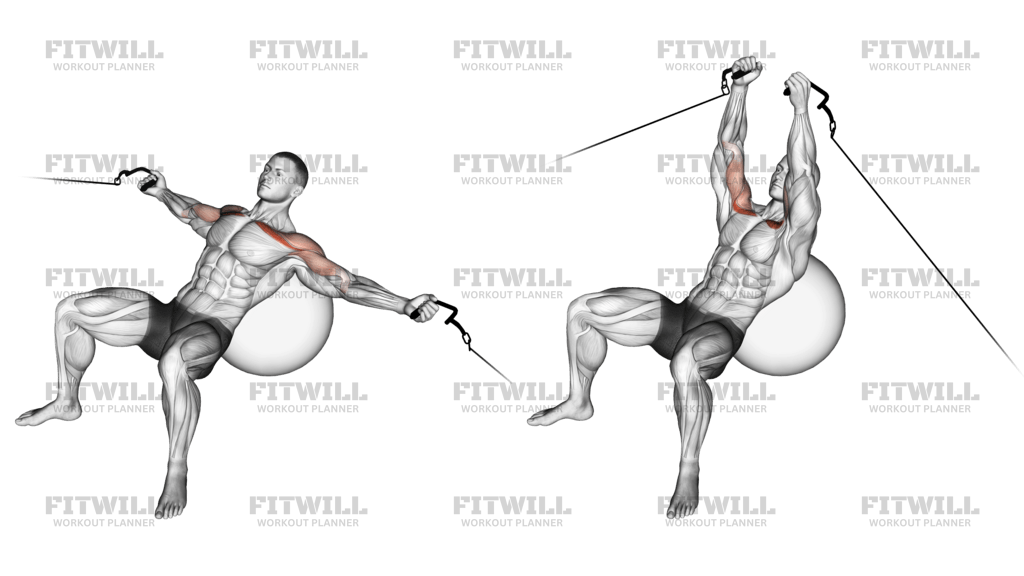
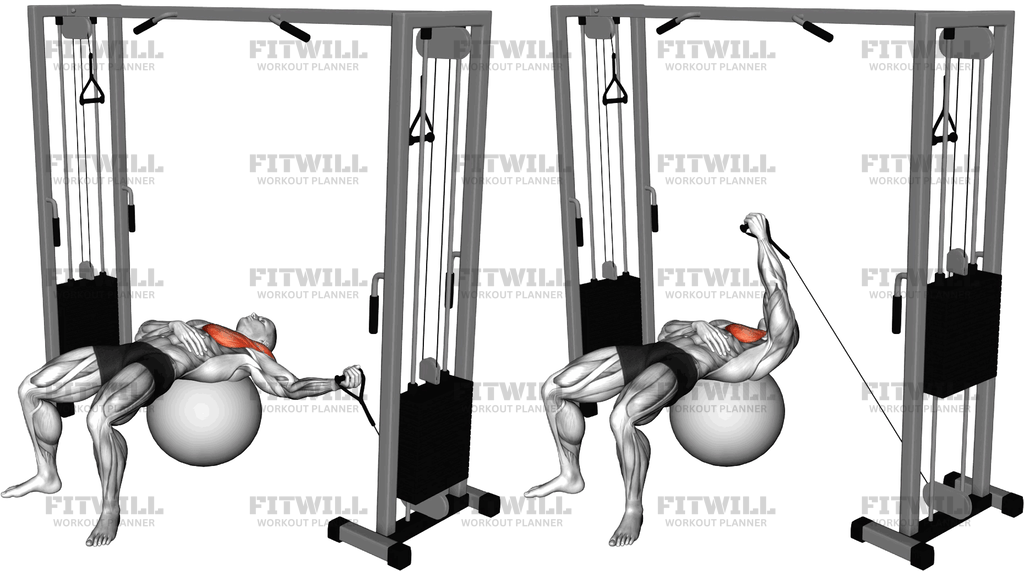
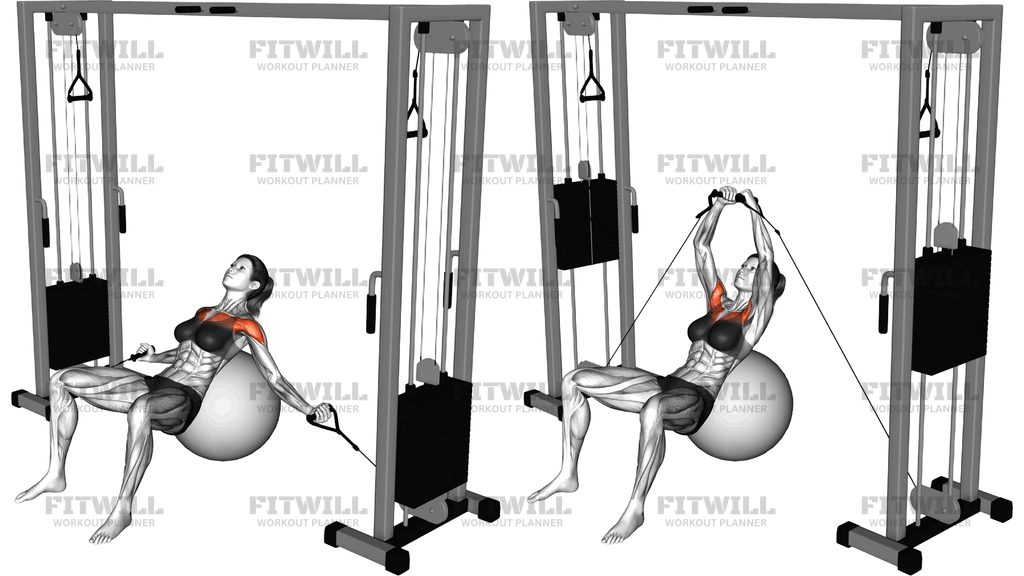
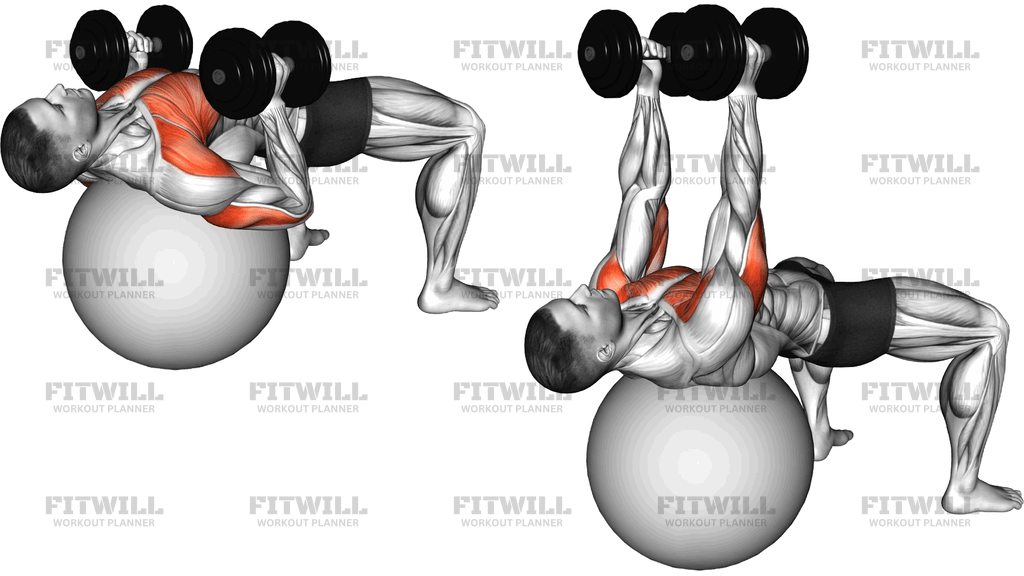
Exercise Ball Prone Leg Raise is a bodyweight posterior-chain exercise performed face down over a stability ball with the hands on the floor for support. The image shows the torso draped across the ball while the legs extend behind the body and lift from the hips. That setup makes the movement look simple, but it demands real control because the ball shortens the base of support and makes it easy to arch the low back or swing the legs.
This exercise is usually used to train the glutes, hamstrings, and the small stabilizers around the lower back and trunk. The hips should do the work while the torso stays quiet. If you lift the legs by pinching the ribs up, throwing the feet, or letting the shoulders collapse into the floor, the repetition turns into a balance drill instead of a clean hip extension pattern. Keeping the ball positioned under the lower abdomen and pelvis helps the body stay organized.
The goal of each rep is to raise the legs with a steady squeeze through the glutes and hamstrings, then lower them under control before the next rep. Because the hands are planted on the floor, they are there to help you balance, not to press the body forward or turn the exercise into an upper-body support hold. A smooth tempo matters more than height: a smaller lift with the pelvis stable is better than a bigger lift that bends the spine.
This movement fits well in accessory work, warmups, posterior-chain sessions, or core-focused training when you want to reinforce hip extension without loading the spine heavily. It is also useful for people who need a low-equipment glute and hamstring option. Beginners can use it if they keep the range modest and the body steady, but the ball can still make the movement feel awkward at first, so setup and breathing matter.
If the rep feels like it is coming from your low back, reset the ball position, shorten the lift, and slow the lowering phase. The clean version should feel controlled through the trunk and strong through the back of the hips, with no jerking and no loss of alignment from the first rep to the last.
Fitwill
Log Workouts, Track Progress & Build Strength.
Achieve more with Fitwill: explore over 9600 exercises with images and videos, access built-in and custom workouts, perfect for both gym and home sessions, and see real results.
Start your journey. Download today!




Instructions
- Place the stability ball under your lower abdomen and pelvis, then walk your hands to the floor so your shoulders, forearms, and palms can help you balance.
- Extend both legs straight behind you with the toes pointed slightly down and the feet off the floor or lightly skimming it at the start.
- Brace your midsection and keep your ribs pulled in so your low back does not sag over the ball.
- Squeeze your glutes to lift both legs behind you from the hips, keeping the knees long and the torso still.
- Raise the legs only as high as you can without twisting the pelvis or overextending the low back.
- Pause for a moment at the top while keeping pressure even through both hands and the center of the ball.
- Lower the legs slowly until they are back near the start position, keeping tension in the glutes and hamstrings.
- Reset your breath at the bottom and repeat for the planned number of reps, then step off the ball carefully.
Tips & Tricks
- Keep the ball under the pelvis, not the ribs, so the lift comes from hip extension rather than a dramatic low-back arch.
- Think about pushing the heels back and slightly up; that cue usually finds the glutes better than trying to kick the feet toward the ceiling.
- If the shoulders feel crowded, walk the hands a little farther forward so your support base is wider and the chest is not jammed into the floor.
- A smaller leg lift with a steady pelvis is better than a high swing that rocks the ball side to side.
- Keep the knees nearly straight, but do not lock them aggressively; a soft line through the legs usually feels smoother.
- Move slowly on the way down because the lowering phase is where many people lose trunk position and start hinging through the low back.
- Exhale as the legs rise and inhale as they lower if that rhythm helps you keep the core organized.
- Stop the set when you can no longer keep both hips square over the ball or when the neck starts straining to hold position.
Frequently Asked Questions
What muscles does Exercise Ball Prone Leg Raise work?
It mainly trains the glutes and hamstrings, with the core and lower-back stabilizers helping you stay balanced on the ball.
Can beginners perform this exercise?
Yes, but beginners should keep the leg lift small and use the hands on the floor for extra balance until the torso stays steady.
Where should the stability ball sit during the rep?
The ball should support the lower abdomen and pelvis so the hips can extend freely without the chest collapsing onto it.
What is the most common mistake on this movement?
Most people lift too high and turn the rep into a low-back arch, which takes tension away from the glutes and hamstrings.
Should my knees stay straight or bent?
Keep the legs long with only a soft knee bend if needed for comfort; bending the knees too much changes the exercise into a different pattern.
How high should I lift my legs?
Lift only until the hips extend and the pelvis stays square; if the height comes from the spine arching, the range is too big.
Why are my hands on the floor in the image?
The hands provide support and balance so the torso can stay stable while the legs move; they should not be used to push the body around.
How can I make this exercise harder?
Slow the lowering phase, pause at the top, or lift one leg at a time while keeping the pelvis level on the ball.