Leg Curl On Stability Ball
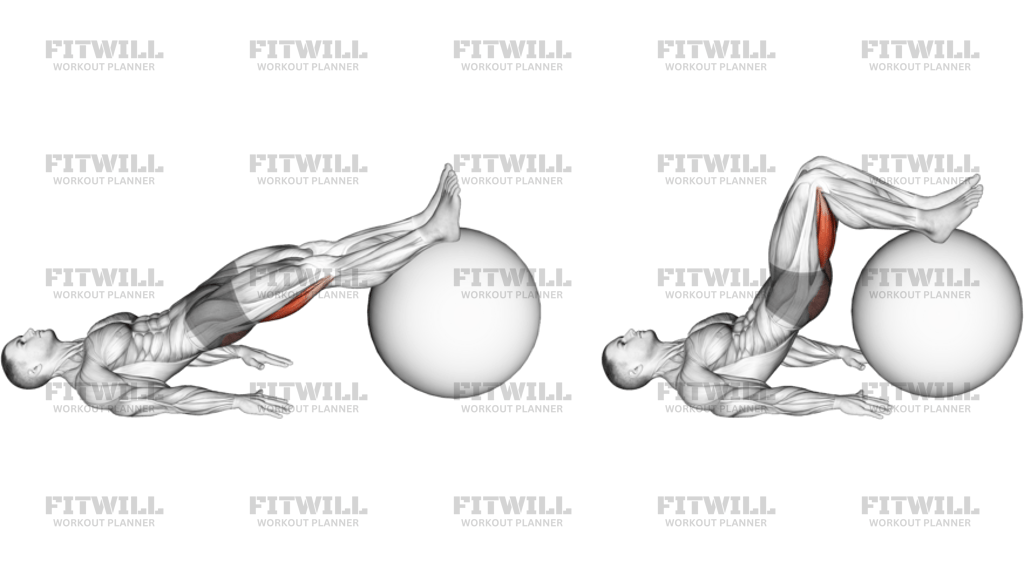
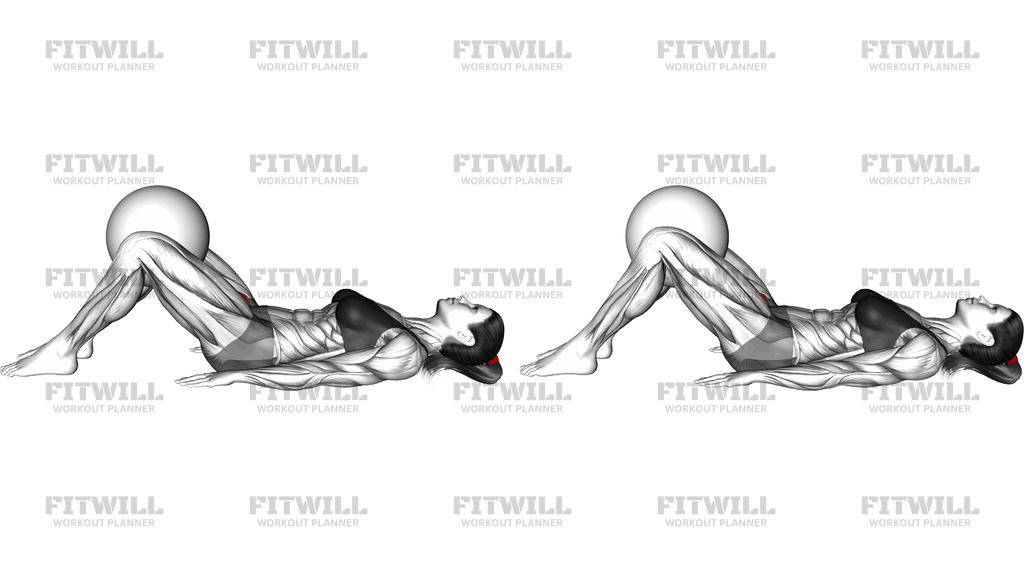
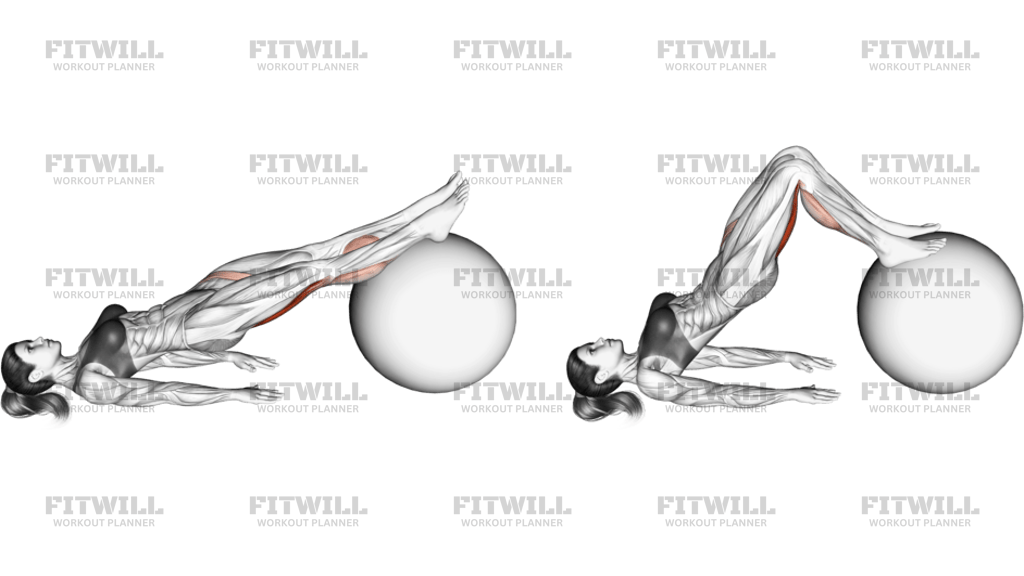
Leg Curl on Stability Ball is a bodyweight hamstring exercise that combines a glute bridge with a rolling knee curl. You lie on your back with your heels on the ball, lift your hips, and then pull the ball toward you by bending the knees. The movement challenges the hamstrings through both hip extension and knee flexion, while the abs and glutes work hard to keep the pelvis from sagging or twisting.
Because the ball is unstable, the setup matters as much as the curl itself. If your heels are too low on the ball or your hips start too low, the hamstrings will not have a strong line of pull and the set turns into a balance drill. A better rep starts with the shoulders heavy on the floor, arms relaxed for support, and the body already organized into a straight line from shoulders to ankles before the first curl begins.
At the top of the bridge, the body should stay tall enough that the hips do not drop when the knees bend. The ball should roll toward the glutes in a smooth path, not jerk forward. On the way back out, straighten the legs only as far as you can while keeping the hips lifted and the ball under control. If the pelvis tilts, the lower back arches, or the heels slide off the ball, shorten the range and slow the tempo.
This exercise is useful for hamstring strength, posterior-chain coordination, and trunk stability. It is often programmed as accessory work after a main lift, as a home-workout hamstring movement, or as a bodyweight option when you want more challenge than a floor bridge but less load than a machine curl. It can also expose side-to-side differences because one leg may drift more than the other as the ball moves.
Treat each rep like a controlled curl plus bridge hold rather than a fast leg swing. Keep your chin slightly tucked, breathe out as you curl the ball in, and reset the hips at the top before every rep. The exercise should feel strongest in the hamstrings and glutes, with the core acting as the brace that keeps the whole line steady.
[ Workout Log & Planner ]
Put your next workout in Fitwill
Keep your plan and training log ready when you are.


Instructions
- Lie on your back with your heels on top of the stability ball and your arms slightly out to the sides for balance.
- Press your heels into the ball, lift your hips, and form a straight line from shoulders through knees to ankles.
- Keep your ribs down and your chin slightly tucked so your neck and lower back stay neutral.
- From the bridge, bend your knees and roll the ball toward your glutes without letting the hips drop.
- Keep the heels planted on the ball as long as possible so the curl comes from the hamstrings, not from sliding the feet.
- Pause briefly when the ball is close to your hips and the knees are deeply bent.
- Slowly extend the knees to roll the ball back out, maintaining the bridge and control all the way to the start.
- Inhale as you extend back out, exhale as you curl in, and reset the hips before the next rep.
- Lower your hips to the floor only after the final rep or if you lose control of the ball.
Tips & Tricks
- Start with your heels, not your calves, on the ball; that gives the hamstrings a stronger leverage point.
- If the ball squirms around, widen your arms or press them into the floor a little harder for balance.
- Do not chase a huge range if your hips collapse at the top; a shorter, clean curl is more useful than a sloppy full curl.
- Keep the bridge high enough that your glutes stay engaged, but not so high that your ribs flare and your lower back takes over.
- A slower return phase makes the hamstrings work harder and usually reveals whether you are actually controlling the ball.
- If both feet keep sliding, move the ball slightly closer to your body before starting the set.
- Squeeze the ball inward with your heels instead of letting the ankles flop outward.
- Bodyweight is enough for a hard set here, so add tempo or pauses before looking for external load.
- Stop the set when the hips start sagging on the first half of the curl, because that is usually when the hamstrings begin to lose the line of pull.
Frequently Asked Questions
What muscles work most during a stability ball leg curl?
The hamstrings do most of the work, especially as you curl the ball in. The glutes and core help keep the bridge high and the pelvis steady.
Why do I need to keep my hips lifted the whole time?
The high bridge keeps tension on the hamstrings and prevents the movement from becoming a simple floor slide. If the hips drop, the lower back usually starts doing too much of the work.
Where should my feet be on the stability ball?
Place your heels on the top of the ball with your toes relaxed and pointing upward. If your feet are too low or too far apart, the ball is harder to control.
Should I bend my knees first or lift my hips first?
Lift your hips first, then start the curl. The bridge creates the right line of tension before the ball moves.
Why does the ball keep sliding away from me?
Usually the hips are not high enough, the heels are not planted firmly enough, or the return phase is too fast. Re-set the bridge and slow the lowering portion.
Can beginners do this exercise?
Yes, but it is easier if they can already hold a stable glute bridge. Start with small curls and focus on keeping the ball steady before trying a full range.
How is this different from a machine leg curl?
The ball version adds balance and core demand because the feet are not fixed in place. It also asks the hips to stay extended while the knees bend.
What is the most common form mistake?
Letting the hips sag while the knees bend is the biggest problem. That usually turns the movement into a lower-back compensation instead of a hamstring curl.
How can I make the exercise harder without weights?
Use a slower eccentric, add a pause when the ball is close to your glutes, or perform single-leg variations once the two-leg version is solid.