Dumbbell Lying Pronated Grip Maltese Hold Isometric
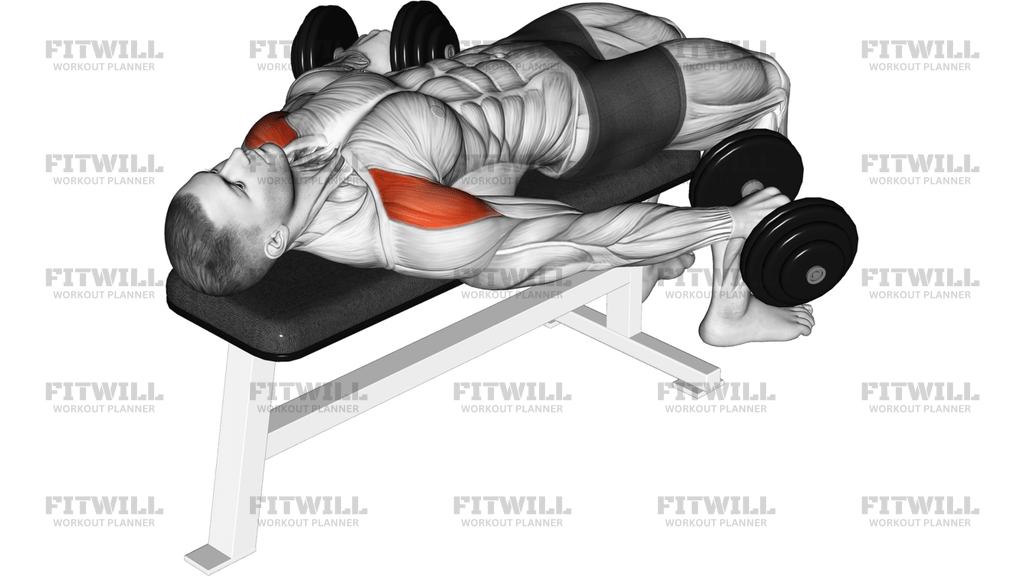
Dumbbell Lying Pronated Grip Maltese Hold Isometric is a flat-bench shoulder hold built around resisting the pull of the dumbbells in a wide, open arm position. You lie on your back, grip the dumbbells with your palms facing down, and settle into the stretched portion of a fly-like position without turning it into a dynamic rep. The goal is not to press the weights up and down; the goal is to own the bottom position with steady tension and clean alignment.
This movement puts the delts under a long lever and asks the upper back, triceps, chest, and forearm grip to stabilize the shoulders. The bench matters because your head, upper back, and pelvis need support while your feet stay planted and your ribs stay controlled. If the shoulder blades slide, the neck tightens, or the elbows drift, the hold stops being a target-muscle drill and becomes a joint stress test.
Set up with light dumbbells, soft elbows, and wrists stacked over the handles. Open the arms only as far as you can maintain a level chest, neutral neck, and even shoulder height, then freeze the position for the programmed time. Breathe in short, quiet breaths instead of bracing so hard that the ribs flare or the shoulders climb toward your ears. Every second of the hold should look the same from left to right.
This is best used as an advanced accessory for shoulder endurance, body control, or an isometric finisher after heavier pressing or fly work. It is usually more useful with very light loading and short holds than with a lot of weight, because the lever arm magnifies poor control quickly. If the front of the shoulder pinches, shorten the range, lower the load, or switch to a more supported variation before the form breaks down.
[ Workout Log & Planner ]
Put your next workout in Fitwill
Keep your plan and training log ready when you are.


Instructions
- Lie face up on a flat bench with your head, upper back, and hips supported, then plant both feet firmly on the floor.
- Hold a dumbbell in each hand with a pronated grip and stacked wrists so the handles stay steady in your palms.
- Start with the arms slightly bent and the dumbbells near your thighs, then brace your ribs down before you move.
- Lower the dumbbells out to the sides until the upper arms are slightly below bench height and the shoulders feel loaded.
- Keep the elbow angle fixed and let the shoulder joint, not the elbows, control the hold.
- Freeze in the open position for the programmed time while taking short, controlled breaths.
- Keep both dumbbells level and avoid twisting your torso or letting one shoulder drift forward.
- Bring the dumbbells back in under control and reset your shoulder position before the next hold.
Tips & Tricks
- Use much lighter dumbbells than you would for a regular fly, because the long lever makes the hold much harder than it looks.
- Keep a small bend in the elbows and lock that angle in place for the whole hold.
- Pin your shoulder blades to the bench without cranking them together so hard that the chest pops up.
- Keep your wrists neutral and the dumbbell plates level so the hands do not roll backward as fatigue builds.
- Set the dumbbells only as low as you can keep the front of the shoulders calm and even.
- Breathe in short, quiet puffs instead of holding your breath and flaring the ribs.
- Watch for one arm drifting lower than the other, which usually means the hold is too heavy or too long.
- Stop the set the moment your neck tightens, your shoulders shrug, or the elbows start to bend more.
Frequently Asked Questions
What muscles does Dumbbell Lying Pronated Grip Maltese Hold Isometric train most?
The delts are the main target, with the upper back, triceps, chest, and grip helping to stabilize the hold.
Is this a pressing exercise?
No. It is an isometric hold in the open position, so you are resisting the load instead of pressing it through a range.
Where should the dumbbells be during the hold?
Keep them out to the sides in a wide, open position, with the upper arms slightly below bench height and the wrists stacked over the handles.
How heavy should I use for this movement?
Much lighter than a normal fly or press. If the shoulders shrug or the elbows drift, the load is too heavy.
Should my palms face up or down?
Use a pronated grip, so the palms face down and the dumbbells stay steady in the hands.
Can beginners do this exercise?
It is usually better for experienced lifters. Beginners should start with a shorter hold, a smaller range, or a more supported variation.
What is the biggest form mistake?
Letting the shoulders roll forward or letting the elbow bend more as fatigue increases.
What should I do if I feel pain in the front of the shoulder?
Shorten the range, lower the load, or stop the set. A pinch in the front of the shoulder is a sign the position is too aggressive.