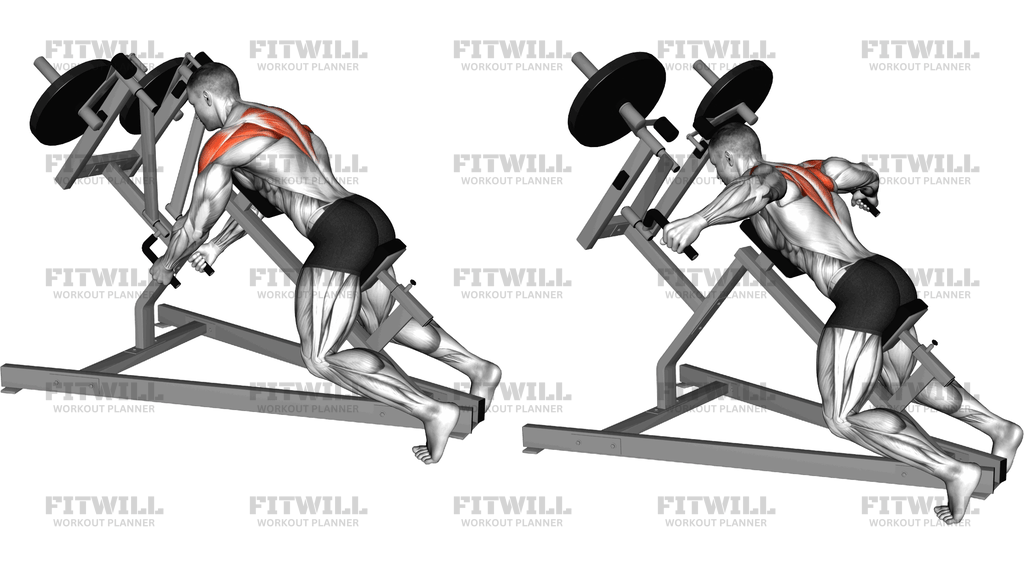
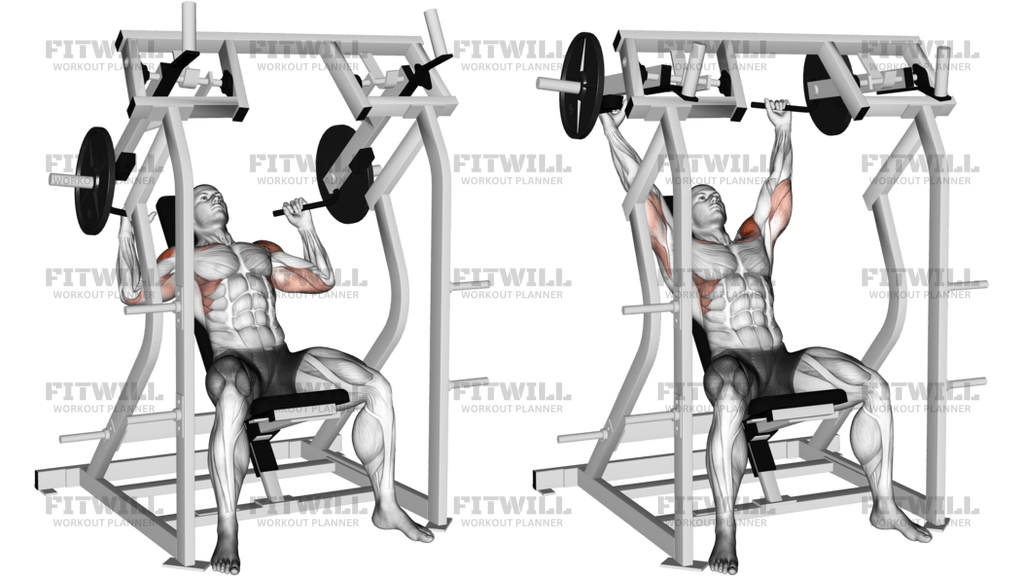
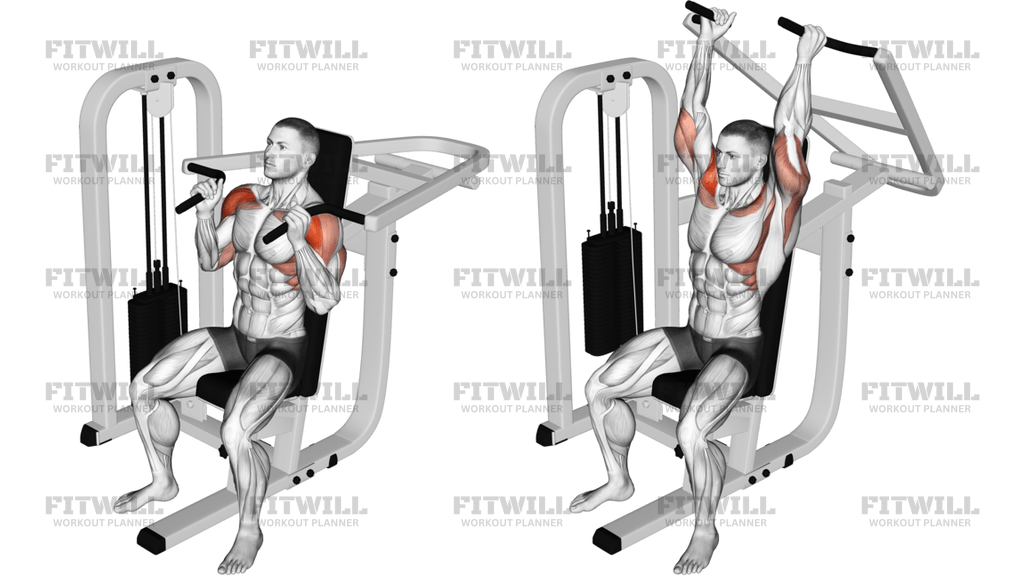
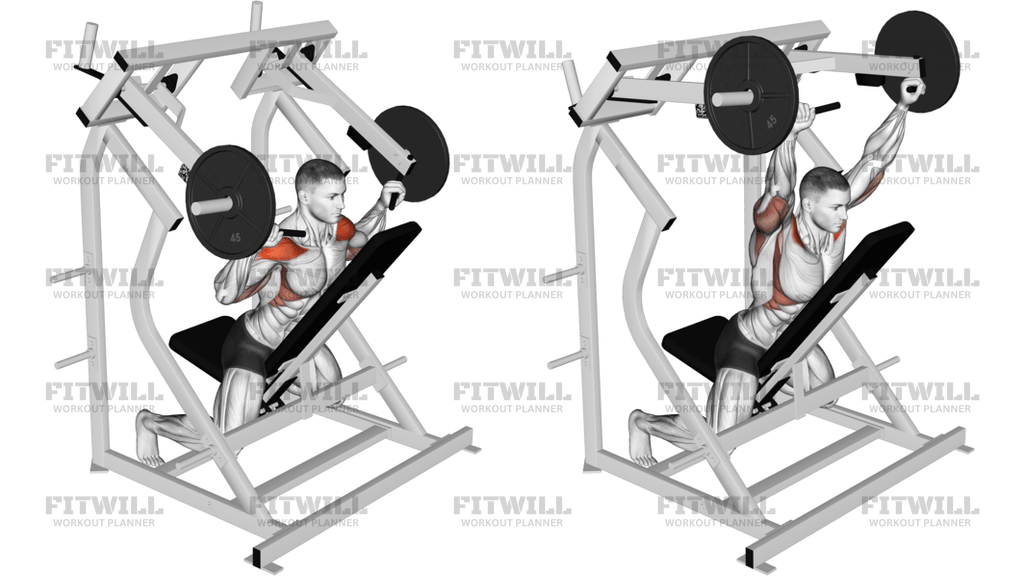
Lever Seated Shoulder Press
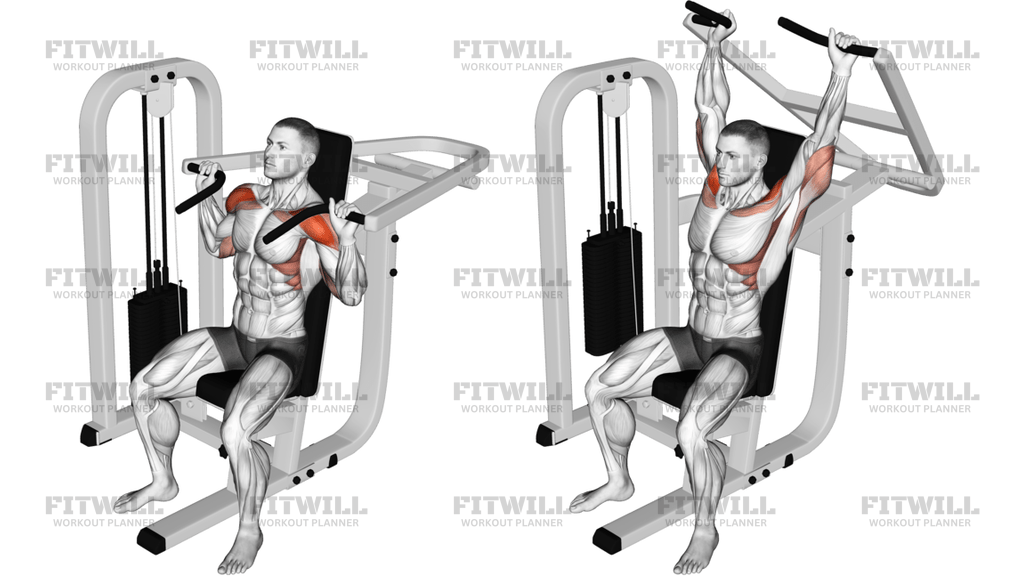
Lever Seated Shoulder Press is a machine-based overhead press that trains the shoulders with strong support from the triceps and upper chest. The seated back pad and fixed lever path make it easier to keep the torso still, so the working muscles can produce force without the balance demands of a free-weight press. It is a good option when you want shoulder strength, hypertrophy, or safer high-rep pressing with a consistent range of motion.
The exercise places its main emphasis on the delts, with the triceps, upper chest, and upper back helping to stabilize and finish the press. In anatomy terms, the primary work centers on the Deltoids, with assistance from Triceps brachii, Pectoralis major, and Trapezius. Because the machine follows a set arc, the quality of the setup matters: if the seat is too low or too high, the handles will start in an awkward position and the shoulders will lose a clean pressing line.
Start by sitting deep against the back pad with both feet planted and the hips centered on the seat. Set the seat so the handles begin around shoulder height, not down near the lap and not so high that you have to shrug to reach them. With the wrists stacked over the elbows and the chest lifted without over-arching the lower back, the press can move smoothly through the machine’s path instead of turning into a body-driven shove.
From the bottom position, drive the handles upward and slightly inward along the machine’s natural arc. Keep the head neutral, the ribs down, and the shoulders away from the ears as the elbows extend. At the top, finish the rep without slamming the joints into lockout; the goal is strong overhead extension with control, not a forced reach. Lower the handles slowly until the upper arms return to a comfortable shoulder-level position, then reset your breath before the next rep.
This movement works well as a main shoulder accessory, a hypertrophy exercise after heavier pressing, or a stable pressing option for lifters who want less balance demand than dumbbells or a barbell. It is also useful when you need a repeatable range and consistent tension from rep to rep. Keep the motion pain-free, avoid letting the lower back take over, and stop a set if the shoulders start to roll forward or the machine path becomes jerky.
[ Workout Log & Planner ]
Put your next workout in Fitwill
Keep your plan and training log ready when you are.


Instructions
- Sit fully back against the pad with your feet flat on the floor and your hips centered on the seat.
- Adjust the seat so the handles start at about shoulder height and your elbows are slightly below or in line with your hands.
- Grip the handles firmly with wrists straight, then set your chest tall without arching your lower back.
- Pull your shoulder blades down and lightly back so the shoulders stay anchored against the pad.
- Brace your torso and press the handles up along the machine's arc until your arms are nearly straight.
- Keep your neck long and your ribs stacked as the handles travel overhead.
- Lower the handles under control until your elbows return to a comfortable shoulder-level start position.
- Reset your breath at the bottom and repeat for the planned reps without bouncing.
Tips & Tricks
- If the seat is too low, the press starts with the elbows behind the wrists and the front delts take a beating; raise the seat until the handles line up with the shoulders.
- Keep your wrists stacked over your elbows so the force goes straight into the handles instead of folding the wrists back.
- Do not chase a huge range if the bottom position pinches the front of the shoulder; stop just before the humerus rolls forward.
- Press with the shoulders down, not shrugged toward the ears, especially as you approach lockout.
- Keep the rib cage from flaring up to finish the rep; the machine should move, not your lower back.
- Use a slower lowering phase than pressing phase to keep tension on the delts and avoid dropping into the bottom position.
- A neutral or slightly angled grip is usually friendlier on the shoulders than forcing the elbows out wide if the machine allows it.
- Choose a load that lets you finish every rep smoothly; if the handles jerk or collide at the top, the set is too heavy.
Frequently Asked Questions
What muscle does Lever Seated Shoulder Press target most?
The main target is the delts, especially the front and middle portions of the shoulders.
Why use the seated leverage machine instead of free weights?
The back pad and fixed path make it easier to keep the torso stable and press with repeatable form.
Where should the handles start at the bottom?
They should start around shoulder height so you can press without shrugging or dumping the shoulders forward.
How far down should I lower the handles?
Lower them until the upper arms reach a comfortable shoulder-level position, but stop before the front of the shoulders feels pinched.
Should I lean back or arch my lower back to press more weight?
No. Keep your back against the pad and your ribs stacked so the shoulders do the work.
Can beginners use Lever Seated Shoulder Press?
Yes. The machine is beginner-friendly because it supports the body and reduces balance demands.
What are the most common mistakes on this machine?
Bad seat height, shrugged shoulders, excessive lower-back arch, and bouncing out of the bottom are the big ones.
What should I feel working during the press?
You should feel the shoulders doing most of the work, with the triceps helping as the handles approach the top.
Is this a good substitute for dumbbell shoulder press?
Yes, if you want a more stable pressing option with a fixed path and less balance demand.