Backward Jump
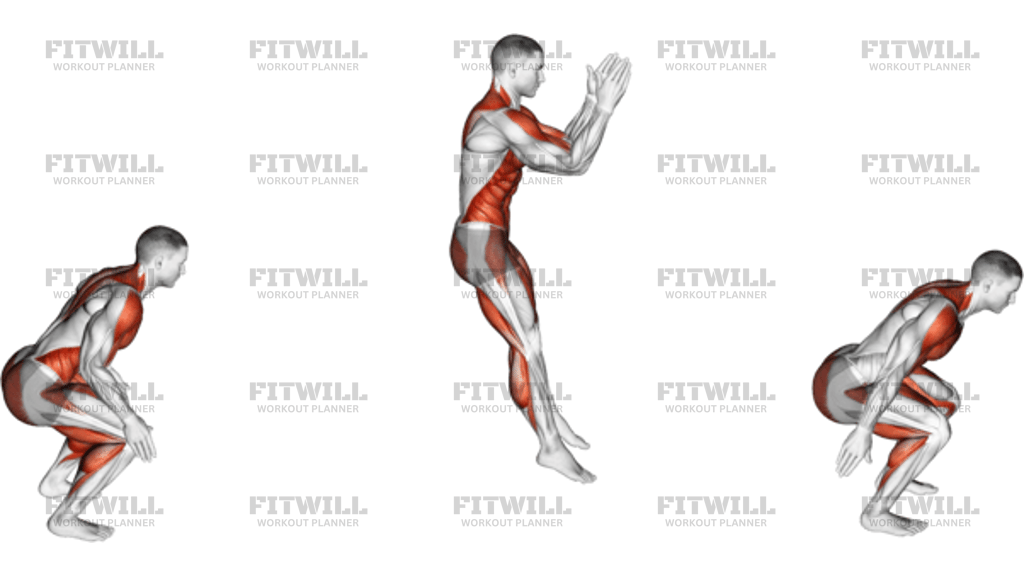
Backward Jump is a bodyweight plyometric drill built around an explosive jump backward or backward hop from an athletic squat, followed by a quiet landing back into control. The goal is not to cover the most distance possible. It is to produce a sharp, coordinated push from the floor and then absorb the landing with the same quality on every rep. That makes it useful for power, coordination, ankle stiffness, hip drive, and landing mechanics.
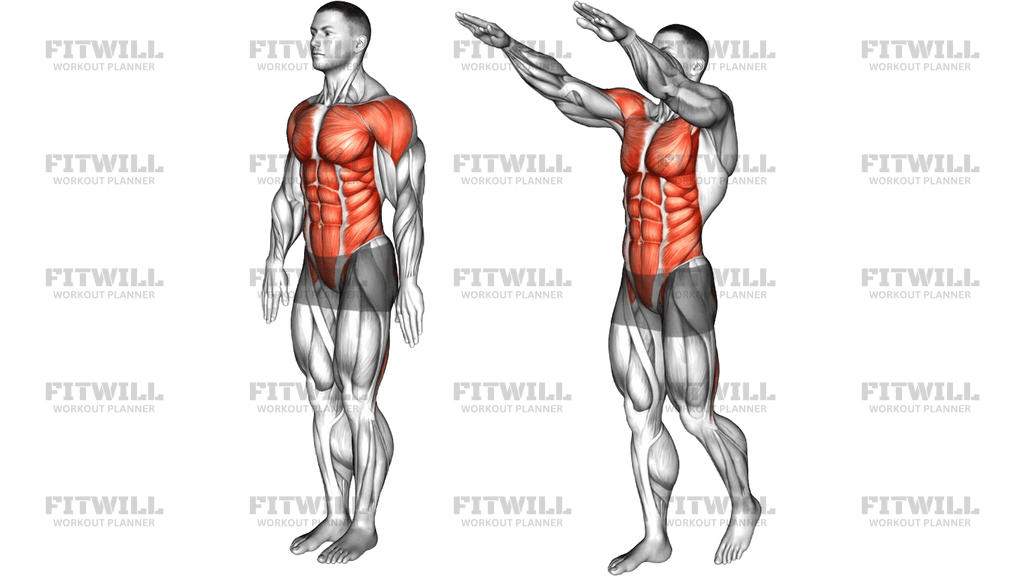
The movement shown in the image starts from a compact squat with the feet under control and the torso forward enough to stay balanced. From there, you load the legs, extend forcefully through the ankles, knees, and hips, and move into a brief airborne phase before landing again in a stable squat. Because the exercise is performed with body weight only, the quality of the landing matters more than the height or speed of the jump.
This drill teaches you how to create force without losing posture. The knees should track over the toes, the chest should stay organized, and the feet should reconnect to the floor quietly rather than slamming down. If the landing gets noisy or the body drifts too far forward, the rep usually turned into momentum instead of a controlled plyometric. Keep the rep small enough that you can reset immediately after each landing.
Backward Jump is often used in warm-ups, athletic prep, or short power blocks where you want fast force production without heavy loading. It can fit into circuits, but only if you can keep the jump crisp and the landing stable. The exercise is simple on paper and demanding in practice because every rep asks for timing, balance, and body control at the same time.
Fitwill
Log Workouts, Track Progress & Build Strength.
Achieve more with Fitwill: explore over 9600 exercises with images and videos, access built-in and custom workouts, perfect for both gym and home sessions, and see real results.
Start your journey. Download today!




Instructions
- Stand in a shoulder- to hip-width athletic stance with your knees softly bent and your arms in front of your torso.
- Lower into a compact squat by sending your hips back and keeping your chest balanced over midfoot.
- Brace your trunk and load evenly through the whole foot before the jump.
- Swing the arms only as much as needed and drive forcefully through the floor.
- Jump backward a short distance while fully extending your ankles, knees, and hips.
- Land softly on the balls of your feet first, then let the heels settle as you absorb into a squat.
- Keep the knees tracking in line with the toes and hold the landing long enough to feel stable.
- Reset your feet and posture before the next rep instead of bouncing immediately.
- Breathe out on the jump and inhale as you absorb and reset.
- Stop the set if you cannot land quietly and under control.
Tips & Tricks
- Think of the jump as a short backward hop, not a long leap across the floor.
- The landing should be quieter than the takeoff; loud contact usually means the rep was too aggressive.
- Keep the chest angled forward enough to stay balanced, but do not fold at the waist.
- Let the arms help with rhythm, not with flinging the body backward.
- Use a squat depth that you can reverse instantly without rocking forward.
- If your heels pop up and you cannot settle them on landing, shorten the jump.
- Keep the knees from caving inward when you touch down and absorb the force.
- Low reps work best here because each rep should feel explosive rather than fatigued.
- Use a non-slip surface with enough open space behind you before you start the set.
Frequently Asked Questions
What does Backward Jump train?
It trains lower-body power, coordination, landing control, and quick force production through the ankles, knees, and hips.
Is this just a squat jump?
No. A squat jump is usually vertical, while this drill uses a backward hop or jump with a controlled landing.
How far backward should I travel?
Only a short distance is needed. The rep should stay crisp enough that you can land balanced and reset immediately.
What should my feet do when I land?
Land on the balls of the feet first, then let the heels settle as you absorb into a stable squat.
Can beginners do Backward Jump?
Yes, but only with a small hop, low reps, and a focus on landing quietly before adding speed or distance.
What is the most common mistake?
Jumping too far and losing the ability to land softly, which usually turns the drill into a noisy, unstable landing.
How low should I squat before jumping?
Use a compact squat that lets you reverse direction quickly. If the bottom position feels slow, it is probably too deep.
How can I make this exercise harder?
Increase power and precision first, then add slightly more distance or use it in shorter, higher-quality sets.