Locust Yoga Pose Iron Man Pose
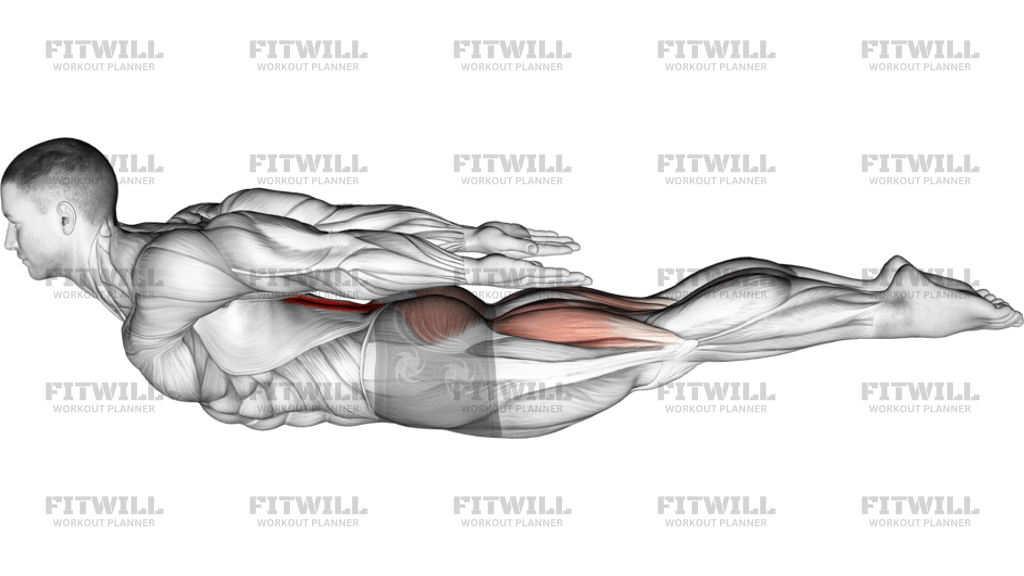
Locust Yoga Pose, also called Iron Man Pose, is a prone back-extension drill performed face down on the floor with the chest, arms, and legs lifted away from the ground. It is a bodyweight movement used to train the spinal extensors, glutes, upper back, and the muscles that hold the shoulders and neck in a long, organized position.
The pose matters because the start position determines whether the lift comes from the posterior chain or from momentum and neck tension. When you set the body long and still before each rep, the torso can rise as one unit and the lower back does not have to do all the work. That makes the exercise useful for posture control, posterior-chain activation, and low-load trunk endurance.
In the image, the body is lying prone with the face turned slightly forward, the arms reaching straight back beside the torso, and the legs extended and lightly together. The movement is small but deliberate: lift the chest, thighs, and arms just enough to create clean tension, then hold the shape briefly before lowering under control. The goal is a smooth arc through the spine and hips, not a dramatic back bend.
This exercise is often used in warmups, yoga sequences, rehab-style conditioning, and accessory work when you want to build endurance through the back of the body without loading the spine heavily. It can also help people learn how to keep the ribs tucked, the neck long, and the glutes active while the trunk is extended. The more the shoulders shrug or the chin juts forward, the less the rep resembles the intended pattern.
Treat each repetition as a posture drill as much as a strength drill. Lift only as high as you can keep the legs straight, the glutes active, and the neck in line with the rest of the spine. A clean locust is controlled, symmetrical, and easy to repeat across the full set.
Fitwill
Log Workouts, Track Progress & Build Strength.
Achieve more with Fitwill: explore over 9600 exercises with images and videos, access built-in and custom workouts, perfect for both gym and home sessions, and see real results.
Start your journey. Download today!




Instructions
- Lie face down on the floor with your legs straight, feet together or lightly separated, and your forehead hovering just above the ground.
- Reach both arms straight back alongside your torso so your palms face down or in slightly, and keep the shoulders wide rather than shrugged up.
- Set your ribs down, lightly brace your abdomen, and lengthen the back of your neck before you start the lift.
- Press the thighs into the floor, then lift the chest, arms, and legs a few inches as one long shape.
- Keep the chin slightly tucked and look down or slightly forward so the neck stays in line with the spine.
- Hold the top position briefly while squeezing the glutes and upper back without flaring the ribs hard.
- Lower the chest, arms, and legs back to the floor under control without collapsing or bouncing.
- Reset the body long and still before the next rep, then repeat for the planned number of repetitions.
Tips & Tricks
- Think about making the body longer, not just higher; a small clean lift is better than a big arch through the low back.
- Keep the glutes active so the legs rise with the torso instead of hanging behind and pulling on the lumbar spine.
- If your lower back pinches, reduce the height of the lift and focus on chest-up, thighs-light, and ribs-down at the same time.
- The hands do not need to reach high behind you; keep the arms long and controlled so the shoulders stay organized.
- Avoid shrugging the shoulders toward the ears, which turns the work into neck tension instead of upper-back control.
- Exhale as you lift and hold, then inhale on the way down to help keep the trunk braced without locking your breath.
- Keep the feet pointed back and the legs straight unless a bent-knee version is needed to reduce strain.
- Do not bounce off the floor between reps; fully reset the prone position so each rep starts from stillness.
Frequently Asked Questions
What muscles does Locust Yoga Pose (Iron Man Pose) work?
It emphasizes the spinal extensors, glutes, upper back, and the rear shoulder muscles that help hold the arms off the floor.
Should my chest and legs both lift at the same time?
Yes. The clean version lifts the chest, thighs, and arms together so the body stays long instead of bending only through the low back.
How high should I raise my chest in the locust pose?
Only high enough to feel firm tension and maintain a long neck. A few inches is enough if the lift stays controlled.
What is the most common mistake in Iron Man pose?
Overarching the lower back, flaring the ribs, and cranking the head up are the most common errors.
Is this exercise safe for beginners?
Yes, as long as the lift stays small and controlled. Beginners often do best with short holds and a modest range of motion.
Do my arms need to float behind my body the whole time?
They should stay long and active beside the torso, but they do not need to be forced high. Keep them just off the floor if that is all you can control.
Can I bend my knees in this pose?
A bent-knee version is a useful regression if straight legs cause low-back strain. It reduces lever length and makes the lift easier to control.
How long should I hold each rep?
A brief 1-3 second hold is usually enough to build control without turning the exercise into a hard isometric back squeeze.
Where should I feel the exercise most?
You should feel it across the back of the body, especially the upper back, glutes, and spinal muscles, not just in the neck.