Band Hip Flexion
Band Hip Flexion is a standing unilateral drill that uses a low-anchored band to resist the leg as it drives forward and upward. It is a practical way to train hip flexion strength, control, and pelvic stability at the same time. The movement is simple on paper, but the setup matters: if the band angle, stance, or trunk position drift, the rep quickly turns into a back-leaning swing instead of a clean hip-driven lift.
This exercise usually fits best as an activation drill, accessory movement, or warm-up for athletes who need better knee drive, sprint mechanics, or general hip control. The working leg has to create the lift while the support leg, glutes, and core keep the pelvis level. That makes it useful when you want the hip flexors to do their job without letting the lower back or body sway steal the repetition.
A good rep starts with a tall posture, a light band, and enough distance from the anchor that the leg begins with tension but not a hard pull. From there, the knee travels forward in a smooth arc, the ribs stay stacked over the pelvis, and the standing foot stays quiet. The goal is a controlled lift and an equally controlled return, not a forced range or a fast snap upward.
Because the band increases tension as the leg moves, form breaks usually show up as leaning back, rotating the hips, or hiking the pelvis to fake a higher knee position. Keep the range honest, use light resistance, and stop the set if the support leg starts wobbling or the low back takes over. Done well, Band Hip Flexion is a precise drill for building cleaner hip mechanics and stronger control through the top of the movement.
Fitwill
Log Workouts, Track Progress & Build Strength.
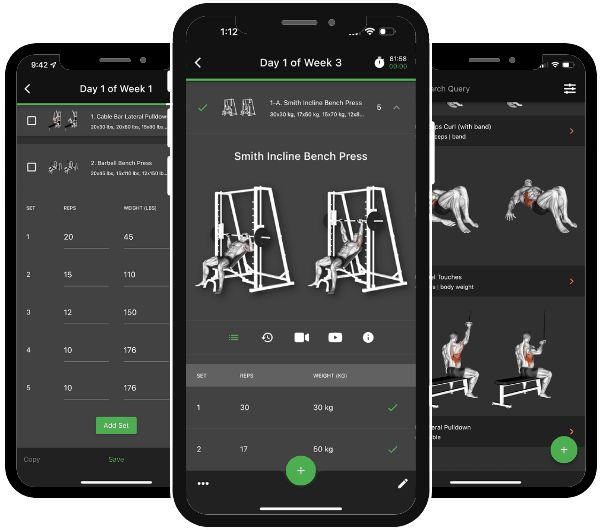
Achieve more with Fitwill: explore over 5000 exercises with images and videos, access built-in and custom workouts, perfect for both gym and home sessions, and see real results.
Start your journey. Download today!


Instructions
- Anchor a light band low behind you and loop it around the ankle of the working leg.
- Stand tall on the support leg with a soft knee, feet hip-width apart, and the pelvis square.
- Let the banded leg start slightly behind the hips with the toes pointing mostly forward.
- Brace your midsection and keep the ribs stacked over the pelvis before you move.
- Drive the banded knee forward and upward in a smooth arc without leaning back.
- Lift only as high as you can while keeping the standing leg steady and the torso upright.
- Pause briefly at the top, then lower the leg under control until the foot returns beside the standing leg.
- Reset the band tension before the next rep and repeat for the planned number of repetitions.
Tips & Tricks
- Start with a very light band; if you have to swing the torso to move the leg, the resistance is too heavy.
- Keep the standing foot planted in a tripod so the support hip does not cave inward.
- Think about driving the knee forward, not flicking the foot, so the hip flexors stay in control.
- A slight forward lean from the ankles is fine, but do not arch the low back to fake a higher knee.
- Keep the toes of the working leg pointed mostly forward so the rep stays in the hip flexion plane.
- Lower the leg slowly; the return should look as controlled as the lift.
- If the band pulls the knee outward, move the anchor so the resistance tracks straight ahead.
- Use the smallest range that lets the pelvis stay level and the support side stay quiet.
Frequently Asked Questions
What muscles does Band Hip Flexion work?
It mainly trains the hip flexors, especially the iliopsoas and rectus femoris, while the standing leg, glutes, and core stabilize the pelvis.
Where should the band be attached for this exercise?
Attach it low behind you so the band pulls the working ankle backward and the knee has to drive forward against resistance.
How high should I lift my knee?
Lift only as high as you can without leaning back, twisting the hips, or hiking one side of the pelvis.
Can beginners do band hip flexion?
Yes, but they should use a light band and a small, controlled range so the movement stays smooth and balanced.
Why do I feel this in my low back?
Usually the ribcage is flaring and the pelvis is tipping forward. Shorten the range and keep the abs stacked over the hips.
Should my standing knee stay locked out?
No. A soft knee makes balance easier and helps the support hip stay level through the rep.
What is the most common mistake?
The biggest mistake is swinging the leg or rotating the torso to get more height instead of lifting straight through the hip.
How do I make the exercise harder without losing form?
First clean up the range and tempo, then use a slightly stronger band or a slower return before trying to lift higher.