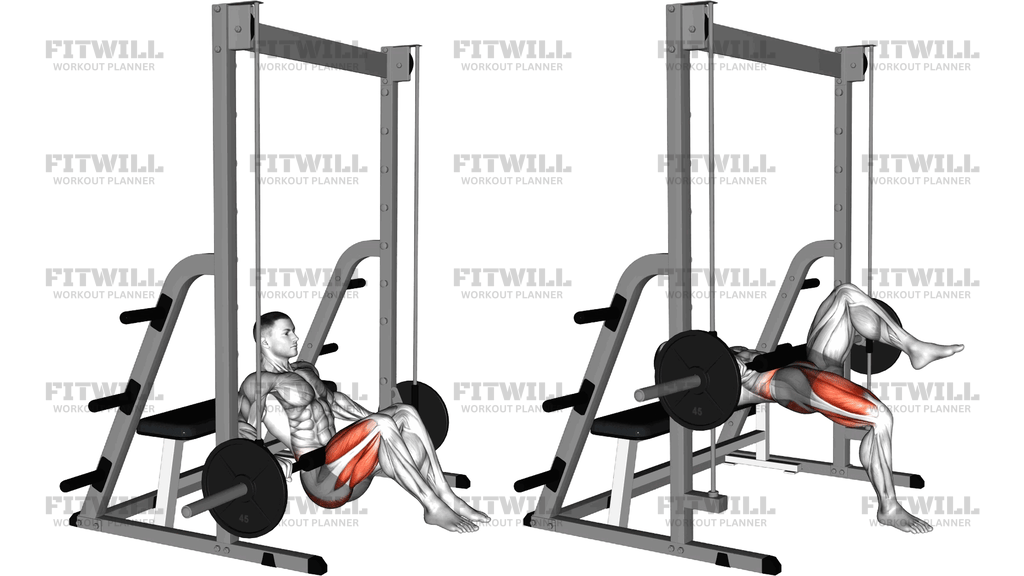
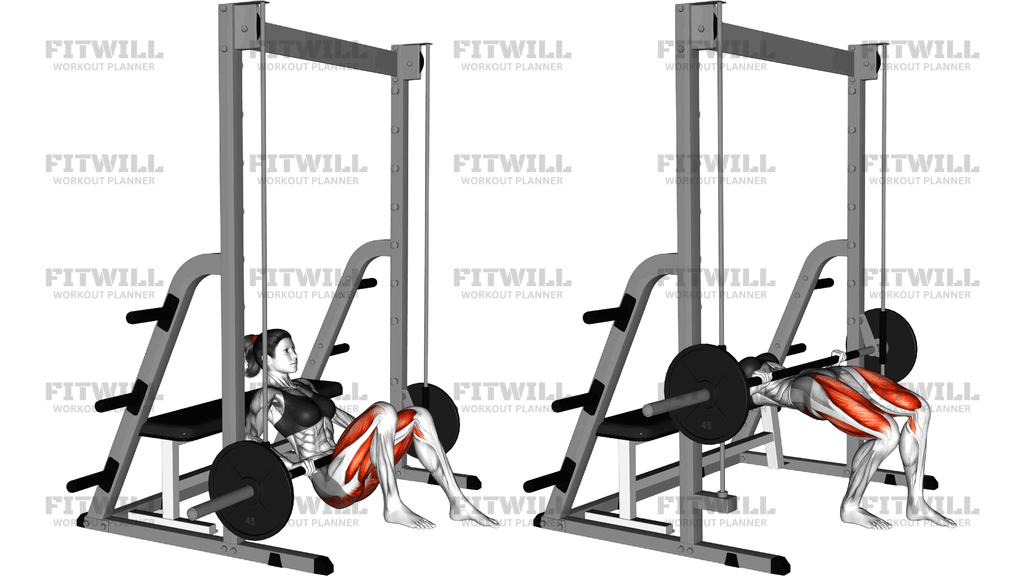
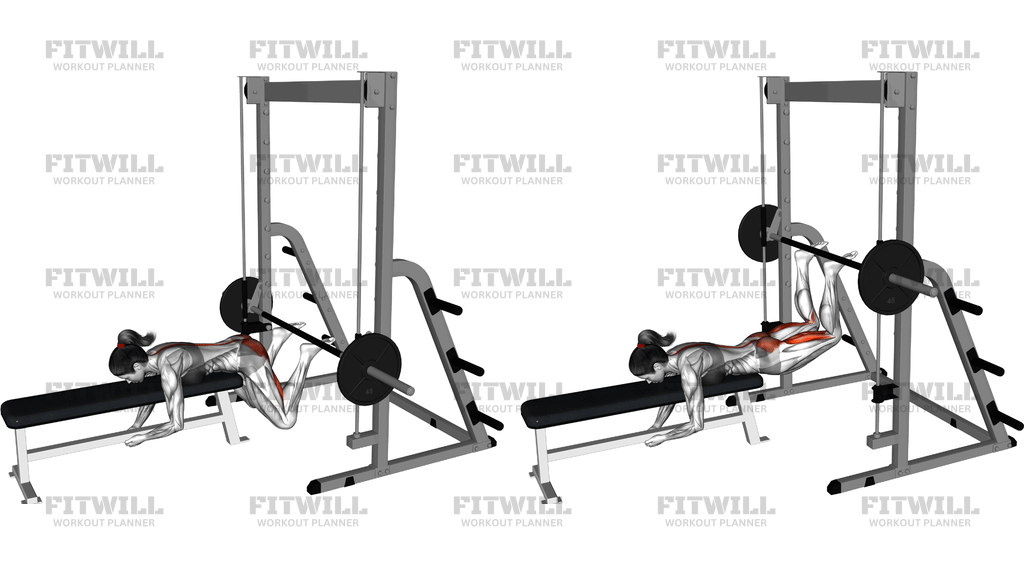
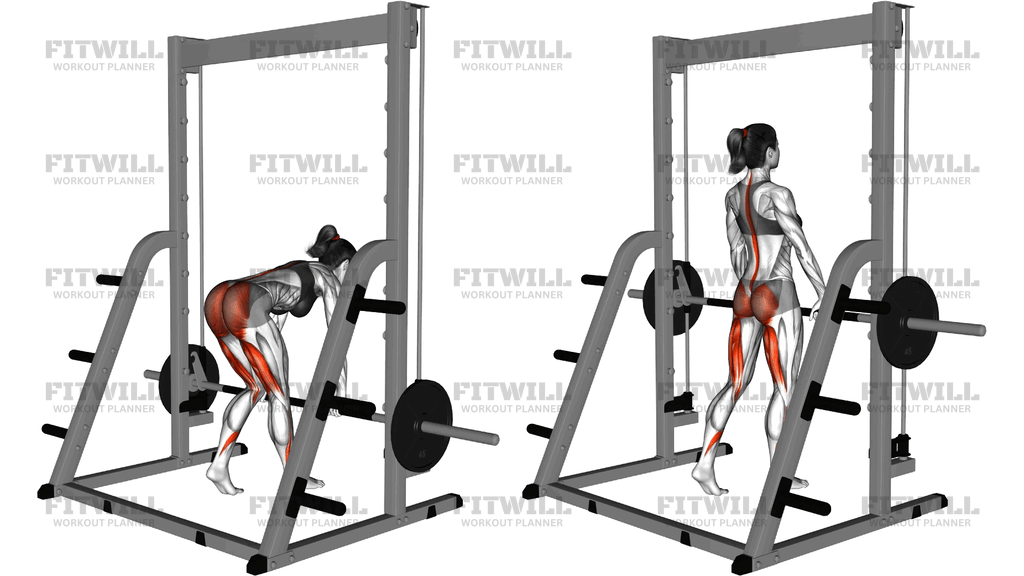
Smith Good Morning Off Pins
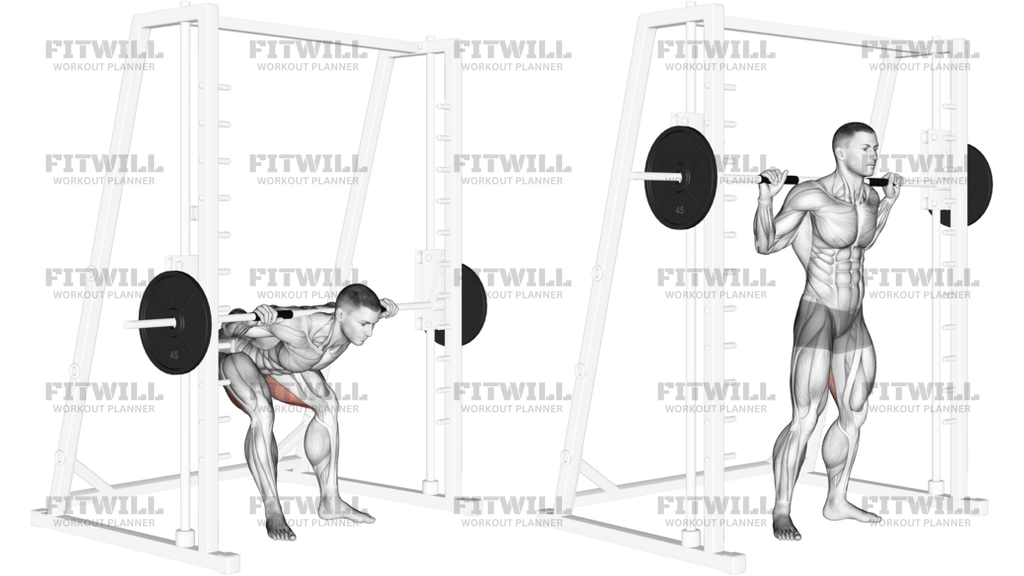
Smith Good Morning Off Pins is a dead-stop Smith machine hip hinge built around a controlled fold and stand pattern. It is most useful for training the posterior chain and trunk together: the glutes and hamstrings create the hip drive, while the spinal erectors and abdominals keep the torso organized as the bar moves on the fixed rails. The pin start removes the bounce you get from a continuous rep and makes each repetition more honest about position, brace, and force production.
The setup matters because the bar has to sit securely across the upper traps or rear delts before you hinge. Stand with a shoulder-width or slightly narrower stance, toes turned out just a little, and knees softly unlocked. Unrack the Smith bar by standing tall first, then take a breath and lock your ribs over your pelvis before you begin the descent. If the bar is too high on the neck, the machine will feel harsh; if the stance is too wide or the knees travel forward, the movement starts to drift toward a squat.
On the way down, send the hips back and let the torso tip forward as one unit. The shins should stay fairly vertical while the spine stays neutral and the chest stays long, not collapsed. Lower until you reach the safeties or the pin height you set for the exercise, then pause long enough to kill momentum. The best reps come from a clear reset at the bottom, not from bouncing through the soft spot of the hinge.
Drive back up by pushing the floor away, squeezing the glutes, and bringing the hips through until you are tall again. Finish stacked, not overextended, with the abdomen still braced and the shoulders relaxed. This makes the exercise fit well as an accessory strength lift, a hinge-pattern builder, or a controlled posterior-chain movement in a lower-body session where you want more precision than a free barbell good morning would give.
Use lighter loads than you would for a squat or deadlift pattern and earn the range before adding weight. The most common errors are rounding the lower back, letting the knees drift too far forward, or chasing depth after the hamstrings are already fully loaded. A clean set should look smooth, deliberate, and repeatable from the first dead-stop rep to the last.
[ Workout Log & Planner ]
Put your next workout in Fitwill
Keep your plan and training log ready when you are.


Instructions
- Set the Smith bar across your upper traps or rear delts and place the safeties at the depth you want for the dead stop.
- Step under the bar, stand tall to unrack it, and set your feet about shoulder-width apart with a slight toe-out.
- Take a breath, brace your torso, and keep your ribs stacked over your pelvis before you move.
- Unlock the knees just enough to keep them soft, then send your hips straight back to start the hinge.
- Let your torso tip forward as one unit while keeping your spine neutral and your shins mostly vertical.
- Lower until the bar settles onto the pins or safeties without rounding your back or bouncing.
- Pause briefly at the bottom to reset tension, then drive through your whole foot and squeeze your glutes to stand back up.
- Finish tall with the hips fully extended, exhale after the hardest part of the rep, and rebrace before the next repetition.
Tips & Tricks
- Keep the bar on the upper back, not high on the neck, so the Smith machine does not dig into the spine.
- Hold the knees in a soft bend and resist letting them travel forward as you hinge.
- Stop the descent when the hamstrings are loaded and the back still feels neutral, even if that is above the pins.
- Use the pins as a true dead stop; do not bounce into the next rep.
- A slightly narrower stance often makes the hip hinge cleaner and keeps the torso from drifting into a squat pattern.
- Keep the bar path slow and straight on the rails instead of shifting it forward and back.
- Choose a load light enough to maintain abdominal pressure at the bottom position.
- If your lower back takes over, shorten the range and slow the eccentric phase.
Frequently Asked Questions
What does Smith Good Morning Off Pins train most?
It mainly trains the posterior chain, especially the glutes, hamstrings, and spinal erectors, with a strong bracing demand from the core.
Why use a Smith machine for this good morning?
The fixed bar path makes the hinge easier to repeat and can help you focus on hip motion and torso control.
Do the pins mean I should bounce the bar?
No. The pins should create a dead stop so each rep begins with a clean reset instead of a rebound.
How much knee bend should I use?
Keep the knees softly unlocked, but do not turn the movement into a squat by letting them drift far forward.
How low should I hinge?
Go only as low as you can while keeping a neutral spine and firm brace; for many lifters, that is just above the point where the hamstrings feel fully loaded.
Is this exercise beginner-friendly?
Yes, if the load is light and the hinge range is shortened until you can keep the rep strict.
What is the most common mistake?
Rounding the lower back or letting the knees travel too far forward as the torso lowers.
Should I feel this in my lower back?
Some isometric work there is normal, but the movement should still feel driven mainly by the hips and posterior chain.