Smith Bent-Over Row
Smith Bent-Over Row is a guided horizontal pulling exercise that trains the upper back while your torso stays fixed in a hip hinge. The Smith machine keeps the bar on a vertical track, so the quality of the rep depends less on balancing the bar and more on how well you set your stance, brace your trunk, and drive the elbows back without letting the torso rise.
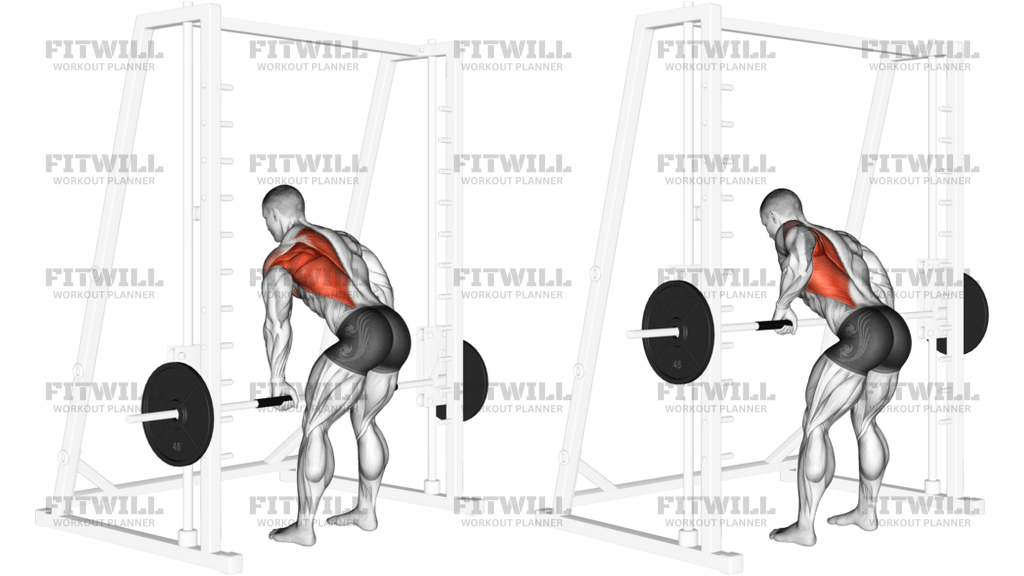
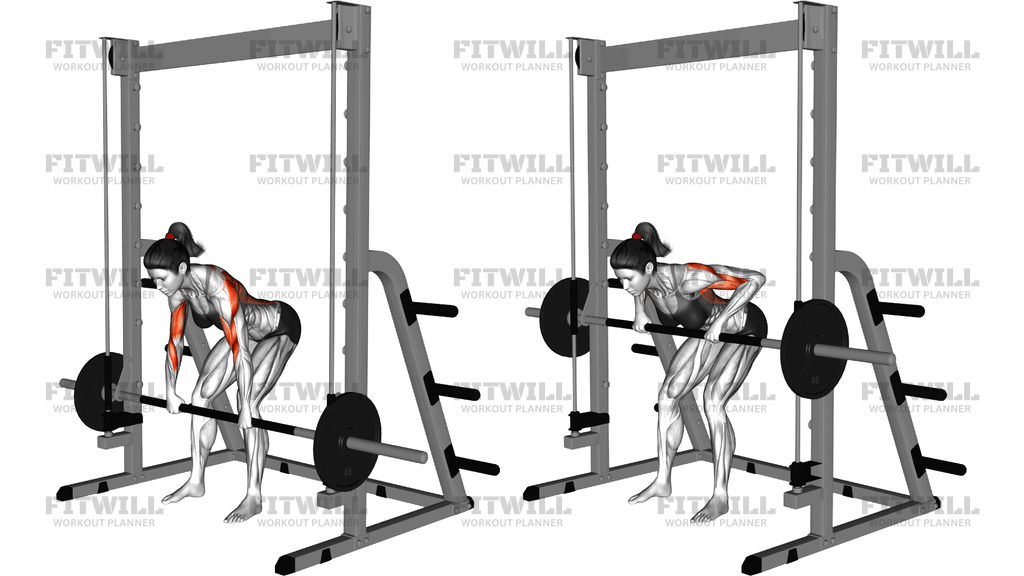
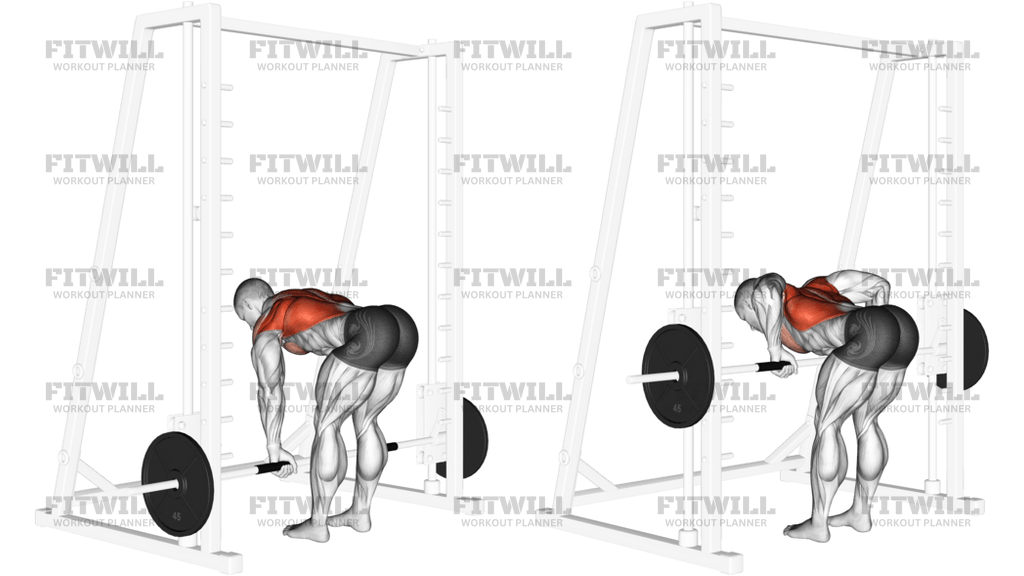
This version places the greatest emphasis on the traps and upper back, with the rhomboids, lats, rear delts, and biceps helping control the pull. In anatomy terms, the main work centers on the Trapezius, with support from Rhomboids, Latissimus dorsi, and Biceps brachii. The image shows a strict overhand grip and a torso angle that is close to parallel with the floor, which makes the row more demanding on posture and mid-back tension.
The setup matters because the bar has to clear the knees and stay close to the shins without forcing the lower back into an awkward position. Stand with feet about hip-width, hinge at the hips until the chest is tipped forward, and keep a soft bend in the knees. From there, let the arms hang straight down, brace before each rep, and keep the neck long so the pull starts from the back instead of from the shoulders or momentum.
Each repetition should move on the same line: pull the bar toward the lower ribs or upper waist, squeeze the shoulder blades back and slightly together, then lower it under control until the elbows are fully extended again. Because the bar path is fixed, even small changes in torso angle or foot placement can change where the bar lands and which muscles work hardest. For that reason, this lift is useful for back-focused strength work, accessory rowing, and controlled hypertrophy sets where strict form matters more than load.
Use a weight that lets you hold the hinge position from the first rep to the last. If the lower back starts to take over, the torso rises, or the bar starts bouncing, the set is too heavy or the stance is off. Done well, Smith Bent-Over Row builds upper-back thickness, teaches clean scapular retraction, and reinforces a strong pulling pattern without requiring the stabilization demands of a free barbell row.
[ Workout Log & Planner ]
Put your next workout in Fitwill
Keep your plan and training log ready when you are.


Instructions
- Set the Smith bar around mid-shin to just below knee height, then stand facing the machine with your feet about hip-width apart and the bar over your midfoot.
- Take an overhand grip slightly wider than shoulder width, unlock your knees, and hinge your hips back until your torso is angled close to parallel with the floor.
- Let your arms hang straight down from your shoulders, keep your neck long, and brace your torso before the first pull.
- Start each rep with the bar hanging just below your knees or near the top of your shins, depending on your hinge depth and stance.
- Pull the bar toward your lower ribs or upper waist by driving your elbows back and squeezing your shoulder blades together and down.
- Keep your chest fixed in the hinge and avoid letting your torso pop up as the bar moves.
- Pause briefly at the top of the rep with the bar close to your body and the elbows behind your torso.
- Lower the bar back along the same fixed track until your arms are fully extended and your back stays braced.
- Inhale on the way down and exhale as you row the bar up.
- After the last repetition, stand tall before letting go of the bar or re-racking the machine.
Tips & Tricks
- Set your feet so the bar clears your knees cleanly; if it drifts into the thighs or catches the machine, adjust the stance before adding load.
- Keep the hinge coming from the hips, not the lower back, so your torso angle stays steady through every repetition.
- Use a grip that lets the elbows travel behind the torso without forcing the shoulders to shrug upward.
- Think about pulling the elbows toward your back pockets rather than yanking the bar with your hands.
- If your lower back starts to dominate, raise your torso a little and reduce the load instead of trying to row from a deeper hinge.
- Keep your gaze a few feet ahead on the floor so your neck stays neutral and does not crane upward.
- A short pause at the top removes bounce and makes the upper-back squeeze more effective.
- Use straps if grip fatigue ends the set before your upper back does.
- Stop the set when the bar starts drifting, the torso starts rising, or you can no longer lower it under control.
Frequently Asked Questions
What muscles work most in Smith Bent-Over Row?
The traps and upper back do most of the work, with the rhomboids, lats, rear delts, and biceps assisting.
Why use a Smith machine for this row instead of a free barbell?
The fixed bar path makes it easier to keep the row strict and repeat the same path every rep.
How low should my torso be in the bent-over position?
Aim for a strong hip hinge with the torso near parallel to the floor, or slightly higher if your lower back needs a less aggressive angle.
Where should the bar touch at the top of the rep?
Pull it toward the lower ribs or upper waist, not up to the chest.
What is the most common mistake with this exercise?
Letting the torso rise and turn the row into a standing shrug or partial deadlift is the biggest problem.
Can beginners do Smith Bent-Over Row safely?
Yes, as long as they start light, keep the hinge controlled, and avoid loading the lower back with too much body angle.
Should I use an overhand or underhand grip?
The image shows an overhand grip, which is the standard choice for this version of the row.
Why does my lower back get tired before my upper back?
That usually means the hinge is too deep, the load is too heavy, or you are losing trunk brace during the set.
Is a brief pause at the top useful?
Yes, a short pause helps you keep the bar under control and reduces momentum from the Smith machine's fixed path.