Smith Rack Pull
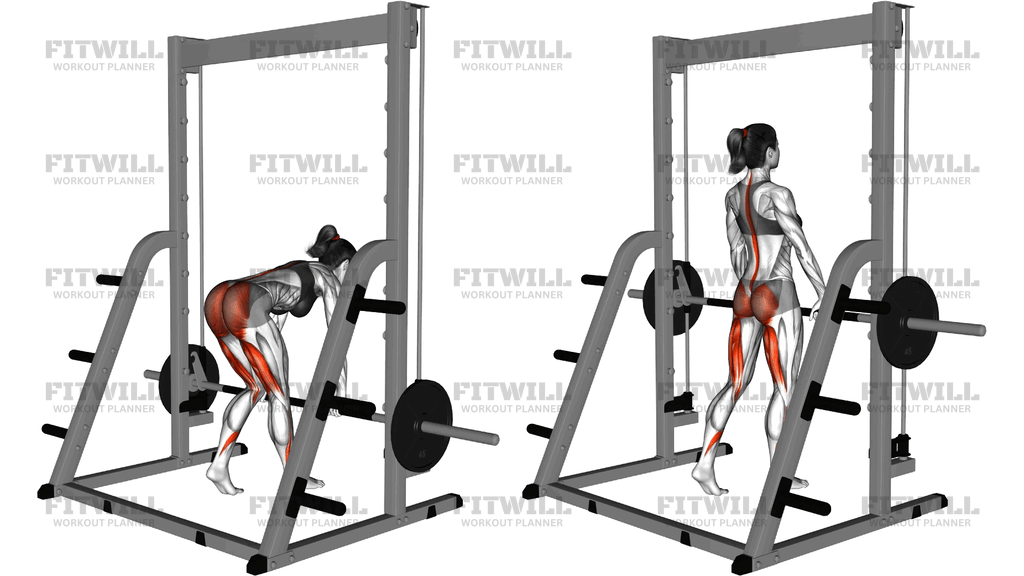
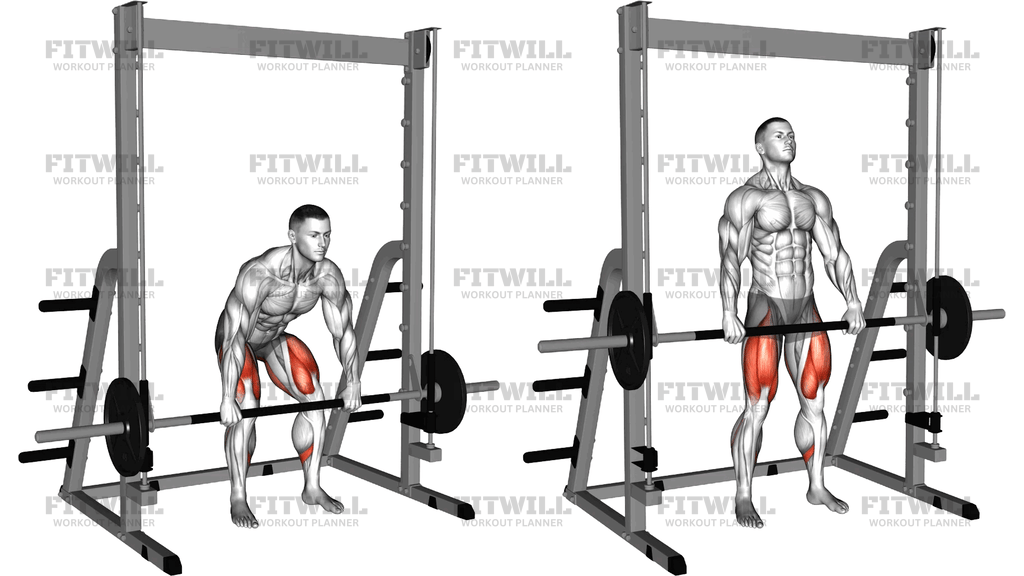
Smith Rack Pull is a guided hip hinge performed on a Smith Machine with the bar set on pins or safeties below knee height. It is used to train the hips and glutes hard while keeping the bar path fixed, which makes it easier to rehearse a strong pull without needing to balance the bar. Because the range starts from an elevated position, it is often easier to control than a floor deadlift and still heavy enough to build strength in the posterior chain.
The fixed track changes how the lift feels, so setup matters more than on a free bar. Stand close enough that the bar travels up the front of your thighs, but keep your feet slightly forward if that helps you hinge without the knees drifting into the bar path. A solid torso angle, a neutral spine, and a deliberate brace keep the work in the hips and glutes instead of turning the lift into a low-back yank.
At the top, Smith Rack Pull should look tall and organized, not hyperextended. Drive through the whole foot, stand up by extending the hips, and finish with the glutes squeezed and the ribs stacked over the pelvis. On the way down, send the hips back first, let the bar slide down the thighs under control, and stop on the pins or safeties before the next rep so each repetition begins from a stable reset.
This movement is useful for lifters who want a simpler way to load a heavy hinge, especially when grip, balance, or full floor-range pulling is not the main goal. It can fit as a strength accessory, a glute-focused hinge variation, or a progression toward harder deadlift work. The best results come from smooth reps, a consistent bar start height, and enough control to keep the torso angle, breathing, and bar path identical from rep to rep.
Use a load that lets you keep the bar close, the shoulders set, and the lower back quiet. If the bar starts too low, the lift becomes a deadlift; if it starts too high, the glutes do less work and the finish can turn into a backward lean. Smith Rack Pull is most productive when every rep begins from the same pin height and ends with a clean lockout rather than a rushed grind.
[ Workout Log & Planner ]
Put your next workout in Fitwill
Keep your plan and training log ready when you are.


Instructions
- Set the Smith Machine bar on pins or safeties just below knee height and load the plates before you step in.
- Stand with your feet about hip-width, the bar over midfoot, and your shins close enough to reach the bar without leaning forward.
- Hinge at the hips, take an overhand grip just outside your legs, and keep your shoulders slightly in front of the bar.
- Pull your chest long, brace your trunk, and keep your spine neutral before you start the lift.
- Drive through your whole foot and extend your hips to bring the bar straight up the Smith track.
- Finish tall with your glutes tight and your ribs stacked over your pelvis, without leaning backward at the top.
- Lower the bar by sending your hips back first, then bend your knees as the bar passes them.
- Let the bar settle back onto the pins with control, reset your brace, and repeat for the planned reps.
Tips & Tricks
- Set the pins so the first pull starts around mid-shin to just below the knee; that keeps the lift in the hip hinge instead of turning it into a floor deadlift.
- Keep your feet a little in front of the bar if the Smith track feels restrictive on the knees or shins.
- Think about pushing the floor away and driving the hips through, not yanking the bar with your arms.
- Stop the lockout when your hips are fully extended; leaning back adds stress to the low back without helping the glutes.
- Let the bar brush the thighs on the way up and down so it stays close to your center of mass.
- Use straps if grip gives out before your hips do, especially on heavier sets.
- Take a fresh breath and brace before every rep instead of bouncing repeated pulls off the pins.
- If your lower back feels like the main limiter, raise the bar slightly and shorten the range until the hinge stays clean.
Frequently Asked Questions
What muscles does Smith Rack Pull work most?
It mainly trains the hips and glutes, with the hamstrings and core helping you keep the torso fixed while you pull.
How high should the Smith Machine bar be set?
A good starting point is just below the knees. If you want a slightly bigger range, drop it toward mid-shin, but keep the hinge clean.
Should my feet be directly under the bar?
Not always. Many lifters do better with their feet a little forward so the fixed Smith track lets the hips move back without the knees crashing into the bar.
Is Smith Rack Pull easier than a regular deadlift?
Usually yes, because the bar path is guided and the range starts above the floor. That makes it easier to load the hips without worrying about balance.
Do I need to touch the floor on every rep?
No. The bar should return to the pins or safeties each rep so you get a consistent reset from the same start height.
Why do I feel Smith Rack Pull in my lower back?
That usually means the bar is too low, the brace is weak, or the finish is turning into a lean-back. Raise the start height and keep the ribs stacked over the pelvis.
What grip should I use on Smith Rack Pull?
An overhand grip just outside the legs works well for most lifters. Use straps if you want the hips to limit the set instead of the hands.
Can beginners do Smith Rack Pull safely?
Yes, if they keep the bar high enough to maintain a clear hip hinge and use a light load until the setup feels consistent.