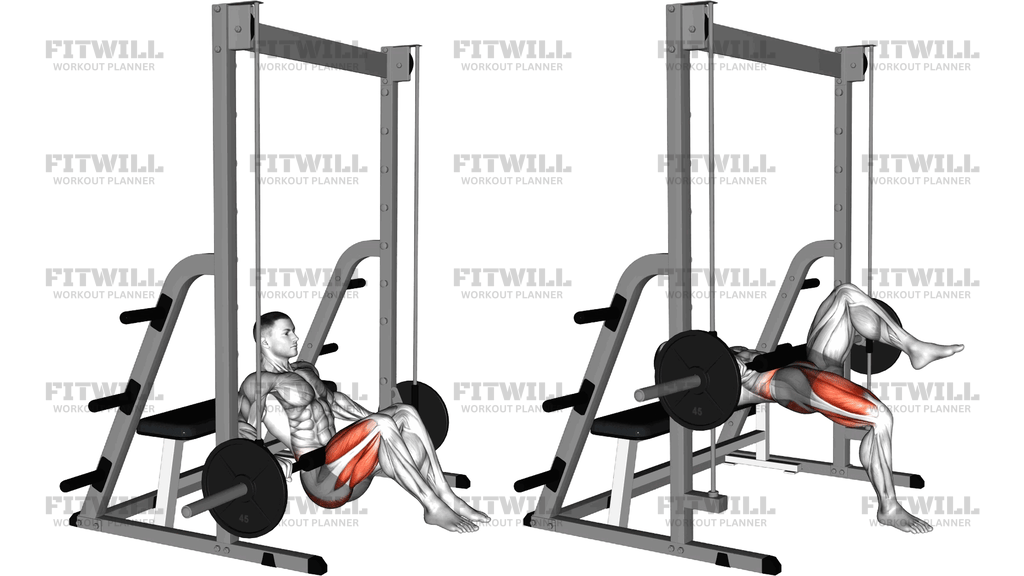
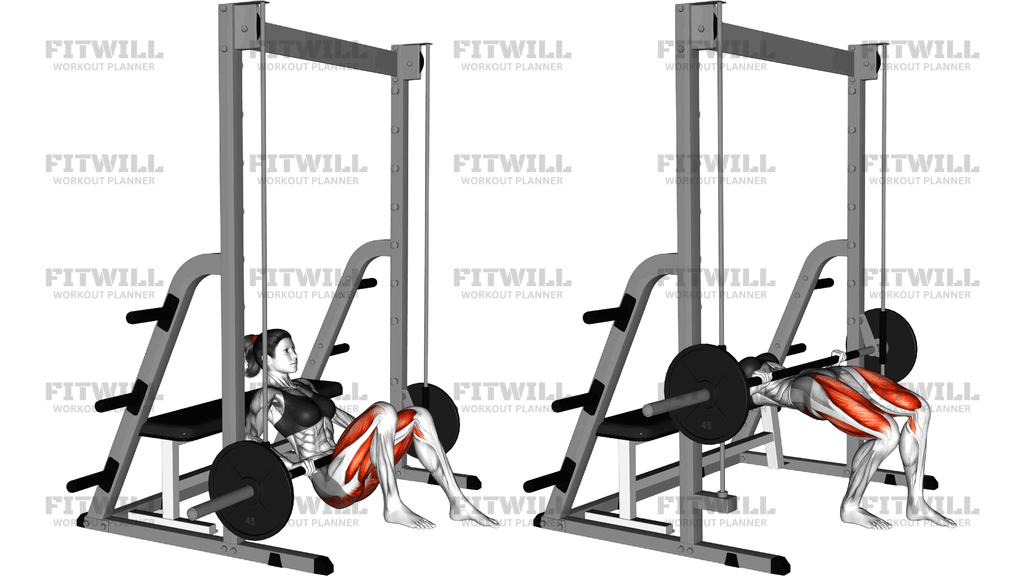
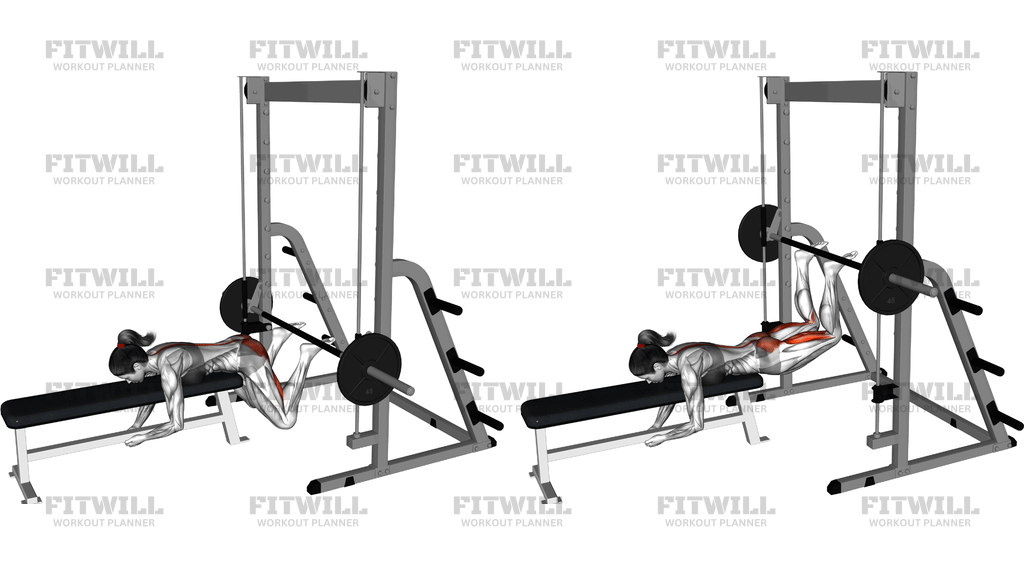
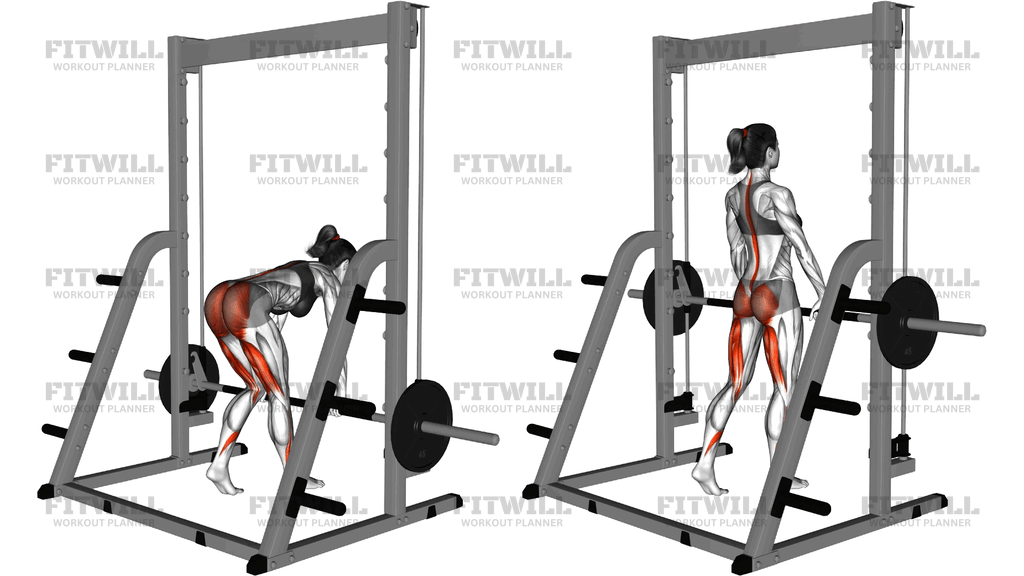
Smith Frog Hip Thrust
Smith Frog Hip Thrust is a glute-biased hip extension on a Smith machine that uses a frog-leg setup to keep tension centered on the hips rather than on long hamstring stretch. The upper back rests on a bench while the bar travels straight up and down in the Smith track, so the main job is to open and close the hips without losing the stacked ribcage-and-pelvis position.
The frog stance changes the feel of the thrust. With the soles of the feet together and the knees dropped out, the hips can drive hard into extension while the adductors and glutes help stabilize the legs. That makes this variation useful when you want a short, controlled range of motion that still delivers a strong contraction at lockout and a clear burn through the glutes.
Setup matters more here than in many machine exercises. The bench height, bar placement, and foot angle all determine whether you get a clean hip thrust or just a low-back bridge. The bar should sit in the crease of the hips, the upper back should be anchored securely on the bench, and the knees should stay open as the pelvis rises. If the torso starts to arch back instead of the hips driving up, the set is too heavy or the setup is off.
Perform each rep by bracing before the lift, pressing through the inner edges of the feet, and driving the hips up until the glutes are fully contracted without overextending the spine. Control the lowering phase and keep the bar path smooth in the Smith rails. A short pause at the top helps keep the work where it belongs and prevents bouncing off the bottom or turning the rep into momentum.
This exercise is a strong accessory choice for glute-focused strength work, lower-body hypertrophy, or warm-up activation before heavier thrusting, squatting, or hinging patterns. It is especially useful when you want a stable, repeatable setup that lets you focus on squeezing the glutes instead of balancing the bar. Light to moderate loads usually work best at first, because the frog position can make it easy to rush the range and lose pelvic control.
[ Workout Log & Planner ]
Put your next workout in Fitwill
Keep your plan and training log ready when you are.


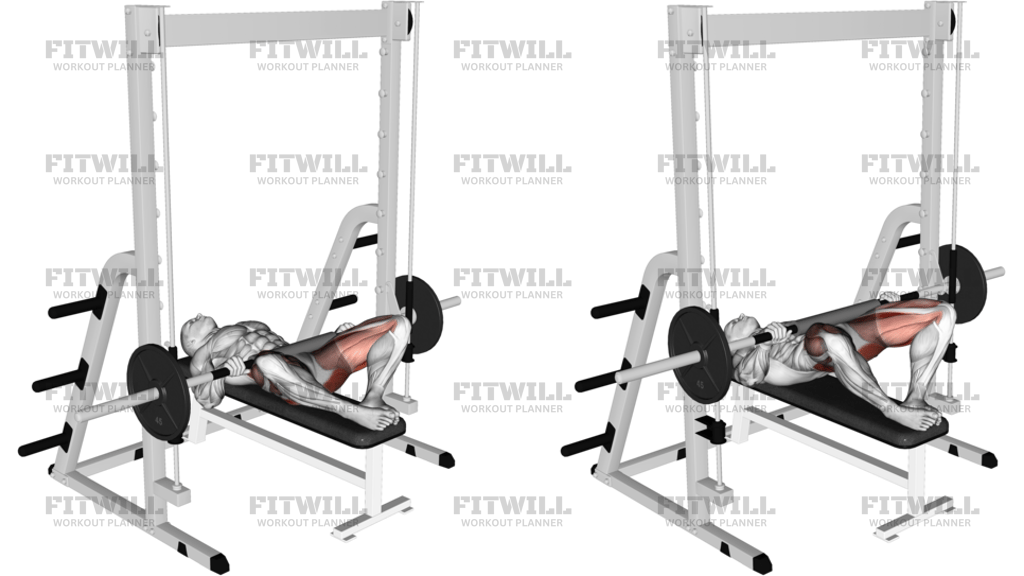
Instructions
- Set a bench across the Smith machine and position your upper back on the pad so the bar can travel over the crease of your hips.
- Sit down under the bar, bring the soles of your feet together, and let your knees fall open in a frog stance.
- Place the bar across your hip crease, hold it steady with your hands, and keep your chin slightly tucked.
- Brace your abs, keep your ribs down, and squeeze your glutes before you start the first rep.
- Drive your hips up along the Smith track until your torso and thighs form a strong line without arching your lower back.
- Pause for a moment at the top while keeping the knees open and the bar stable.
- Lower the bar under control until the hips are close to the floor and the glutes stay loaded.
- Reset the brace, then repeat for the planned reps before re-racking the bar.
Tips & Tricks
- Pad the bar well if the Smith knurling or sleeve edges press into the hip crease.
- Keep the soles of your feet together and resist letting the knees drift inward as you fatigue.
- Think about driving the hips up, not pushing the chest backward into a bigger arch.
- Stop the top position when the glutes are fully squeezed and the ribs are still stacked over the pelvis.
- Use a shorter range if the lower back starts taking over before the glutes finish the rep.
- Take a smooth breath in on the way down and exhale as you thrust to the top.
- Choose a load you can control for a full set without bouncing off the bottom.
- Keep the descent slow enough that the Smith bar never loses contact with your controlled path.
Frequently Asked Questions
What muscles does Smith Frog Hip Thrust work most?
It primarily targets the glutes, with the adductors and core helping you keep the frog position and a stable pelvis.
Why use the frog-leg position instead of a normal hip thrust stance?
The wide, knees-out setup shortens the range a bit and shifts the emphasis toward a hard glute squeeze instead of a long hamstring stretch.
Where should the Smith bar sit during the rep?
It should rest in the crease of the hips, not high on the stomach or too low on the thighs, so the load follows the hip hinge cleanly.
Should my knees stay wide the whole time?
Yes, keep the knees dropped out and the feet together so the frog position stays consistent through the whole set.
How high should I lift my hips?
Lift until the glutes are fully contracted and your torso is close to a straight line from shoulders to knees, but do not overarch the lower back.
Can beginners do this exercise safely?
Yes, if they start light, keep the bench and bar set correctly, and use a controlled range instead of chasing load.
What is the most common form mistake?
The biggest issue is turning the thrust into a low-back bridge by flaring the ribs and overextending at the top.
Is this a good substitute for a regular Smith hip thrust?
Yes, if you want a more glute-focused variation with less hamstring involvement and a shorter, more controlled top range.