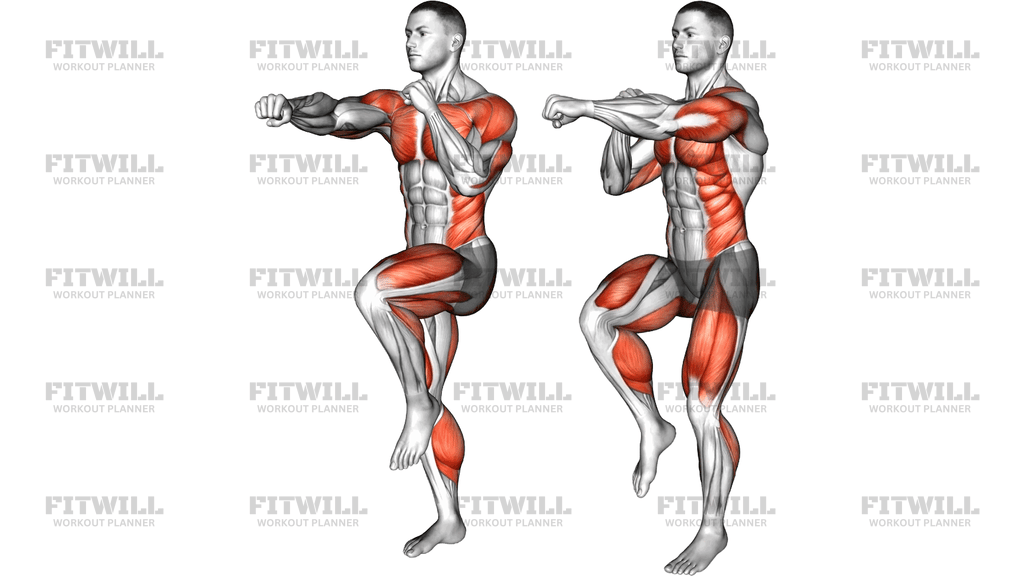
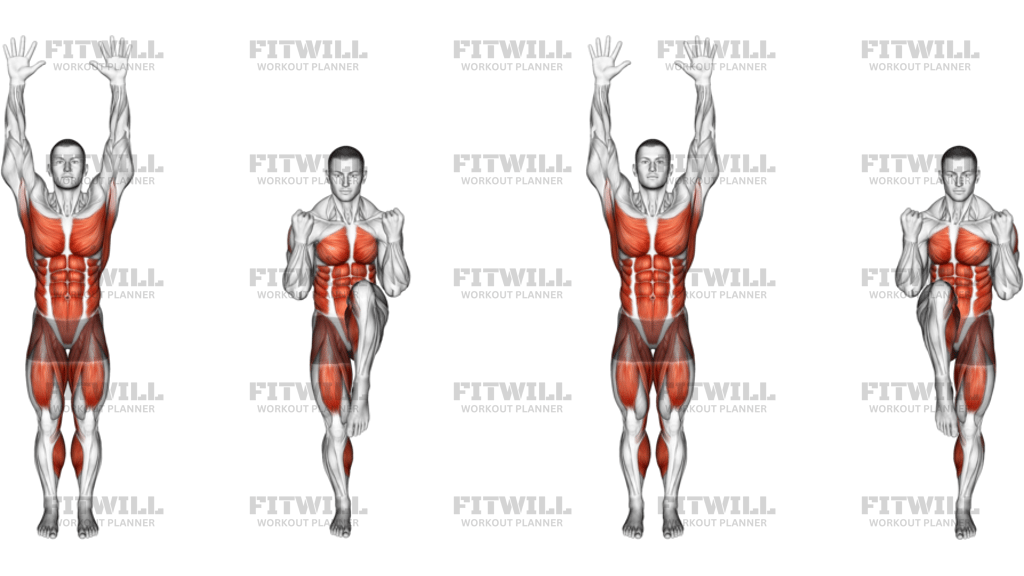
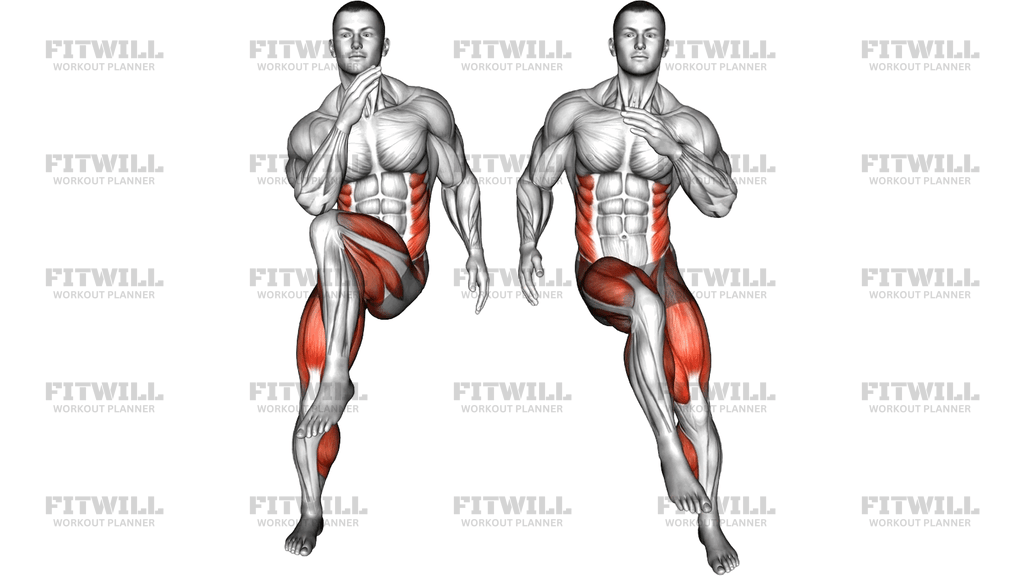
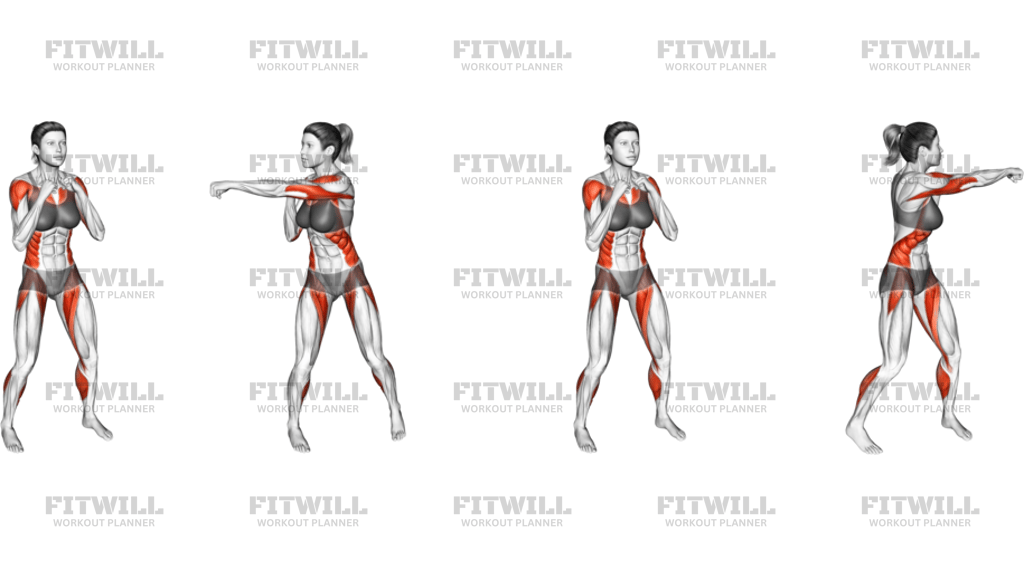
Double Leg Butt Kick
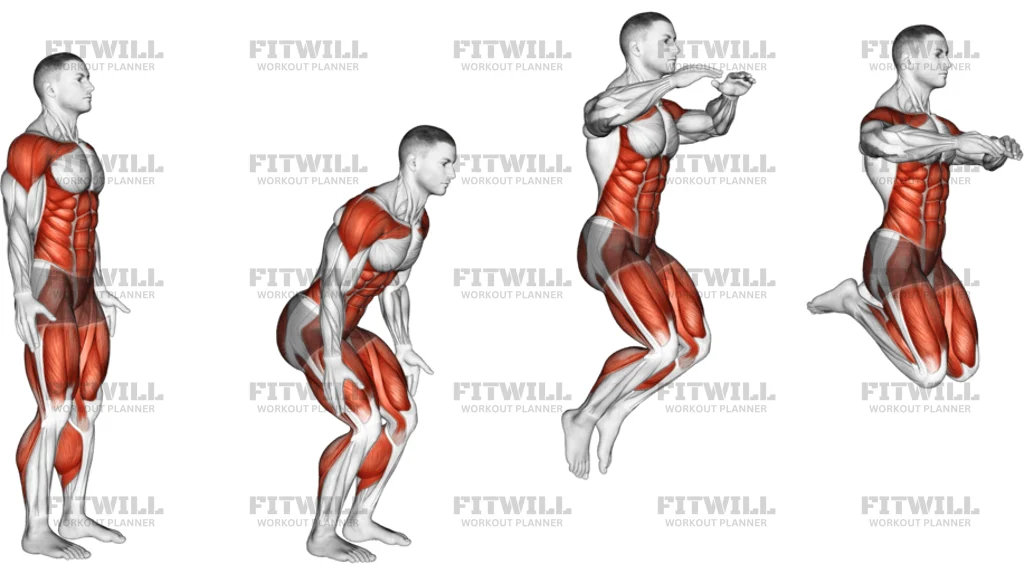
Double Leg Butt Kick is a bodyweight plyometric drill built around a quick jump and a sharp heel-to-glute snap. It is less about loading the legs and more about how cleanly you can leave the floor, tuck both lower legs, and land in a controlled rhythm for the next rep. The better the timing, the more useful the drill becomes for speed, coordination, and elastic lower-body work.
The movement asks for a lot from the calves, hamstrings, glutes, quads, and trunk even though it looks simple. Your arms mostly help with balance and tempo, while your torso stays tall enough to keep the jump organized. If the chest folds forward or the landing gets heavy, the drill stops feeling springy and starts turning into a sloppy hop.
A good rep starts from a tall stance with the feet under the hips or slightly wider and the knees softly bent. From there, you dip just enough to preload the legs, then jump upward and pull both heels back toward the glutes as the body rises. The feet should come down softly under you, not far in front, so the landing stays ready for the next rebound.
Double Leg Butt Kick works well as a warm-up drill, a plyometric primer, or a fast conditioning interval before sprinting, field work, or lower-body training. It teaches quick ground contact and a compact jump pattern without requiring equipment, which makes it easy to place early in a session. Keep the effort crisp and rhythmic rather than trying to force a bigger jump each rep.
Because the drill is fast, breathing should stay short and regular rather than held rigidly through the whole set. Exhale on the jump and let the next inhale happen as you absorb the landing, which helps keep the torso from tightening up and the cadence from stalling. If you want the drill to feel athletic instead of frantic, think about matching the heel snap to a steady tempo.
Safety and quality come from controlling the landing. If the contacts get loud, the knees cave in, or the heels stop reaching back toward the glutes, the set is done. Use a surface and shoes that handle repeated hops comfortably, and keep the rep count low enough that every jump still looks snappy and repeatable.
Fitwill
Log Workouts, Track Progress & Build Strength.
Achieve more with Fitwill: explore over 9600 exercises with images and videos, access built-in and custom workouts, perfect for both gym and home sessions, and see real results.
Start your journey. Download today!




Instructions
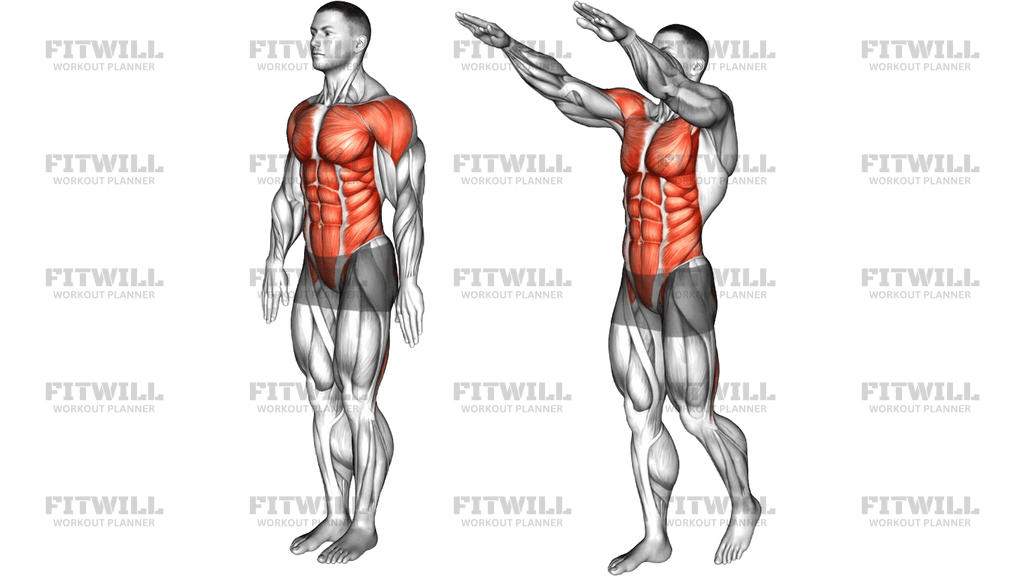
- Stand tall on a flat surface with your feet hip-width apart and your hands held in front of your chest or relaxed by your sides.
- Set your weight over the midfoot, keep your chest stacked over your pelvis, and soften your knees before you start.
- Dip a few inches to preload the legs, then brace your trunk so the jump begins from a stable base.
- Drive straight up off both feet together and let your arms help with balance instead of swinging wildly.
- As you rise, bend both knees and snap both heels back toward your glutes for the butt-kick position.
- Keep your torso tall and your knees pointing forward so the movement stays compact instead of folding into a squat.
- Land softly on the balls of your feet with bent knees and absorb the impact quietly under your hips.
- Rebound into the next rep with the same rhythm, or step out and reset if the landing gets heavy or your balance changes.
Tips & Tricks
- Think of this as a short, springy hop, not a max-height jump.
- Keep the chest tall so the heel kick comes from the legs, not from folding the torso forward.
- Bring the feet back down under your hips; if they drift far in front, the landing gets noisy and unstable.
- Use a small arm position in front of the body to steady the rep instead of throwing the shoulders back.
- The heels should travel clearly toward the glutes on every rep; a tiny flick turns the drill into a generic bounce.
- If you are using Double Leg Butt Kick as a warm-up, keep the jumps lower and the cadence crisp.
- Land quieter than you take off; loud contacts usually mean you are overreaching the jump.
- Stop the set as soon as the rhythm turns choppy or the knees start caving inward.
Frequently Asked Questions
What muscles does Double Leg Butt Kick work?
It mainly trains the calves, hamstrings, glutes, quads, and the trunk that keeps the jump organized. Because it is a plyometric drill, the ankles and hips also work hard to create the rebound.
Is Double Leg Butt Kick good as a warm-up?
Yes. It works well before sprinting, lower-body lifting, or conditioning because it raises temperature and rehearses quick ground contact without heavy loading.
How is Double Leg Butt Kick different from jogging butt kicks?
This version uses a two-foot jump with both heels snapping back together, while jogging butt kicks travel forward one step at a time. The standing rebound version is more explosive and stays in place.
Should my knees drive up or my heels drive back?
For Double Leg Butt Kick, the heel-to-glute snap is the main cue. The knees bend naturally, but the goal is a compact backward kick rather than a high-knee drive.
Do I need equipment for Double Leg Butt Kick?
No equipment is needed. A flat, forgiving surface and supportive shoes are enough for most people.
What is the most common mistake with this exercise?
Most people turn it into a squat jump or let the chest fold forward. Keep the torso tall and keep the landing directly under you so the drill stays springy.
Can beginners do Double Leg Butt Kick safely?
Yes, if they keep the jump small and the landing quiet. Beginners can also practice the heel snap without much height until the rhythm feels smooth.
How can I make Double Leg Butt Kick harder?
Make it harder by keeping the same crisp heel snap at a faster rhythm or by using it in short intervals. Do not chase a bigger jump; the challenge should come from speed and control.