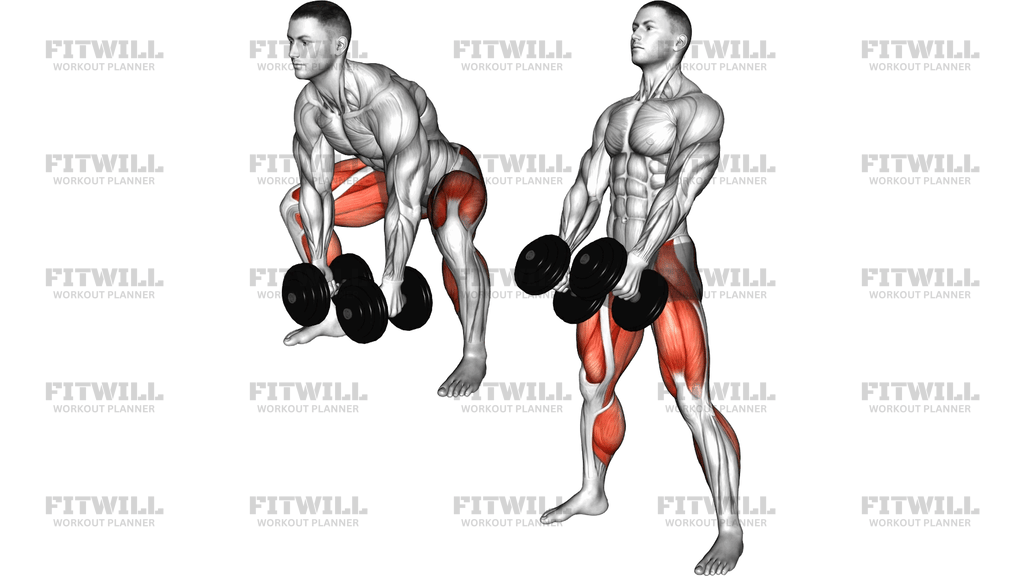
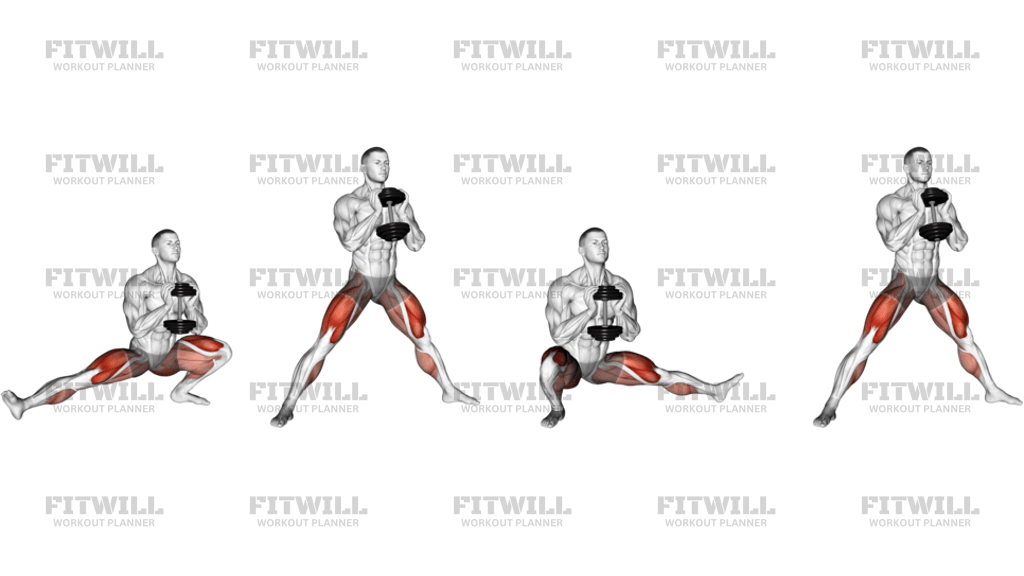
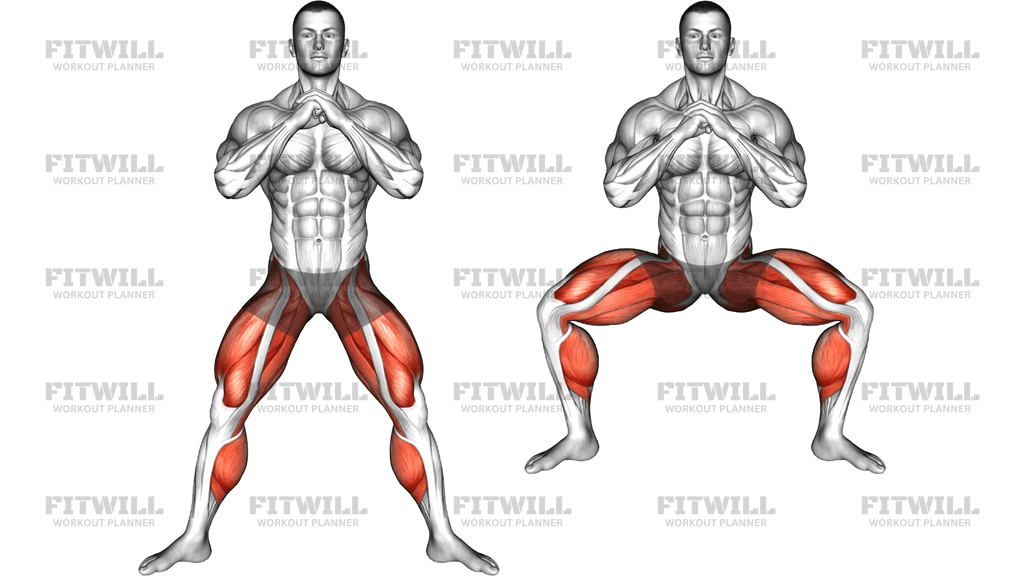
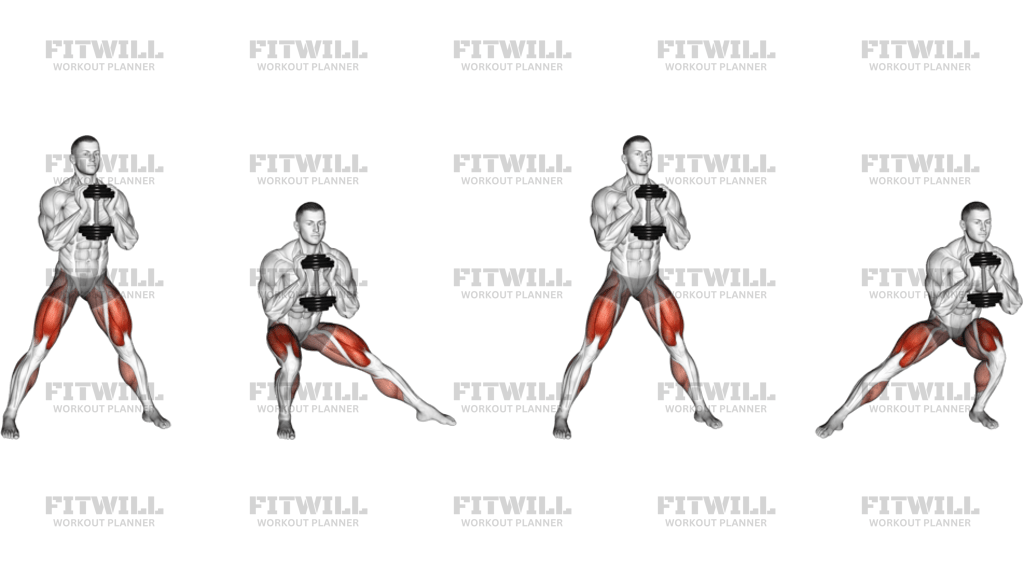
Dumbbell Bench One Leg Squat
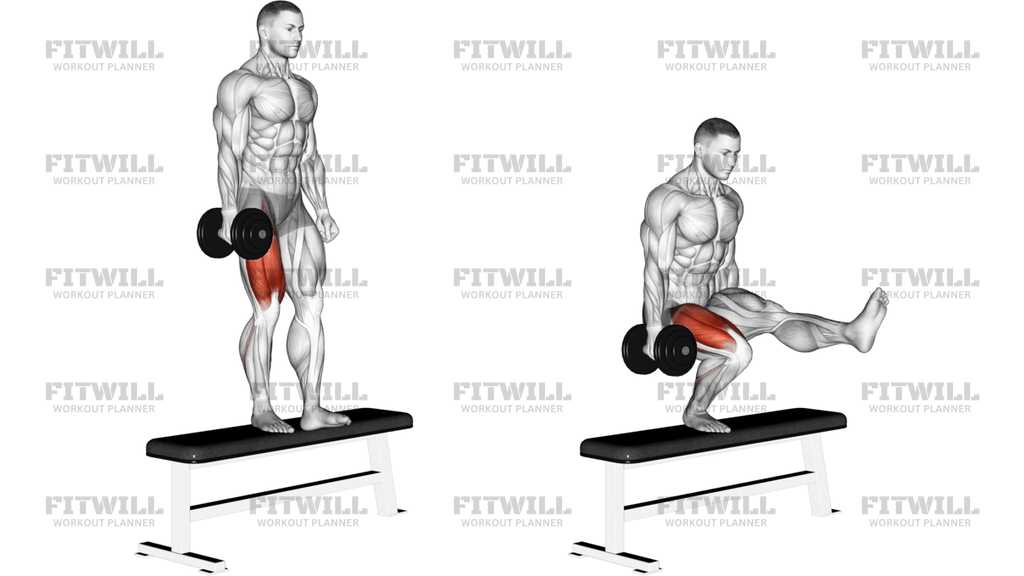
Dumbbell Bench One Leg Squat is a single-leg lower-body strength exercise built around a bench, a standing foot, and a controlled descent. The free leg stays extended in front while the working leg bends, which makes the movement far more demanding than a normal squat because balance, hip control, and quad strength all have to stay organized at the same time.
The main training emphasis is on the quads, with the glutes, adductors, calves, and core helping you stay upright and centered over the bench. Holding dumbbells at your sides adds load without changing the basic pattern, so the exercise is useful when you want a harder leg stimulus while still keeping the movement easy to monitor rep by rep.
Bench position matters because the support point determines how much knee bend, balance challenge, and depth you can control. A stable flat bench lets you load one leg while keeping the torso tall and the foot planted, and the free leg can stay out in front as a counterbalance instead of dropping under you or touching down early.
To perform Dumbbell Bench One Leg Squat well, the working foot should stay fully connected to the bench while the knee tracks in line with the toes. The descent should be slow enough that you can keep the dumbbells quiet, the pelvis level, and the free leg lifted, then the drive up should come from pressing the whole foot into the bench rather than bouncing or pushing off the other leg.
This exercise fits well as an accessory squat, a unilateral strength drill, or a quad-focused progression when split squats and step-ups are no longer challenging enough. It is also a useful balance test for lifters who want to clean up side-to-side differences, but it works best when the load stays light enough that the standing leg, not momentum, controls every rep.
Fitwill
Log Workouts, Track Progress & Build Strength.
Achieve more with Fitwill: explore over 9600 exercises with images and videos, access built-in and custom workouts, perfect for both gym and home sessions, and see real results.
Start your journey. Download today!




Instructions
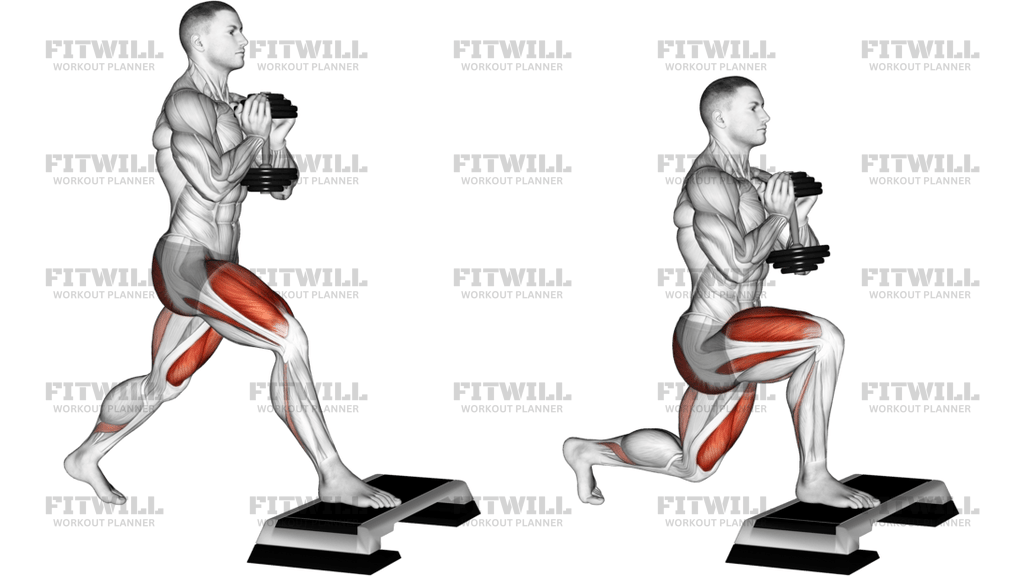
- Stand on a flat bench with one foot planted near the middle of the pad and hold a dumbbell in each hand at your sides.
- Keep your free leg extended in front of you, just off the bench, so it acts as a counterbalance instead of touching down.
- Set your gaze on a fixed point ahead, lift your chest, and brace your torso before you start to descend.
- Bend the working knee and hip together and lower straight down over that standing leg.
- Keep the dumbbells hanging still beside your thighs and let the working knee track in line with your toes.
- Descend until your thigh is near parallel to the bench or as low as you can keep the heel down and the pelvis level.
- Drive through the full foot on the bench to stand back up, finishing with the quad and glute of the working leg.
- Keep the free leg long in front of you during the ascent so you do not push off it to cheat the rep.
- Inhale on the way down, exhale as you rise, and reset your balance before starting the next rep.
Tips & Tricks
- Use a bench height that lets you keep the working heel flat instead of rolling onto the toes as you descend.
- Keep most of your pressure through the middle of the foot on the bench; if you drift to the toes, the rep usually turns into a balance scramble.
- Let the knee travel forward naturally, but keep it lined up with the second or third toe so it does not cave inward.
- Hold the dumbbells quietly at your sides; if they swing, the load is too heavy or the rep is too fast.
- A slower lowering phase makes this exercise much more useful because the standing leg has to control the descent instead of dropping into the bottom.
- Keep the free leg lifted and long in front of you; if it starts dropping toward the floor, shorten the range before you lose control.
- A slight forward lean is fine if it helps you stay balanced, but the torso should not fold over the thigh.
- If your hip shifts to one side, reduce the load and reset before the next rep instead of trying to save it mid-descent.
- Stop the set when the bench foot loses pressure or the pelvis starts twisting, because both signs mean the working leg is no longer doing the job cleanly.
Frequently Asked Questions
What muscle does Dumbbell Bench One Leg Squat target most?
The main target is the quads, with the glutes and core helping you stay balanced on the bench.
How should my free leg be positioned during Dumbbell Bench One Leg Squat?
Keep it extended in front of you and off the bench so it acts as a counterbalance. If it drops or touches down, the working leg is no longer carrying the rep.
How low should I go on the bench?
Lower until the working thigh is near parallel or until you can no longer keep the heel down and the pelvis level. Depth matters less than staying balanced and controlled.
Can beginners do Dumbbell Bench One Leg Squat?
Yes, but start with bodyweight or very light dumbbells and use a low bench. The balance demand is high, so clean control matters more than load.
Why do my dumbbells swing during the rep?
That usually means the set is too heavy or you are dropping too fast. Keep the weights quiet at your sides and slow the descent so the standing leg can control the motion.
What is the biggest form mistake in Dumbbell Bench One Leg Squat?
Letting the working knee cave inward or shifting onto the toes is the most common problem. Keep the foot planted and let the knee track over the toes as you descend.
What can I use instead if this feels too unstable?
A split squat, step-down, or bodyweight bench squat gives a similar quad focus with less balance demand.
Do I need both dumbbells for this exercise?
No. Two dumbbells match the image and add load, but one lighter dumbbell or bodyweight can make it easier to control while you learn the pattern.