Dumbbell Squat
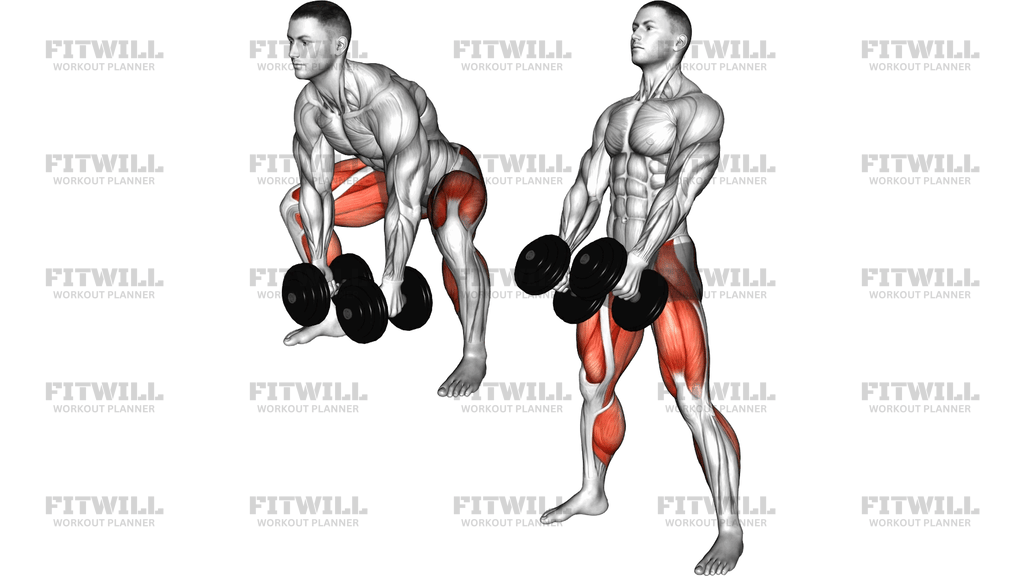
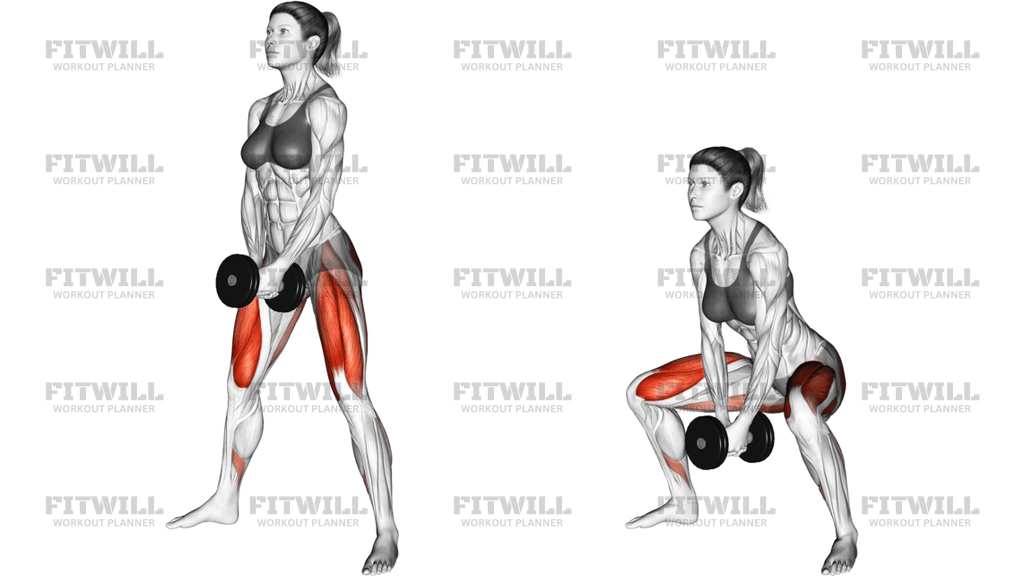
Dumbbell Squat is a classic lower-body strength exercise performed with a dumbbell in each hand hanging at your sides. It trains the thighs heavily, especially the quads, while also asking the glutes, adductors, and trunk to keep the body stable as you descend and stand back up. Because the load sits outside the body rather than on the back, it is a practical squat option for home workouts, accessory work, or lifters who want a straightforward way to build leg strength without a barbell rack.
The setup matters because the dumbbells change how the torso and hips balance through the rep. Stand with your feet about shoulder width apart, let the arms hang long, and keep the chest open as you start the descent. A solid setup helps you sit between your hips instead of collapsing forward, which makes the movement feel smoother on the knees and easier to repeat with control.
On each rep, lower by bending at the hips and knees together, then keep the knees tracking in line with the toes as the hips travel down. The dumbbells should stay close to the sides of the legs, not swing forward. At the bottom, keep the heels grounded and press through the whole foot to stand back up, finishing tall without bouncing or shrugging the shoulders.
Dumbbell Squat is useful when you want a squat pattern that can be loaded gradually and adjusted to different training levels. It works well as a main lift for newer lifters, a warm-up for barbell squatting, or a higher-rep leg builder when equipment is limited. The goal is not to rush depth; it is to keep the torso stacked, the feet stable, and each repetition clean from start to finish.
The exercise is also a good way to spot mobility or balance limits because the dumbbells make any side-to-side shift obvious. If you cannot keep the heels down or the chest from folding, the load is probably too heavy or the stance is too narrow. A controlled Dumbbell Squat should feel like a deliberate leg drive with the abdomen braced and the shoulders quiet, not like a weighted forward lean.
[ Workout Log & Planner ]
Put your next workout in Fitwill
Keep your plan and training log ready when you are.


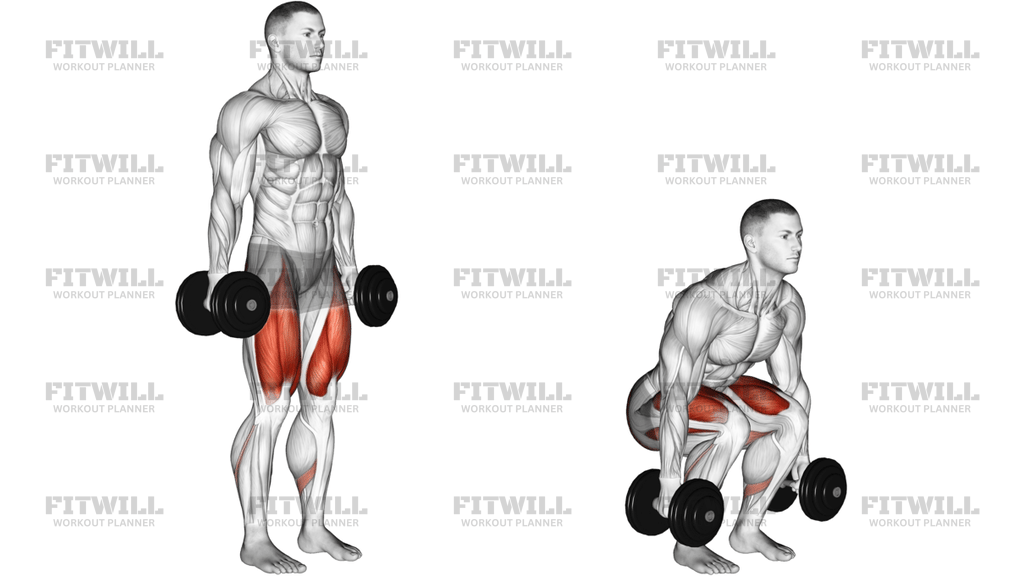
Instructions
- Stand tall with a dumbbell in each hand, arms straight at your sides, feet about shoulder width apart, and toes turned slightly out if that helps your hips sit back comfortably.
- Set your shoulders down and back, keep your chest lifted, and brace your midsection before you start the first descent.
- Keep the dumbbells close to the outside of your thighs so they hang vertically instead of swinging in front of your body.
- Bend at the hips and knees at the same time, sending the hips down between the heels while keeping the feet flat on the floor.
- Lower until your thighs reach at least parallel if your mobility allows, while keeping the knees tracking in line with the toes.
- Pause briefly at the bottom without relaxing onto the joints or letting the dumbbells drift forward.
- Drive through the whole foot to stand back up, squeezing the glutes as you rise and keeping the chest from collapsing.
- Finish the rep fully upright with the hips and knees extended, then reset your breath before the next repetition.
- After the last rep, lower the dumbbells to the floor with control rather than dropping them from standing.
Tips & Tricks
- If the dumbbells tap your thighs on the way down, widen the stance slightly or turn the toes out a few degrees so the arms have a clearer path.
- Keep the dumbbells beside the legs, not in front of the knees; a forward swing usually pulls the torso forward and shortens the squat.
- Use a depth that lets the heels stay planted. If the heels lift, the stance is probably too narrow or the load is too deep for your current mobility.
- Think about sitting between the hips instead of straight down. That cue usually keeps the torso more organized and the knees less crowded.
- Do not lock the knees hard at the top. A strong stand is enough; snapping into extension can make the set feel jerky.
- A slow, controlled lowering phase makes the dumbbells more useful as a strength stimulus than bouncing out of the bottom.
- Choose a load that lets your shoulders stay quiet. If the traps start shrugging, the dumbbells are getting in the way of the squat pattern.
- If your torso folds too much, reduce the range slightly and keep the ribs stacked over the pelvis instead of chasing a deeper rep.
- Exhale as you drive up from the bottom, then take a quick breath and brace before the next descent.
Frequently Asked Questions
What muscles does Dumbbell Squat work most?
It mainly targets the quads, with the glutes and adductors helping drive the squat and the core keeping your torso steady.
Is Dumbbell Squat a good beginner exercise?
Yes. The side-loaded position is easy to learn, and beginners can start with light dumbbells or even bodyweight before adding load.
How low should I go in Dumbbell Squat?
Go as low as you can while keeping the heels down, the chest open, and the knees tracking over the toes. Parallel is a good target for most lifters.
Should the dumbbells stay next to my legs or in front of me?
Keep them hanging next to the thighs. If they drift forward, they pull your torso down and make the squat feel much less stable.
What is the most common mistake in Dumbbell Squat?
Letting the chest collapse and the dumbbells swing forward is the biggest one. Keep the ribs stacked and let the hips and knees lower together.
Can I use a wider stance for Dumbbell Squat?
Yes, a slightly wider stance can help if your hips feel crowded or the dumbbells bump your thighs. Keep the feet flat and the knees following the toes.
How heavy should the dumbbells be for this exercise?
Use a load that lets you squat to your chosen depth without rocking onto your toes, shrugging, or losing control on the way up.
Is Dumbbell Squat safer than a barbell back squat?
It is often easier to learn because the load sits by your sides, but it still needs control and a stable stance. Treat it as a real squat, not a casual leg bend.