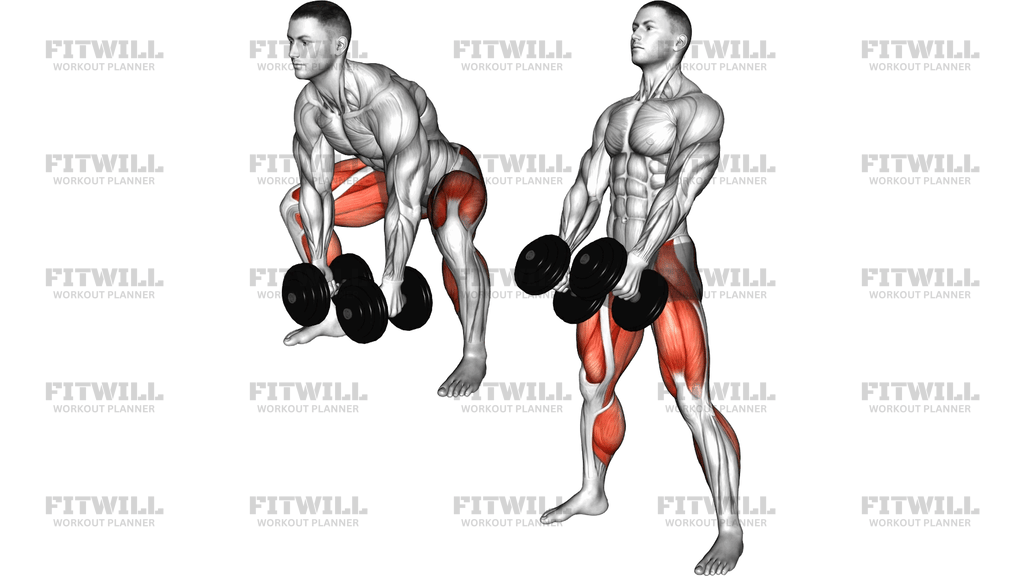
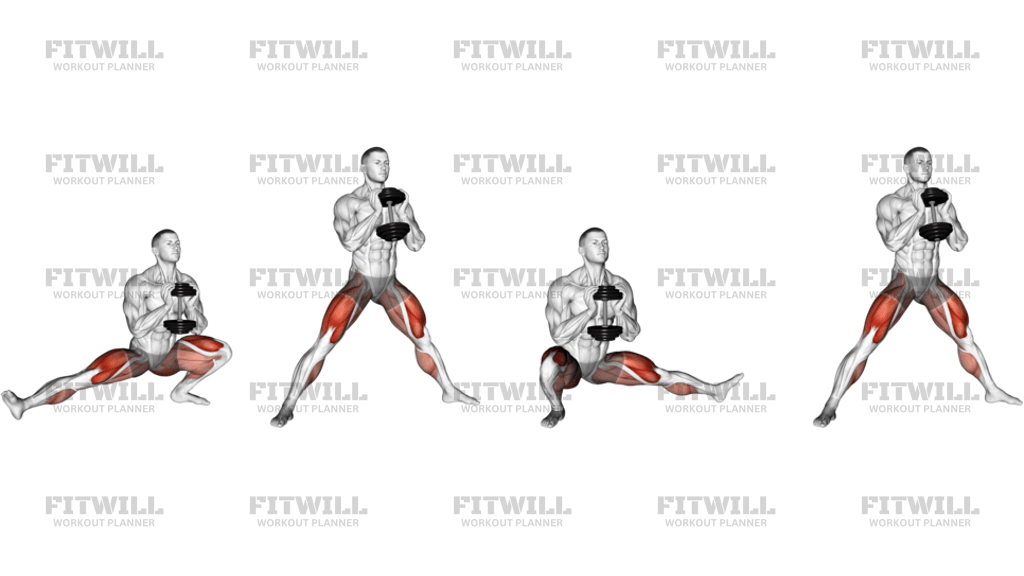
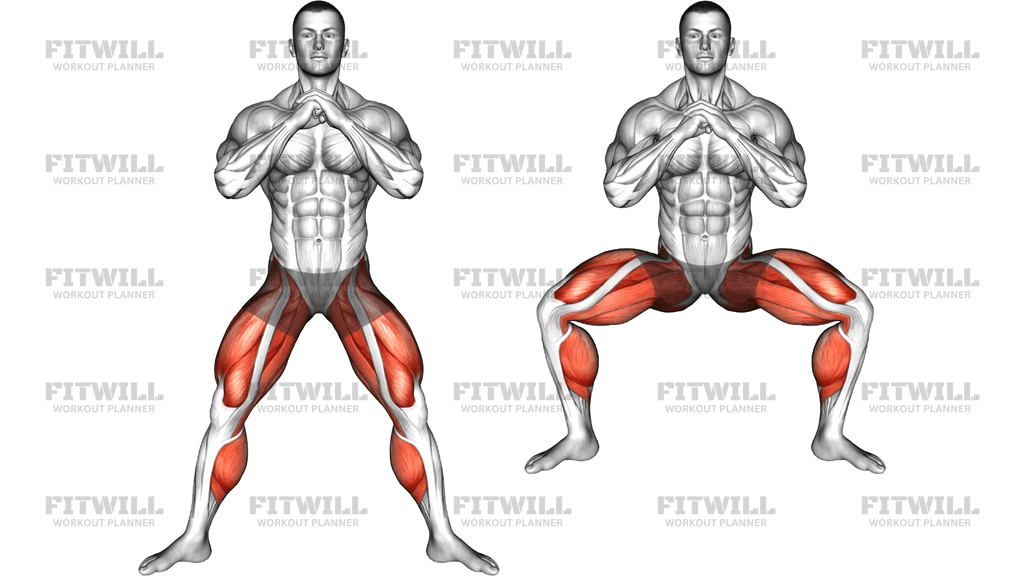
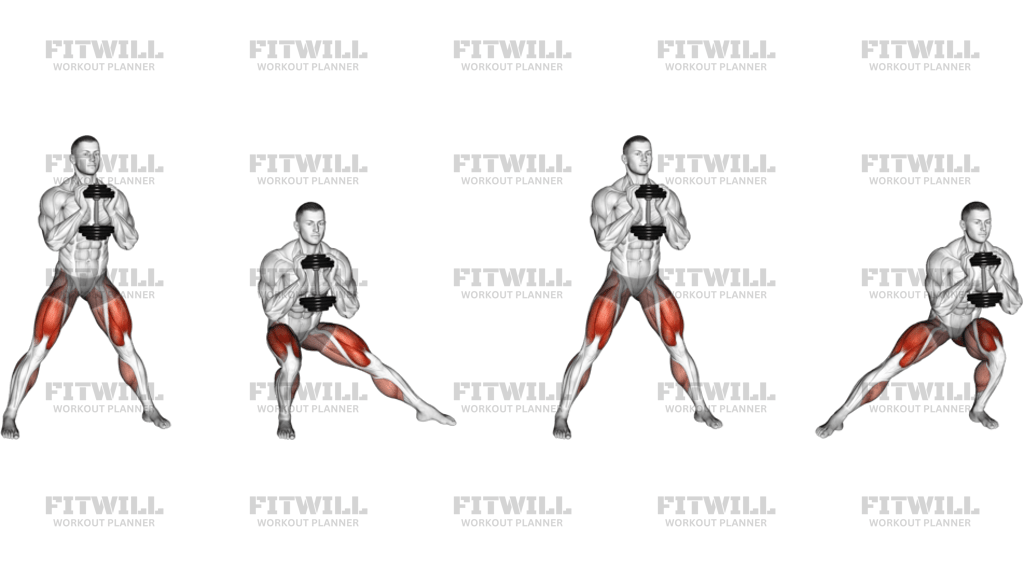
Dumbbell Front Rack Lunge
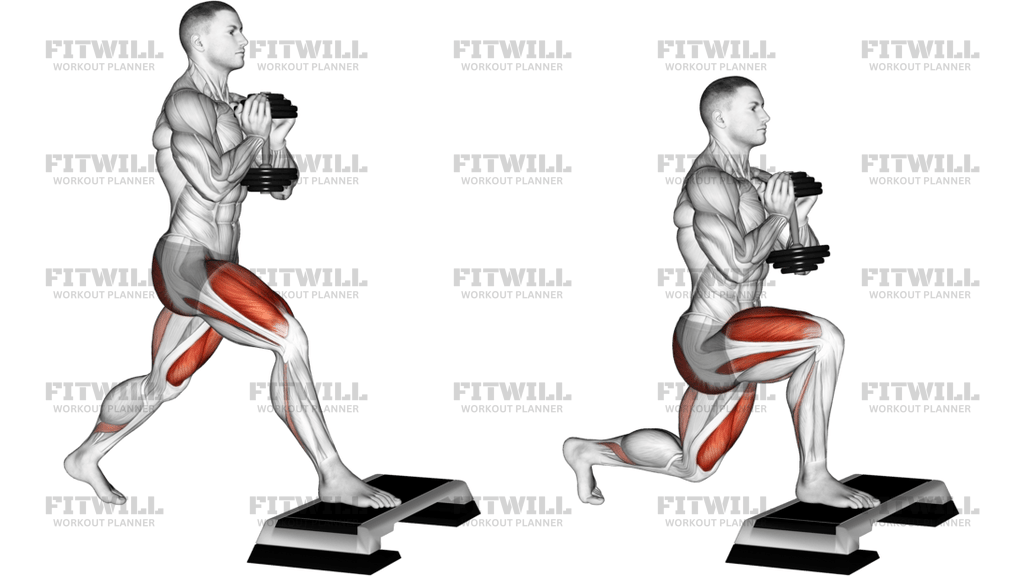
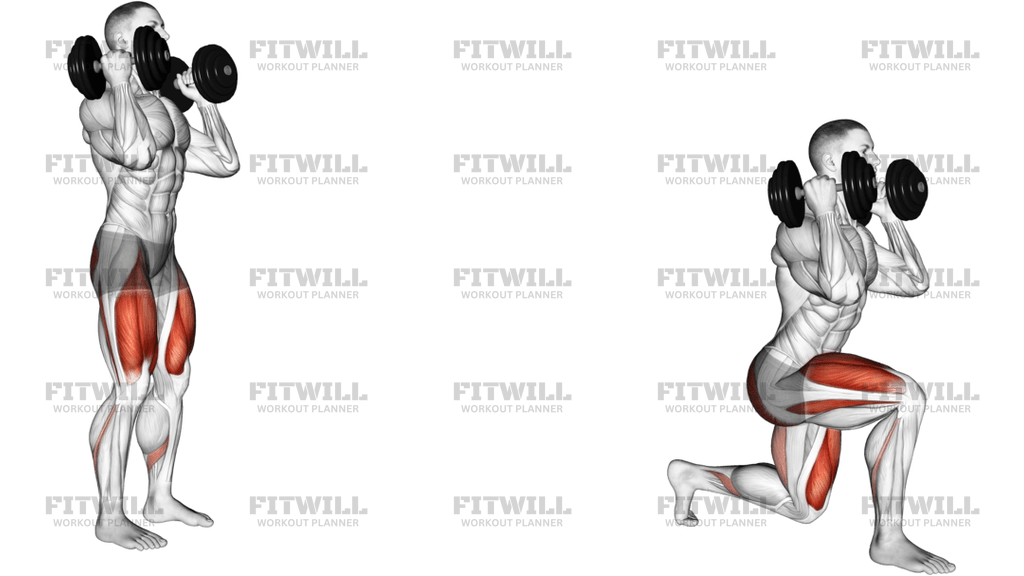
Dumbbell Front Rack Lunge is a quad-focused lower-body exercise built around an upright split stance and a very deliberate step. Holding the dumbbells at shoulder height shifts the challenge away from loose arm swing and toward leg drive, balance, and trunk control. It is useful when you want a lunge that feels demanding without relying on a barbell on your back or a fast walking pattern.
The front rack position changes the feel of the repetition in a practical way. With the dumbbells parked near the shoulders, the torso has to stay stacked over the hips while the front leg accepts most of the load and the back leg helps with balance. That makes Dumbbell Front Rack Lunge a good choice for training quads, glutes, and adductors while also asking the core and upper back to keep the load steady.
A clean rep starts before you descend. Stand tall with the dumbbells at your shoulders, elbows pointed slightly forward, ribs down, and feet set hip-width apart. Step into a split stance and lower straight down, letting the back knee travel toward the floor while the front heel stays planted. The descent should feel controlled and vertical rather than thrown forward into the front knee.
At the bottom, the front thigh should work hard without the torso collapsing over the front leg. Press through the whole front foot to stand, keeping the dumbbells quiet and level as you drive back to the start. If you are using the exercise for strength, step back to reset before the next rep; if you are using it for conditioning, maintain a repeatable stride length and rhythm instead of speeding up the setup.
Dumbbell Front Rack Lunge is especially useful for athletes and lifters who need single-leg strength, knee control, and a stronger upright position under load. It also works well when you want a quad-heavy lunge variation that is easier to balance than carrying the weights at your sides. Keep the range smooth and pain-free, and stop the set if the front knee caves inward, the back knee slams into the floor, or the dumbbells start drifting away from the shoulders.
[ Workout Log & Planner ]
Put your next workout in Fitwill
Keep your plan and training log ready when you are.


Instructions
- Stand tall with a dumbbell racked at each shoulder, palms facing in and elbows slightly forward of your ribs.
- Set your feet hip-width apart, lift your chest, and lock your gaze on a point straight ahead.
- Brace your midsection so your ribs stay stacked over your hips before you take the first step.
- Step one foot back into a split stance, landing on the ball of the back foot while the front heel stays flat.
- Lower straight down until the back knee hovers just above the floor and the front thigh approaches parallel.
- Keep the dumbbells close to your shoulders and let the front knee track over the middle toes as you descend.
- Drive through the front heel and midfoot to stand up, finishing with both hips and knees extended.
- Reset your feet under you before the next rep if you want a strict lunge, or flow directly into the next step if you are performing alternating reps.
- Exhale as you drive up, then regain a tall stacked posture before repeating.
- Lower the dumbbells back to your sides or the rack position only after the set is complete.
Tips & Tricks
- Keep the dumbbells tight to your shoulders; if they drift forward, your torso usually tips with them.
- Think about lowering straight down between your legs instead of reaching the front knee far ahead.
- A shorter step usually makes the front quad work harder; a longer step shifts more stress toward the glute and hip.
- Let the back knee travel down, not forward, so the front shin stays controlled and the stance feels stable.
- If the front heel pops up, shorten the step and reduce the load before adding weight.
- Keep your elbows slightly forward so the front rack stays active and the upper back does not round.
- Use a soft touch from the back knee if you need a depth target, but do not slam it into the floor.
- Hold the bottom position briefly only if you can keep the torso upright and the front foot fully planted.
- Choose a weight that lets you keep both dumbbells level; twisting usually means the set is too heavy.
Frequently Asked Questions
What muscles does Dumbbell Front Rack Lunge train most?
It mainly trains the quads, with strong help from the glutes, adductors, and core because the dumbbells sit at the shoulders and the torso has to stay upright.
Is Dumbbell Front Rack Lunge beginner-friendly?
Yes, if you start with light dumbbells or even just the rack position and focus on a stable step, a vertical torso, and a controlled bottom position.
How should the dumbbells sit in the front rack?
Keep each dumbbell near the front of the shoulder with the elbow slightly forward and the wrist stacked, not bent back toward the forearm.
Should my front foot stay flat during Dumbbell Front Rack Lunge?
Yes. A flat front foot helps you drive through the heel and midfoot instead of bouncing off the toes.
How low should I go on each rep?
Lower until the back knee is just above the floor and the front thigh is close to parallel, but stop sooner if the torso starts tipping or the front heel lifts.
What is the most common mistake in Dumbbell Front Rack Lunge?
Letting the dumbbells drift forward and turning the rep into a forward lean is the big one. Keep the load pinned to the shoulders so the legs, not momentum, do the work.
Can I use Dumbbell Front Rack Lunge for hypertrophy or strength?
Yes. Use moderate reps and a controlled tempo for size, or lower reps with a stricter stance and heavier dumbbells for strength-focused work.
What should I do if my front knee caves inward?
Shorten the step slightly, reduce the load, and think about driving the front knee in line with the second and third toes on the way up.