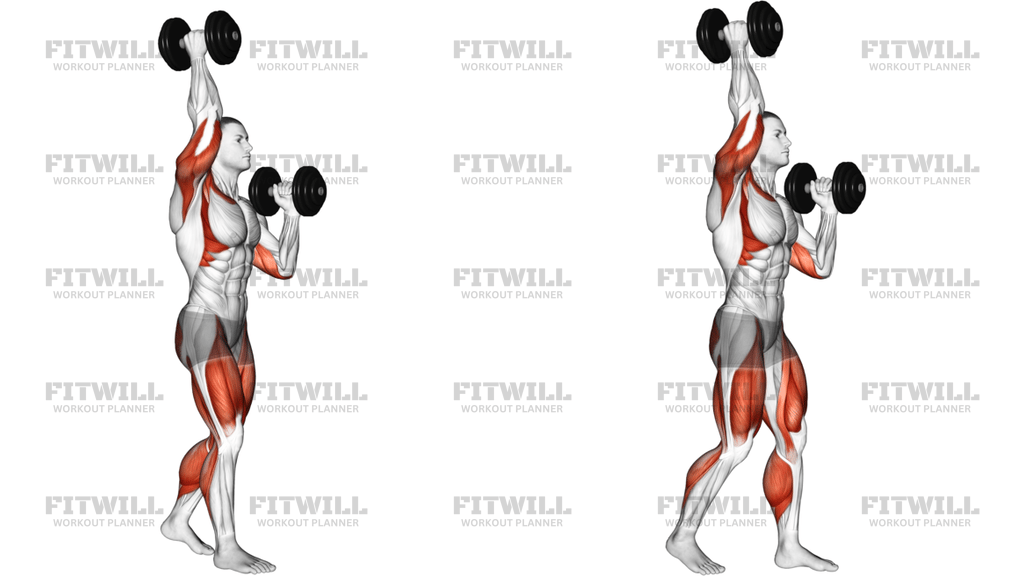
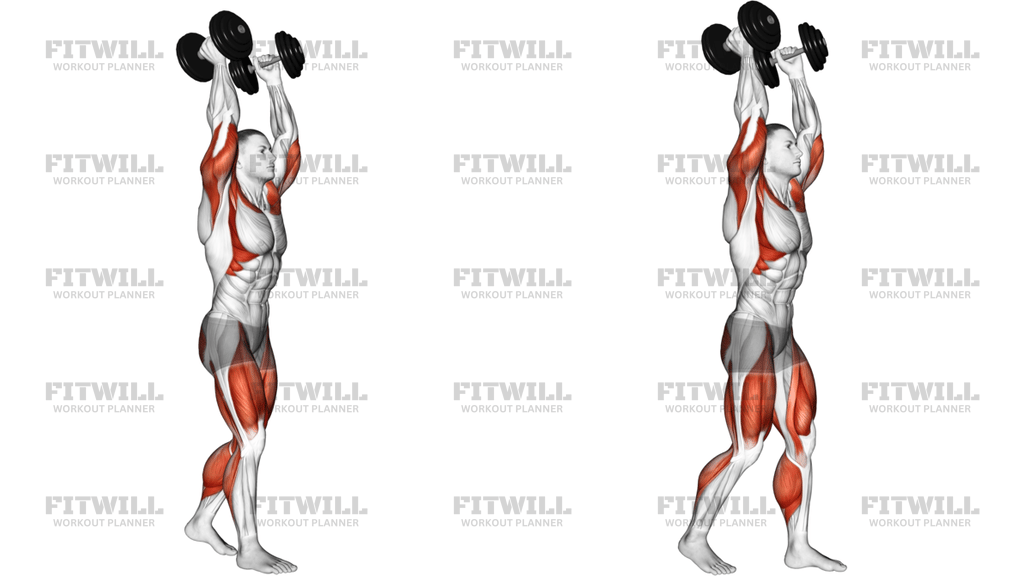
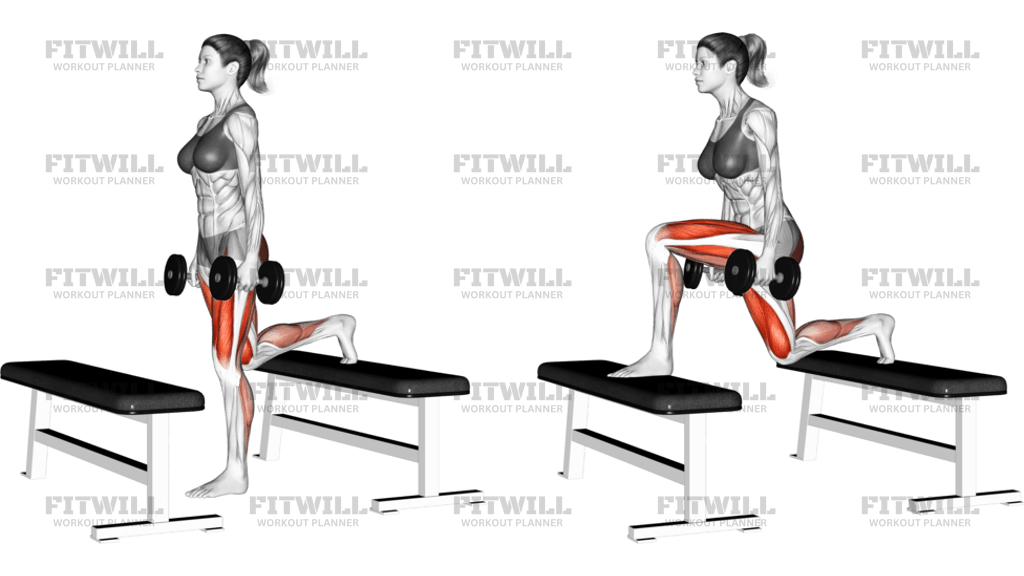
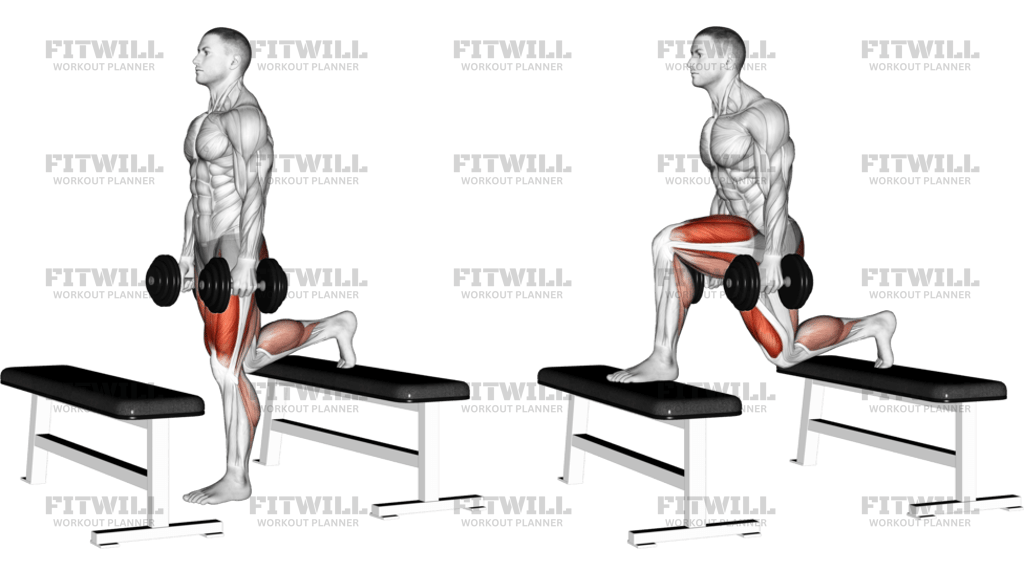
Dumbbell Walking Lunges
Dumbbell Walking Lunges is a traveling single-leg strength exercise that asks each leg to support your body while you keep your torso organized and the dumbbells steady at your sides. It is useful for building quads, glutes, hamstrings, and the small stabilizers around the hips and trunk because every step has to be controlled before the next one begins. The walking pattern makes it different from a static split squat: instead of resetting after each rep, you have to own the landing, the descent, the drive up, and the transition into the next step.
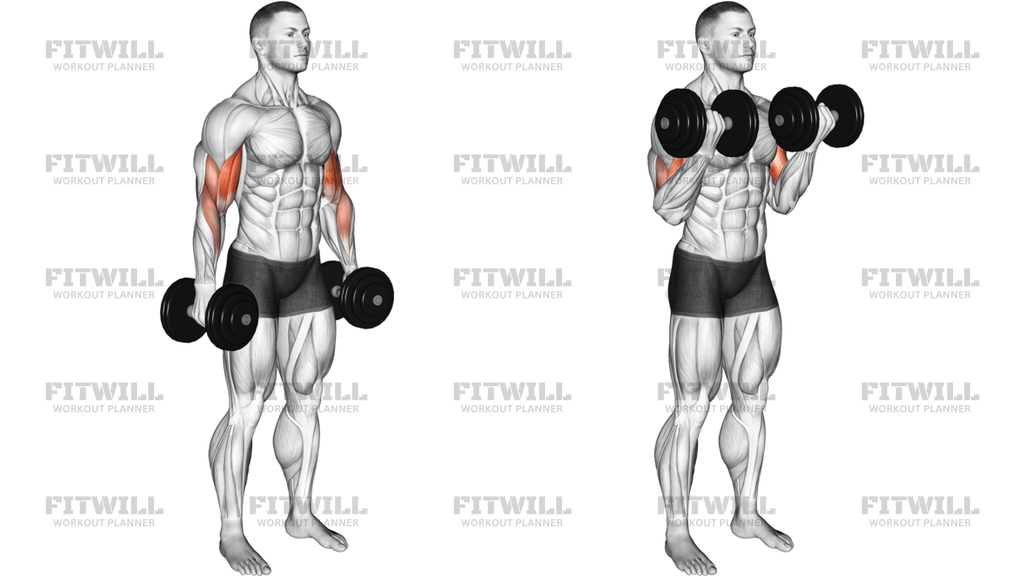
The setup matters more here than on many bilateral leg exercises. Hold a dumbbell in each hand with your arms long, shoulders relaxed, and palms facing your thighs so the weights hang straight down rather than swinging across your body. Take a stride long enough that your front foot can stay flat and your back knee can lower toward the floor without collapsing forward, because a cramped step usually turns the movement into a balance drill instead of a leg exercise. A slightly longer step will usually give you a cleaner line from hip to knee to ankle on the front leg.
Each rep should look smooth and deliberate. Step forward, plant the heel, and lower until both knees are bent and your back knee is hovering just above the floor, then drive through the front heel and midfoot to stand up while you bring the trail leg forward into the next stride. Keep your ribs stacked over your pelvis and let the dumbbells stay quiet at your sides; if the bells start swinging, the set is usually too fast or too heavy. Exhale as you stand and inhale on the descent so you can keep your brace without holding your breath through the whole set.
Dumbbell Walking Lunges fit well in lower-body sessions when you want single-leg strength, hip stability, and a moderate conditioning effect without needing a machine. They also expose left-to-right differences clearly, which makes them useful for athletes and lifters who need better control when one leg is farther back, closer to the floor, or less stable under load. Because the exercise keeps moving, it rewards clean rhythm and spacing more than raw momentum, so the best sets usually look almost identical from rep to rep.
The exercise is safest when the load, step length, and pace match your current balance. If your torso folds forward, the front knee caves in, or the dumbbells start bouncing off your thighs, reduce the weight and slow the transition between steps. When performed well, Dumbbell Walking Lunges give you a strong, repeatable way to train the legs through a natural stride while teaching the hips and trunk to stay organized under load. That combination makes them a strong option for strength work, accessory volume, or conditioning-focused leg training.
[ Workout Log & Planner ]
Put your next workout in Fitwill
Keep your plan and training log ready when you are.


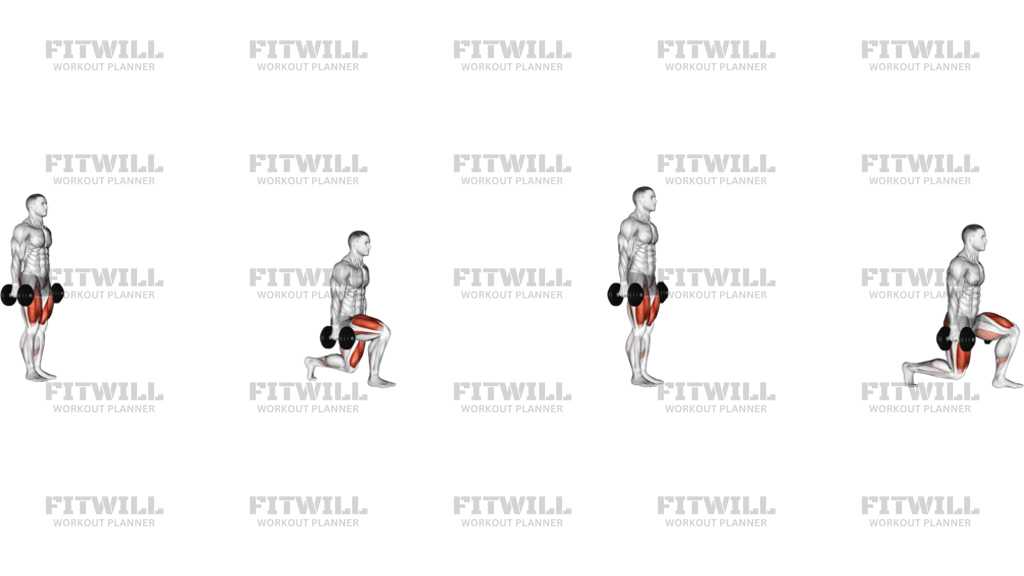
Instructions
- Stand tall holding a dumbbell in each hand at your sides, palms facing in, with your feet about hip-width apart.
- Set your shoulders down, stack your ribs over your pelvis, and look straight ahead before the first step.
- Step forward with one leg and plant the whole front foot flat, keeping the dumbbells hanging quietly beside your thighs.
- Lower your body under control until the front thigh is near parallel and the back knee hovers just above the floor.
- Keep the front knee tracking over the middle toes and let the torso stay tall rather than folding over the front leg.
- Drive through the front heel and midfoot to stand up, exhaling as you rise and bringing the trail leg forward into the next step.
- Continue alternating legs for each walking rep, keeping the stride length and torso angle consistent from side to side.
- Finish by stepping your feet together and lowering the dumbbells to the floor or back to a safe standing hold.
Tips & Tricks
- Choose a stride long enough that your front heel stays down at the bottom; a too-short step usually makes the knee drift forward and the torso tip.
- Keep the dumbbells close to your thighs. If they swing across your body, the set is moving too fast.
- Let the back knee come close to the floor, but do not bounce it off the ground to get the next rep started.
- If your front heel lifts, shorten the range or step a little farther forward so the ankle can stay stacked.
- Think step, lower, drive, step. Rushing the transition between feet usually turns the exercise into a balance scramble.
- Use a lighter load if your torso folds forward, because the bells can pull you out of position before your legs fail.
- Keep each rep on the same walking line instead of crossing your feet or wandering side to side.
- Stop the set when one knee starts caving inward or the next step gets shorter without you choosing it.
Frequently Asked Questions
What muscles do Dumbbell Walking Lunges work most?
They mainly train the quads and glutes, with the hamstrings, adductors, and core helping stabilize each step.
Should my back knee touch the floor in Dumbbell Walking Lunges?
It should come close, but it does not need to slam down. A controlled hover keeps tension on the working leg and reduces impact.
How far should I step on each rep?
Step far enough that your front heel stays down and your torso can remain controlled. If the front knee shoots far forward or the heel lifts, lengthen the step a little.
Do the dumbbells stay at my sides the whole time?
Yes. Let them hang vertically at your sides so they do not pull your torso forward or twist your shoulders.
Are Dumbbell Walking Lunges good for beginners?
Yes, but start light and take shorter walking patterns until you can balance, lower evenly, and keep the front knee tracking cleanly.
Why does my front knee hurt during this exercise?
Usually the step is too short, the knee is collapsing inward, or you are bouncing out of the bottom. Adjust the stride and slow the descent.
What can I use instead if I do not have enough space to walk?
Use reverse dumbbell lunges or split squats in place. They train the same pattern without needing a long walking lane.
How do I make Dumbbell Walking Lunges harder without just adding weight?
Slow the lowering phase, pause briefly near the bottom, or take longer, cleaner steps while keeping the dumbbells still.