Single-Arm Overhead Dumbbell Squat
Single-Arm Overhead Dumbbell Squat is a unilateral squat variation where one arm stays locked overhead while you descend under control. It trains the thighs and glutes hard, but it also asks the core, upper back, and shoulder to keep the load stacked over the midfoot. That overhead position makes the exercise more demanding than a regular squat because any loss of balance, rib flare, or trunk tilt shows up immediately.
The setup matters because the dumbbell should stay directly above the shoulder from the start of the rep to the finish. Stand with a stance that feels stable, usually around shoulder width or a little wider, and place the free arm where it can help with balance without swinging. Keep the working arm straight, wrist neutral, and biceps close to the ear so the weight does not drift forward as you descend.
On the way down, sit between your heels instead of folding at the waist. Let the knees track in line with the toes, keep the chest tall, and lower only as far as you can while the heel stays planted and the dumbbell remains vertical. At the bottom, the rep should feel controlled rather than collapsed; if the torso twists or the shoulder starts to wobble, the load is too heavy or the squat is too deep for your current range.
Press back up by driving through the whole foot and standing tall without losing the overhead lockout. The goal is a clean line from wrist to shoulder to hip, not a rushed bounce out of the bottom. Breathing should stay deliberate: brace before the descent, keep pressure through the torso as you move, and exhale as you stand.
Single-Arm Overhead Dumbbell Squat is useful when you want more than a basic squat pattern but do not want to load both shoulders heavily with a barbell. It fits well in strength, mobility, or coordination-focused sessions, especially if you need to expose side-to-side differences in hip, ankle, or overhead control. Start light, keep the rep honest, and stop the set when the dumbbell starts drifting or the torso can no longer stay centered.
[ Workout Log & Planner ]
Put your next workout in Fitwill
Keep your plan and training log ready when you are.


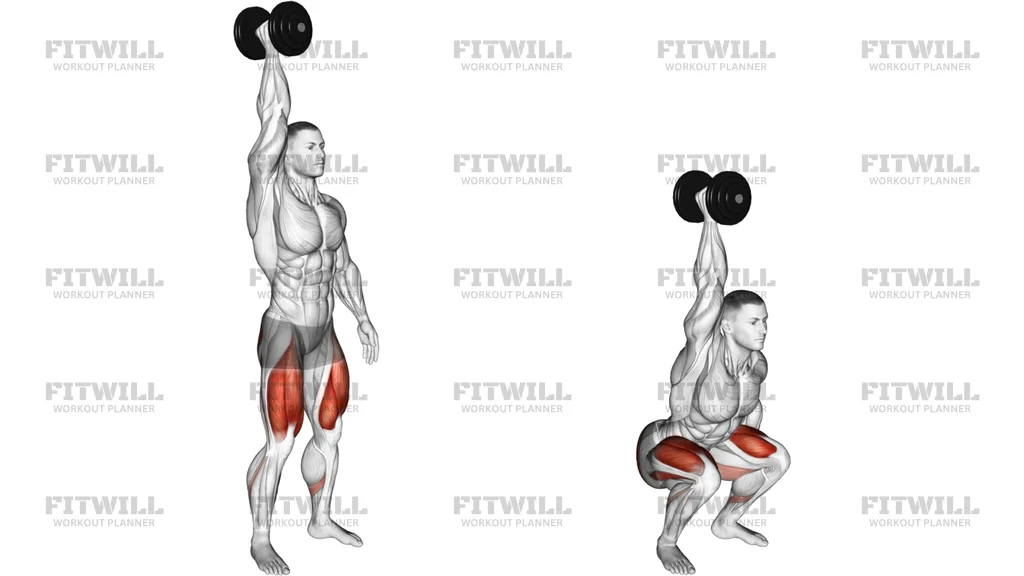
Instructions
- Stand tall with your feet about shoulder-width apart and press one dumbbell straight overhead with the working arm fully extended.
- Stack the wrist over the shoulder, keep the elbow locked, and turn the palm so the dumbbell sits steady above your midfoot.
- Place the free arm slightly out to the side or in front for balance, then set your gaze forward and brace your trunk.
- Turn the toes out slightly if needed and keep your rib cage down so the overhead load does not pull you into a back arch.
- Sit your hips down between your heels while bending the knees and ankles together, keeping the dumbbell vertical over the shoulder.
- Lower until your thighs are at least parallel or until your deepest controlled squat position stops before the heel lifts or the torso twists.
- Drive through the whole foot to stand back up, keeping the knee tracking over the toes and the working arm fixed overhead.
- Finish tall with the glutes tight, the elbow still straight, and the dumbbell stacked over the shoulder before lowering it under control.
Tips & Tricks
- If the dumbbell drifts forward, slow the descent and think about pushing it straight toward the ceiling the whole time.
- Use a wider stance if your heels want to lift, but keep the toes only slightly turned out so the knees can track cleanly.
- A bent elbow turns this into a messy press-squat hybrid, so lower the load if you cannot keep the arm locked out.
- Let the free arm counterbalance, but do not swing it across your body or twist toward the loaded side.
- Pause for a second at the bottom if you tend to rush out of the hole or lose your torso position on the way up.
- If your lower back arches hard overhead, reduce the load and keep the ribs tucked instead of chasing extra depth.
- Choose a depth that lets both heels stay planted; once the heel peels up, the squat is no longer helping your control.
- Equal reps on both sides matter here, because the overhead hold often exposes one shoulder or hip that is less stable.
Frequently Asked Questions
What muscles does Single-Arm Overhead Dumbbell Squat work most?
It hits the thighs and glutes most directly, with the core and shoulder working hard to keep the dumbbell stacked overhead.
Is Single-Arm Overhead Dumbbell Squat suitable for beginners?
Yes, but only with a light dumbbell and a comfortable overhead position. If the shoulder feels unstable, start with a goblet squat first.
Why does the dumbbell need to stay directly over the shoulder?
That stacked position keeps the rep balanced. If the weight drifts forward or sideways, the torso usually twists and the squat becomes much harder to control.
How deep should I go in the Single-Arm Overhead Dumbbell Squat?
Go only as deep as you can while keeping the heel down, the knee tracking over the toes, and the dumbbell stable overhead. Depth is useful only when the position stays clean.
What is the most common form mistake in this squat?
The biggest errors are rib flare, a bent working elbow, and the torso leaning toward the dumbbell. Those usually mean the load is too heavy or the stance is too narrow.
Can I use a kettlebell instead of a dumbbell?
You can use a kettlebell for a similar overhead squat pattern, but the dumbbell version keeps the load more centered in the hand and makes the shoulder stack easier to judge.
Should I do both sides evenly?
Yes. Do the same number of reps on each side, and start with your weaker or less stable side so the better side does not hide the difference.
What should I do if my shoulder feels pinchy overhead?
Stop the set and reduce the load or range of motion. If the overhead position still feels uncomfortable, use a simpler squat variation until the shoulder can stay stacked without pain.