Dumbbell Decline Overhead Sit-Up
Dumbbell Decline Overhead Sit-Up is a weighted abdominal exercise performed on a decline bench with the dumbbells held straight overhead. The decline angle lengthens the range of motion, so each rep asks the trunk to work through a bigger curl than a flat sit-up. That makes setup important: if your feet are not locked in securely, your ribs flare, or the weights drift away from the line of the shoulders, the movement turns into a sloppy hip-flexor lift instead of a controlled spinal curl.
The exercise emphasizes the abdominal wall, especially the rectus abdominis, with the obliques and deep core muscles helping you stay stacked as you rise. Because the arms stay overhead, the shoulders and upper back also have to stabilize the dumbbells while the torso moves. That overhead position is not just cosmetic; it changes the leverage and makes it easier to lose control if the weights are too heavy or if the lower back starts to arch on the way down.
A good rep begins with the body anchored on the bench, ankles secured under the pads, knees bent, and the dumbbells held directly above the chest or slightly behind the line of the shoulders. From there, curl the ribcage toward the pelvis, sit all the way up without yanking on the neck, and finish tall before lowering yourself back down under control. The descent should be deliberate, with the abs resisting the pull of gravity instead of letting the torso drop and rebound.
This is most useful as an accessory core exercise when you want loaded trunk flexion, stronger sit-up strength, or more challenge than a basic floor crunch can provide. It also works well when paired with lower-body or pressing sessions because it trains the midsection to stay organized while the arms are fixed overhead. Use a lighter load than you would for a press or carry, because the limiting factor here is usually trunk control, not upper-body strength.
The main safety priority is keeping the movement clean and pain-free. If the neck tenses, the lower back pinches, or the dumbbells drift so far behind the head that the shoulders lose position, the load is too heavy or the range is too aggressive. Reduce the decline angle, shorten the range slightly, or switch to a bodyweight decline sit-up until the curl pattern stays smooth. When performed well, the exercise builds strong abdominal flexion without turning into a momentum-based swing.
Fitwill
Log Workouts, Track Progress & Build Strength.
Achieve more with Fitwill: explore over 9600 exercises with images and videos, access built-in and custom workouts, perfect for both gym and home sessions, and see real results.
Start your journey. Download today!




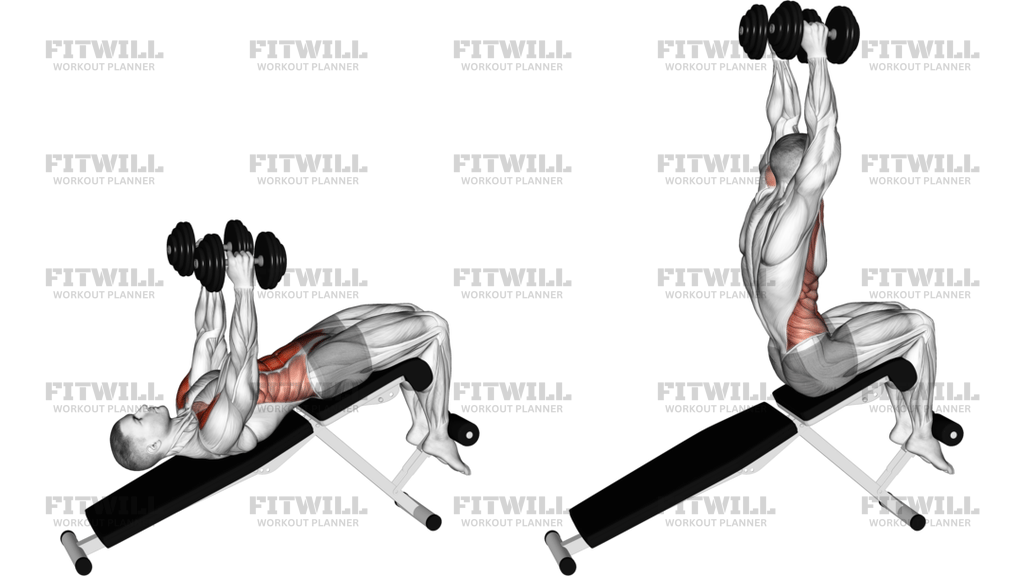
Instructions
- Set the decline bench to a secure angle and hook your ankles firmly under the rear pads.
- Sit back on the bench with your hips low enough that your torso can lower without sliding.
- Hold one dumbbell in each hand and extend both arms overhead so the bells stay stacked above your shoulders.
- Brace your abs, keep your chin slightly tucked, and keep your ribs from flaring as you start the rep.
- Curl your upper back off the bench first, then continue sitting up by bringing your ribs toward your pelvis.
- Finish tall at the top with your torso upright and the dumbbells still controlled overhead.
- Lower yourself back to the bench slowly, resisting the drop all the way until your shoulder blades touch down.
- Reset your brace at the bottom before starting the next repetition.
Tips & Tricks
- Choose a light load first; the overhead hold makes this much harder than a regular decline sit-up.
- Keep the dumbbells stacked over the shoulders instead of drifting behind your head, which can pull you out of position.
- Lead the rep with the ribs, not the neck; if you feel yourself craning forward, the load is too heavy.
- Lower for two to three seconds so the abs do the braking instead of letting gravity drop you back.
- If your lower back arches off the bench on the way down, shorten the range and keep the ribs more tucked.
- Keep the ankles locked under the pads so the hips do not slide as you sit up.
- Use a bench angle that lets you finish every rep without jerking or bouncing at the bottom.
- Stop the set when the dumbbells start wobbling overhead or your torso stops curling smoothly.
Frequently Asked Questions
What muscles does a Dumbbell Decline Overhead Sit-Up train?
It primarily trains the abdominal wall, especially the rectus abdominis, with the obliques, deep core, hip flexors, and shoulder stabilizers helping to control the movement.
Why hold the dumbbells overhead instead of at the chest?
The overhead position increases the lever arm and makes the sit-up harder to control, which raises the demand on the abs and shoulder stability.
Should my arms stay straight the whole time?
Yes, keep a small natural bend if needed, but the goal is to keep the dumbbells stacked overhead without turning the rep into a pressing motion.
How low should I go on the way down?
Lower until your shoulder blades touch the bench and you can keep your lower back controlled; do not force extra range if the hips slide or the back arches hard.
What is the most common mistake with this exercise?
People usually yank with the neck, let the dumbbells drift, or bounce off the bench instead of curling up under control.
Is this a good exercise for beginners?
Yes, but beginners should start with bodyweight or very light dumbbells and a mild decline before adding more load.
Can I do this if my lower back gets irritated during sit-ups?
Only if you can keep a neutral, pain-free range; otherwise reduce the decline angle or switch to a shorter-range crunch variation.
How do I make the exercise harder without using heavier dumbbells?
Slow the lowering phase, pause briefly at the top, or use a steeper decline while keeping the same strict overhead position.