Dumbbell Squat
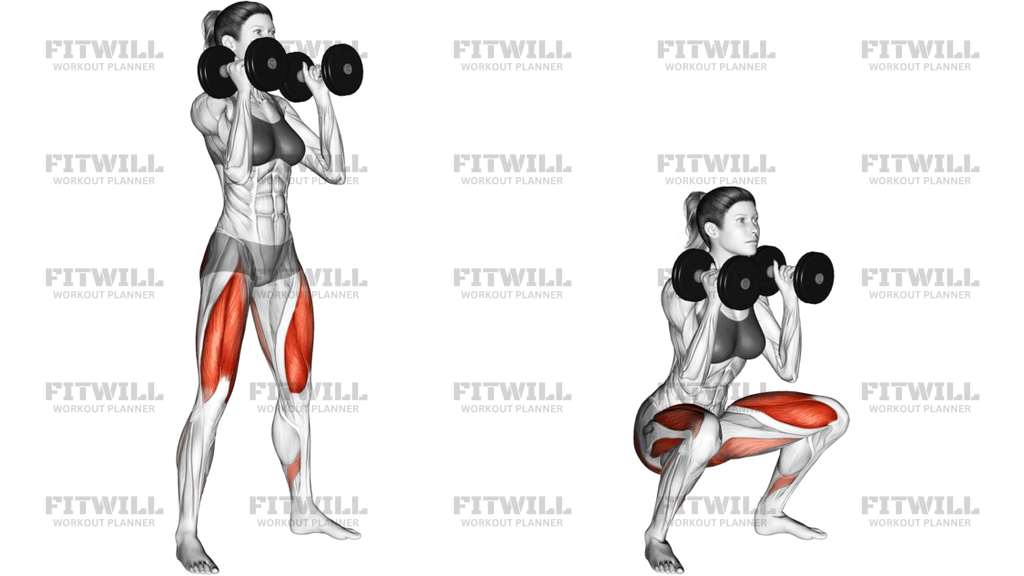
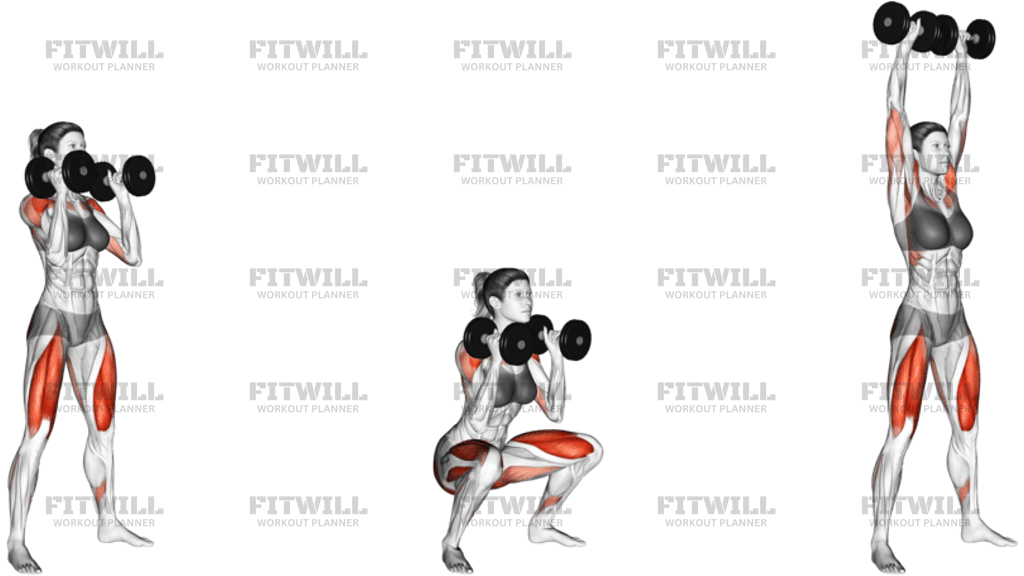
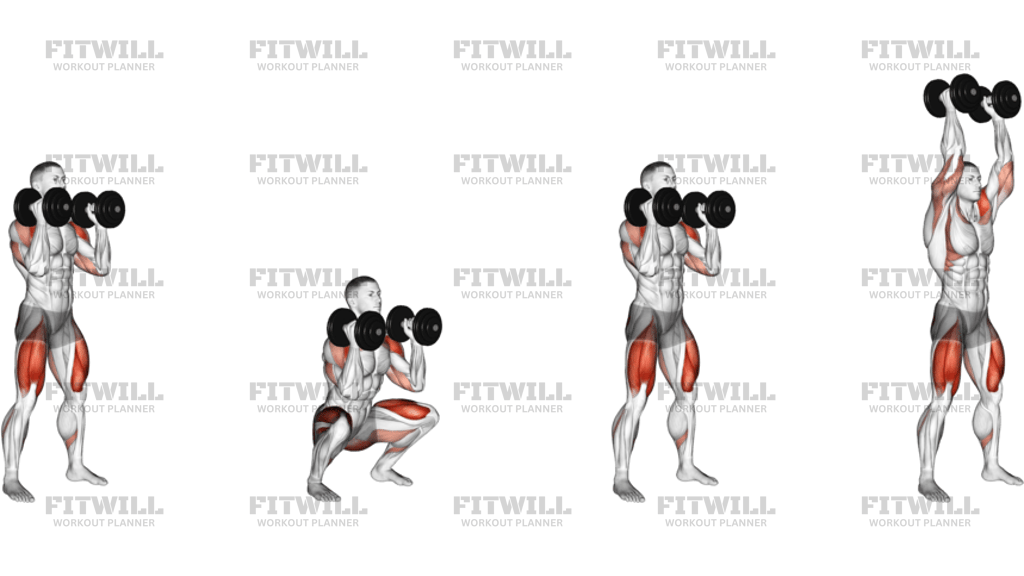
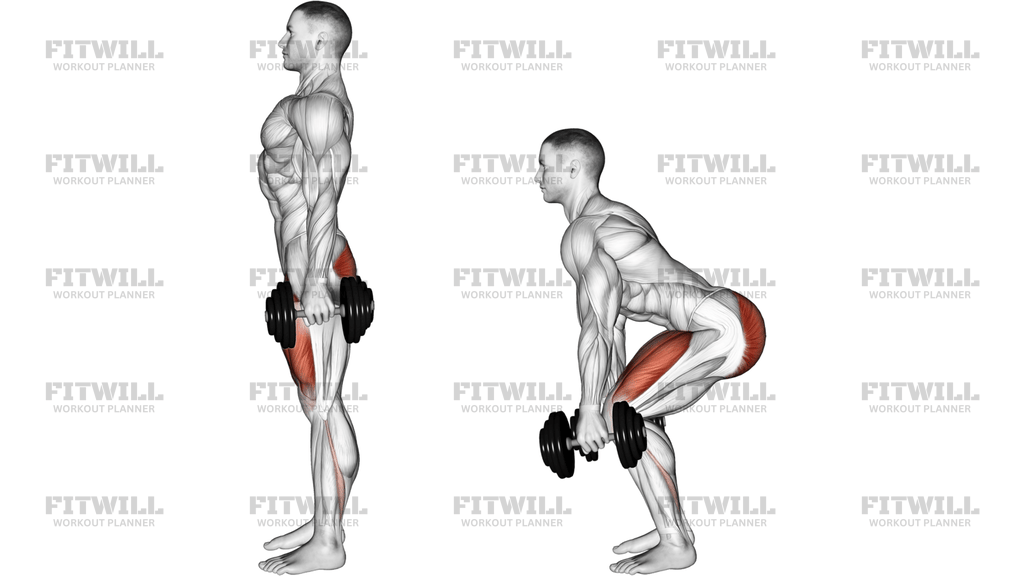
Dumbbell Squat is a loaded squat variation that uses one or two dumbbells to build strength in the glutes, quads, and adductors while asking the trunk to stay organized under load. The dumbbells make the movement more demanding than a bodyweight squat because they pull the shoulders down and challenge balance, grip, and torso control at the same time.
The exercise is useful when you want a simple lower-body pattern that still carries over to real-world lifting and athletic positions. A good Dumbbell Squat should look deliberate: feet planted, chest open, ribs stacked over the pelvis, and knees tracking in line with the toes as you descend and stand. That setup matters because small changes in stance, foot pressure, or torso angle can shift the work away from the legs and into the low back.
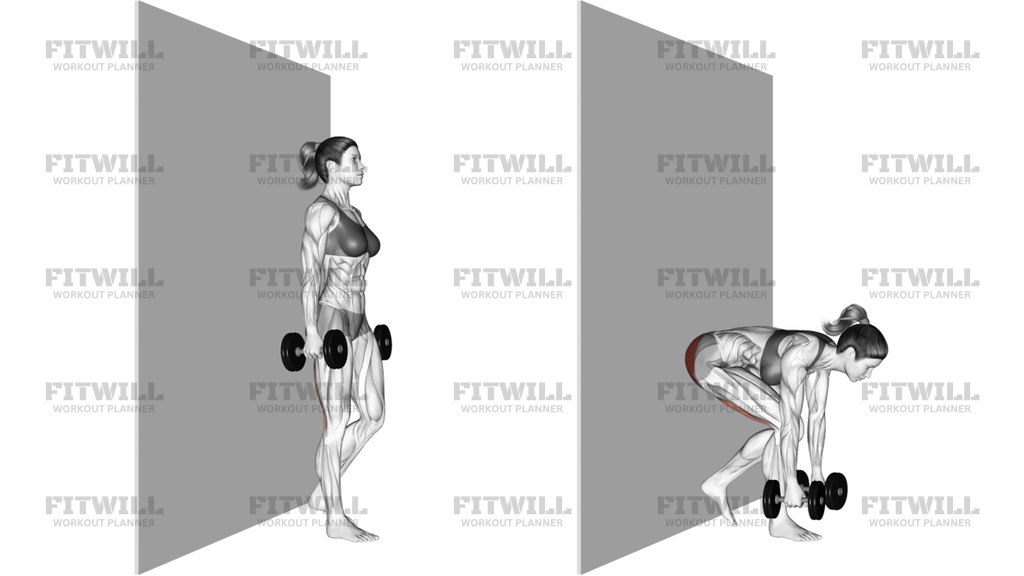
Start by standing tall with the dumbbells held at your sides or in a front-loaded position, depending on the variation you are following. Sit the hips down between the heels, keep the full foot on the floor, and let the knees bend far enough for the thighs to approach parallel or the deepest pain-free depth you can control. If the load pulls you forward or the heels lift, the squat is usually too heavy or the stance is too narrow for your current mobility.
On the way up, drive the floor away through the midfoot and heel and let the hips and knees extend together. The top position should finish with the glutes active and the torso stacked, not with an aggressive lean-back or a shrug of the shoulders. Breathing should stay controlled: take air before each rep, brace as you lower, and exhale as you stand when the hardest part of the rep has passed.
Dumbbell Squat works well for general strength work, warm-ups before heavier barbell squats, or accessory volume when you want leg training without a bar on your back. It is also practical for home training because dumbbells are easier to set up than machines or racks. Keep the range honest, choose a load that lets your knees stay aligned, and stop the set if your lower back starts doing the work that the legs should be handling.
[ Workout Log & Planner ]
Put your next workout in Fitwill
Keep your plan and training log ready when you are.


Instructions
- Stand with your feet about shoulder-width apart and hold a dumbbell in each hand at your sides or one dumbbell in a goblet position.
- Plant your whole foot on the floor, keep your chest lifted, and stack your ribs over your pelvis before the first rep.
- Turn your toes out slightly if it helps your knees track in line with them during the descent.
- Sit your hips down between your heels while bending your knees and keeping your heels rooted.
- Lower until your thighs are near parallel or as deep as you can go without losing balance, heel contact, or spinal position.
- Keep the dumbbells quiet at your sides and let your elbows hang naturally instead of swinging the weights.
- Drive up by pushing the floor away through your midfoot and heels, letting your hips and knees straighten together.
- Finish tall with your glutes active and your knees fully extended but not locked back hard.
- Reset your breath at the top before the next rep and repeat with the same stance and depth.
Tips & Tricks
- If the dumbbells pull your shoulders forward, use a lighter pair or switch to a goblet hold so your torso can stay more upright.
- Let your knees travel forward enough to keep the heels down; a squat that turns into a hinge usually shifts the load away from the quads and glutes.
- Keep pressure through the big toe, little toe, and heel so the feet do not roll inward as you rise.
- A brief pause in the bottom position can expose whether you are truly controlling the squat or bouncing out of it.
- If your lower back feels more taxed than your legs, reduce the load and shorten the range until the torso stays stacked.
- Use a slightly wider stance if your hips pinch at the bottom or your knees need more room to track comfortably.
- Lower in two to three seconds to keep the descent honest and avoid dropping into the hole.
- Choose dumbbells that let you keep the shoulders relaxed; shrugging the weights often makes the whole squat feel unstable.
- Stop the set when your knees cave inward or your heels start lifting instead of forcing extra reps.
- For a more leg-focused version, keep the dumbbells at your sides; for a more upright trunk, hold one dumbbell at chest height.
Frequently Asked Questions
What muscles does Dumbbell Squat work most?
Dumbbell Squat mainly trains the glutes and quads, with the adductors, hamstrings, and core helping stabilize the position. The exact emphasis changes with stance width and where you hold the dumbbells.
Should I hold the dumbbells at my sides or at my chest?
Either works, but a goblet hold usually makes it easier to stay upright, while dumbbells at your sides challenge grip and trunk control more. Pick the version that lets you squat without tipping forward.
How deep should the Dumbbell Squat go?
Go as deep as you can while keeping your heels down, knees tracking cleanly, and your lower back neutral. If depth only comes from rounding the spine, cut the range slightly.
Why do my heels lift during Dumbbell Squat?
That usually means your stance is too narrow, your ankles need more mobility, or the load is too far forward. Widen the stance a little and keep pressure through the whole foot.
What is the most common mistake in Dumbbell Squat?
Letting the torso collapse forward is the big one. Keep the chest proud, ribs stacked, and dumbbells quiet so the legs do the lifting instead of the low back.
Is Dumbbell Squat good for beginners?
Yes, because the load is easy to scale and the movement pattern is simple. Start with light dumbbells or a goblet hold and earn depth before adding weight.
How can I make Dumbbell Squat feel more in my glutes?
Use a slightly wider stance, sit between the heels, and press through the midfoot and heel on the way up. If you stay too upright with a very narrow stance, the quads may take over more of the work.
Can I replace barbell squats with Dumbbell Squat?
It can be a useful substitute for lighter strength work, higher reps, or home training, but it will not load the legs as heavily as a barbell squat. Treat it as a strong accessory or stepping-stone variation.