Front Back Leg Raises
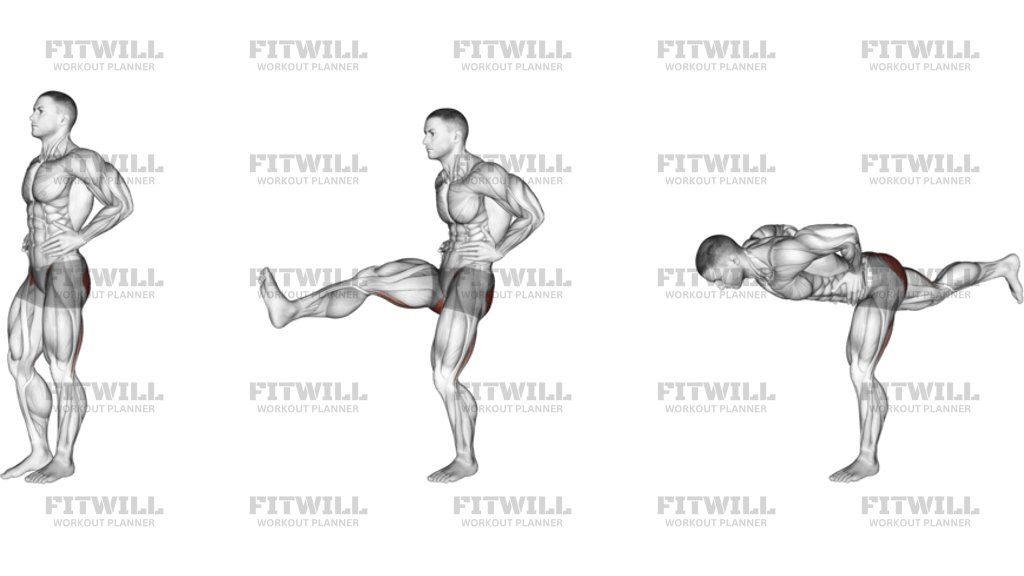
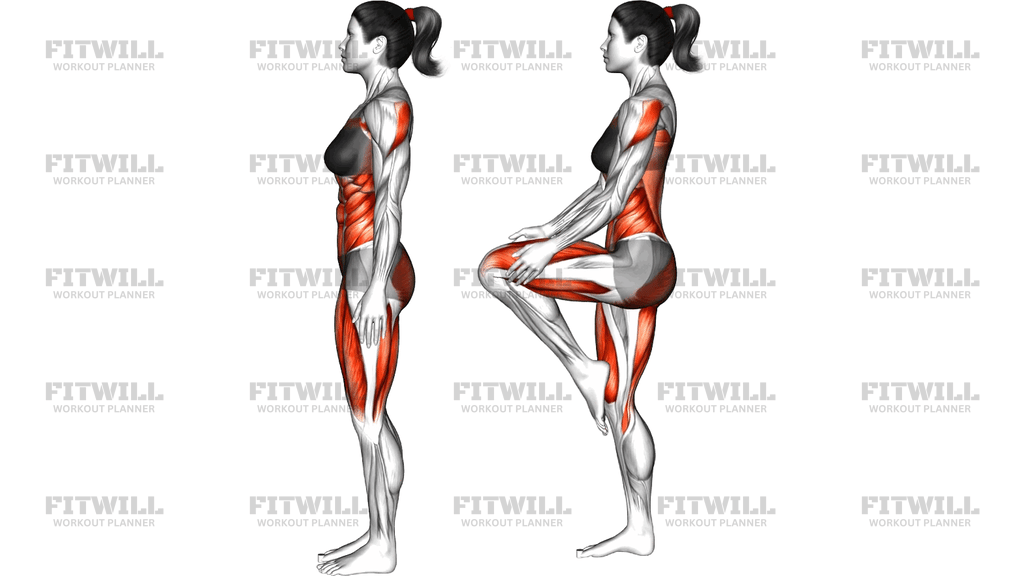
Front Back Leg Raises is a bodyweight standing hip-control drill that combines a straight-leg front raise with a controlled leg sweep behind the body. It trains the hips and trunk to move without the torso drifting, which makes it useful for warm-ups, activation work, and light accessory training. The exercise looks simple, but the value comes from keeping the pelvis level while the free leg travels forward and backward under control.
In the front raise, the hip flexors lift the leg while the standing side keeps the body tall and steady. In the back raise, the glutes help move the leg behind the body without turning the movement into a low-back arch. That front-to-back pattern is why the exercise is often used to improve coordination, balance, and posture at the hip rather than chasing load or speed.
Setup matters because most mistakes come from losing the standing-leg base. Keep most of your weight over one foot, keep the ribs stacked over the pelvis, and use a light wall touch if you need it. A smaller range with clean control is better than a high kick that makes the trunk lean, the pelvis twist, or the support foot wobble. The goal is to move the free leg while the rest of the body stays organized.
During the rep, lift the leg forward without snapping the knee or swinging the torso, then lower it under control before sending it behind you. On the back portion, squeeze the glute and keep the lower back from taking over the motion. Breathing should stay smooth so the torso does not brace so hard that the pelvis stiffens or the movement becomes jerky.
Use Front Back Leg Raises when you want a low-impact drill for hip control, standing balance, and light glute and hip-flexor activation. It is a good fit before leg training, during a mobility block, or as a corrective-style accessory movement for people who need better control of the hips and pelvis. Stay in a pain-free range, keep the tempo deliberate, and stop the set if the standing side starts to collapse or the motion turns into momentum.
Fitwill
Log Workouts, Track Progress & Build Strength.
Achieve more with Fitwill: explore over 9600 exercises with images and videos, access built-in and custom workouts, perfect for both gym and home sessions, and see real results.
Start your journey. Download today!




Instructions
- Stand tall with your feet about hip-width apart, hands on your hips or lightly on a wall for balance, and shift most of your weight onto one standing leg.
- Keep your ribs stacked over your pelvis, soften the standing knee slightly, and square your hips so the trunk does not twist.
- Lift the free leg straight in front of you with the toes up or neutral, keeping the motion driven from the hip instead of the lower back.
- Raise the leg only as high as you can without leaning back, hiking the hip, or swinging the torso.
- Lower the leg under control to the start position and keep the standing foot rooted through the heel and big toe.
- Sweep the same leg behind your body with a controlled hip extension, squeezing the glute instead of arching the low back.
- Pause briefly at the back position, then return to center without letting your pelvis rotate or your chest collapse forward.
- Breathe out on each lift and inhale as the leg comes back to the start, then repeat for the planned reps before switching sides.
Tips & Tricks
- Keep the standing foot planted like a tripod so the ankle does not collapse when the free leg moves.
- If the torso starts leaning backward on the front raise, lower the leg a few inches and repeat with a smaller range.
- Think about lifting from the hip crease on the front raise instead of kicking from the knee.
- On the back raise, keep the ribs down so the glute finishes the motion and the low back does not overextend.
- A light wall touch is better than using momentum if balance is the limiting factor.
- Move slowly enough that you can feel both the lift and the return, especially on the lowering phase.
- Keep the pelvis facing forward; twisting usually means the range is too big or the rep is moving too fast.
- Stop the set when the standing hip starts hiking or the free leg can no longer travel cleanly through both directions.
Frequently Asked Questions
What muscles does Front Back Leg Raises work?
The front raise emphasizes the hip flexors, while the back raise emphasizes the glutes and hamstrings. The standing leg and core also work hard to keep the pelvis steady.
Is the movement supposed to be done on one leg at a time?
Yes. You balance on one leg while the other leg lifts forward and backward, then you switch sides after the planned reps.
How high should I raise the leg?
Only as high as you can go without leaning the torso, twisting the hips, or arching the low back.
Can I hold onto a wall or rack for support?
Yes. Light fingertip support is useful if balance is limiting the hip movement or making the rep sloppy.
Should my knee stay straight during the front raise?
A straight or softly unlocked knee is fine, but the lift should still come from the hip rather than from snapping the leg upward.
What is the most common form mistake?
Most people lean back on the front raise or arch the lower back on the rear raise. Both mistakes usually mean the range is too big.
Is this more of a strength exercise or a mobility drill?
It is mainly a control and activation drill with some strength demand, especially for the standing leg and hip stabilizers.
How should I breathe during the reps?
Exhale as the leg lifts and inhale as it returns, keeping the breathing smooth so you do not brace so hard that the pelvis stops moving cleanly.