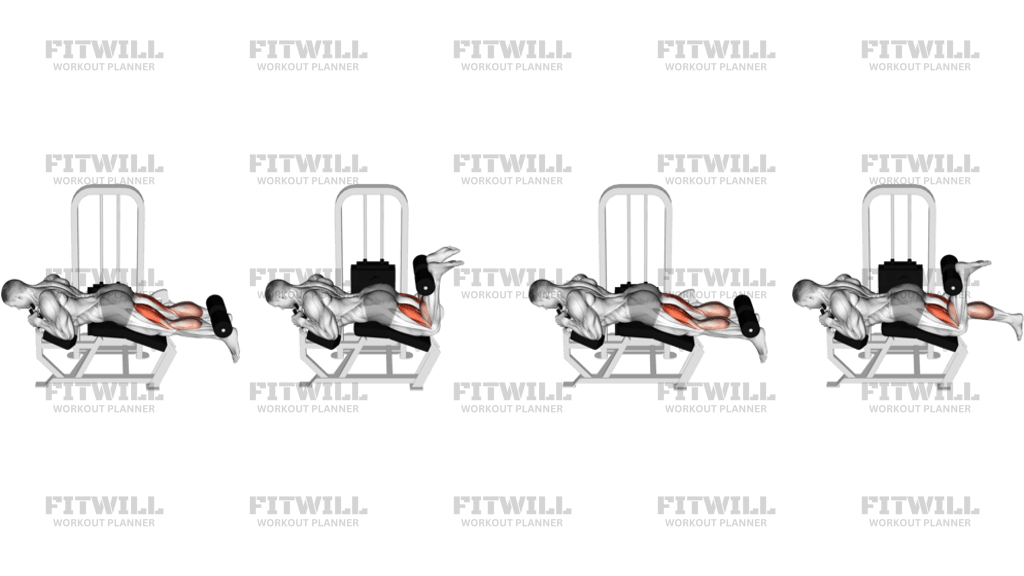
Lever Seated One Leg Curl Right Side
Lever Seated One Leg Curl Right Side is a machine-based hamstring exercise that isolates the right leg through knee flexion. The seat and lever arm keep the path controlled, which makes this a useful choice for building hamstring strength, shape, and side-to-side balance without needing to swing the torso or coordinate a free weight. The working leg should curl the pad through a smooth arc while the other leg stays relaxed and out of the way.
This variation places most of the load on the hamstrings of the right leg, especially when the knee starts near full extension and you pull the pad toward the back of the seat. The glutes and calves help stabilize the leg, but the main work comes from the muscles that bend the knee. Because the machine fixes the path, the exercise is easy to overload with sloppy momentum if the pad is set too low, too high, or too far from the ankle, so the setup matters more than the weight on the stack.
Position yourself so the machine pivot lines up with your knee and the roller pad sits just above the Achilles tendon, not on the foot. Press your thigh and hips into the seat, hold the handles or sides of the machine, and keep your pelvis down as you start each rep. The right heel should travel back under control, the knee should stay in line with the machine path, and the torso should stay quiet instead of lifting to fake a bigger curl.
At the top of the repetition, squeeze the hamstring without losing contact with the seat. On the way down, resist the pad slowly until the right leg is nearly straight again, but avoid snapping into lockout or letting the stack slam. Smooth breathing helps keep the torso stable: exhale as you curl, inhale as you return. If the machine or seat is adjusted well, the set should feel like clean knee flexion on one side rather than a full-body effort.
Use this exercise as accessory work after heavier lower-body lifts, during unilateral hamstring training, or whenever you want to correct a weaker right side. It is also a practical option for lifters who need a fixed path because of balance limits or technique drift on free-weight hamstring work. Choose a load that lets you keep the hip pinned, the knee path consistent, and the eccentric phase controlled from the first rep to the last.
[ Workout Log & Planner ]
Put your next workout in Fitwill
Keep your plan and training log ready when you are.


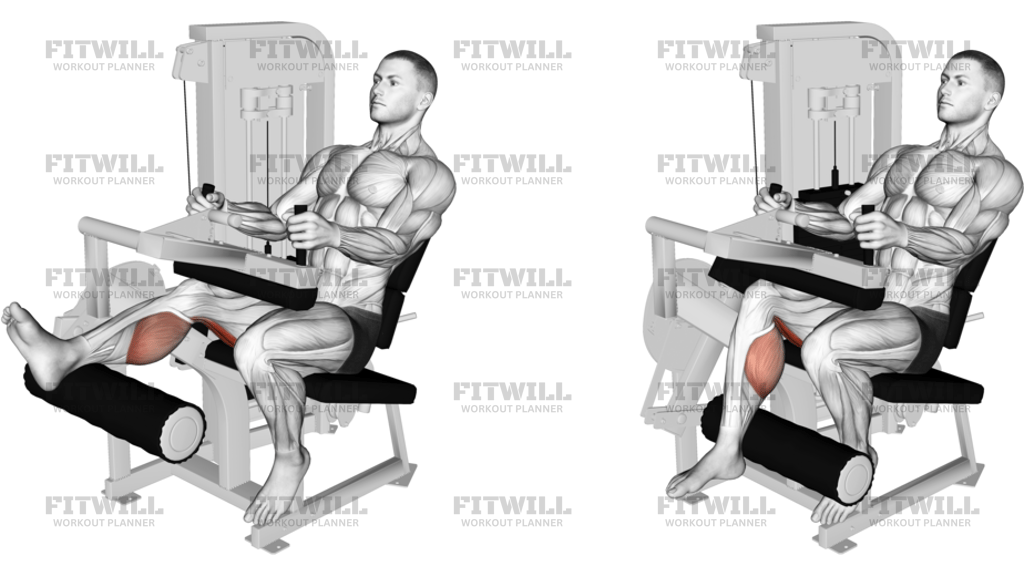
Instructions
- Sit on the machine and adjust the seat so the lever pivot lines up with your right knee joint.
- Place the roller pad just above the right Achilles tendon and keep the left leg relaxed on the floor or foot support.
- Grip the handles or seat edges, press your hips and thighs into the pad, and keep your lower back against the backrest.
- Start with the right knee nearly straight but not locked out, then brace before each rep.
- Curl the right heel back and down in a smooth arc until the pad reaches the strongest shortened position for your hamstring.
- Pause briefly at the top without lifting your hips or twisting your torso.
- Lower the pad slowly until the right leg is almost straight again, keeping tension on the machine the whole time.
- Breathe out as you curl and breathe in as you return, then repeat for the planned reps before switching sides.
Tips & Tricks
- If the pad sits on your foot instead of the lower shin, the curl becomes awkward and the hamstrings lose leverage.
- A seat that is too far forward or backward will pull your knee away from the machine pivot and make the rep feel jerky.
- Keep the right hip pinned to the seat so the movement stays a knee curl, not a hip lift.
- Do not slam into full extension; stop just short of a hard knee lockout to keep tension on the hamstring.
- Use a short pause at the top to remove momentum and make the right side do the work.
- Lower the weight slower than you lift it so the eccentric phase actually trains the hamstring.
- Choose a load that lets your pelvis stay square instead of twisting toward the working leg.
- If the calf starts cramping, reduce the load and make sure the pad is not too low on the ankle.
Frequently Asked Questions
What does the Lever Seated One Leg Curl Right Side train most?
It mainly trains the right hamstring group by bending the knee against the machine lever.
Can beginners perform this exercise?
Yes. The fixed path makes it beginner-friendly if the seat and roller pad are adjusted correctly and the weight stays light enough to control.
Where should the roller pad sit on the right leg?
The pad should rest just above the Achilles tendon, low on the lower shin, so the lever drives the knee curl instead of the foot.
Should my hips or back move during the rep?
No. Keep your hips pressed into the seat and your lower back against the pad so the right hamstring does the work.
Why do I feel my calf during this curl?
Some calf help is normal, but if it dominates the rep the pad is usually too low or the load is too heavy.
Can I use this to fix a stronger left leg?
Yes. Unilateral curls are useful for matching strength and control between sides because each leg works independently.
What is the most common form mistake?
Lifting the hips, kicking the weight, or letting the stack drop too fast are the biggest problems.
How should I progress the exercise?
Increase the load only when you can keep the right knee path smooth, the pause controlled, and the lowering phase slow.