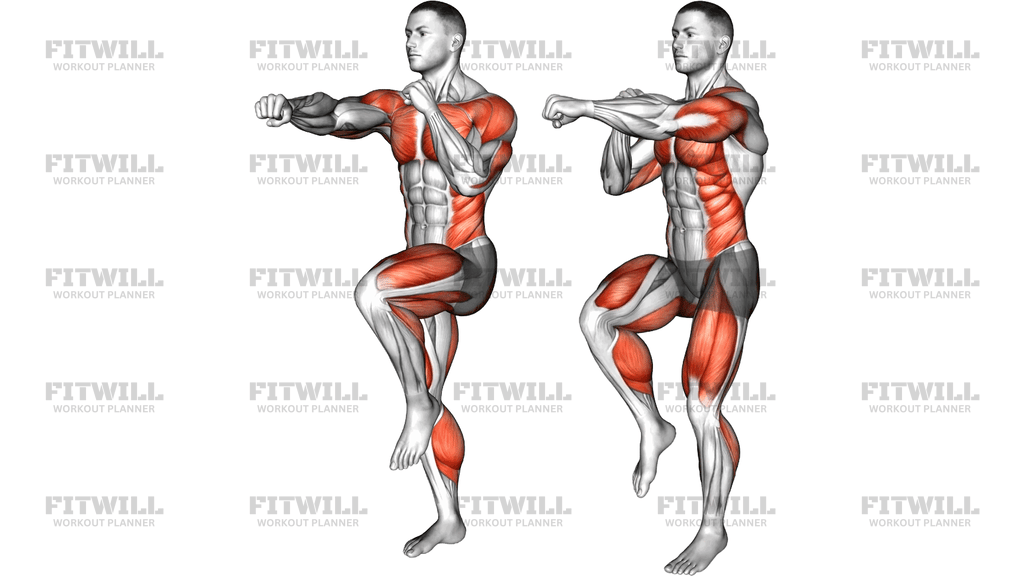
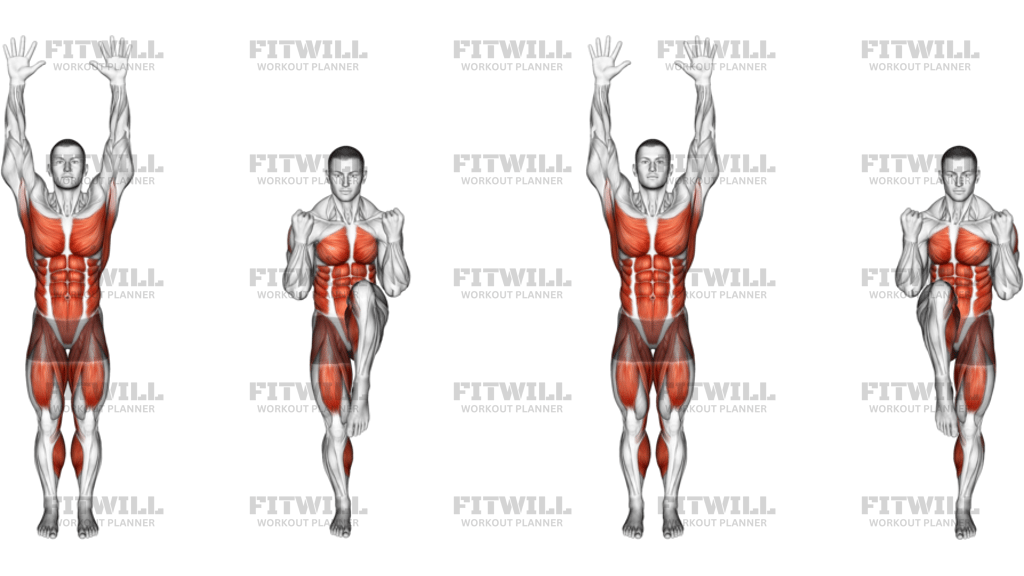
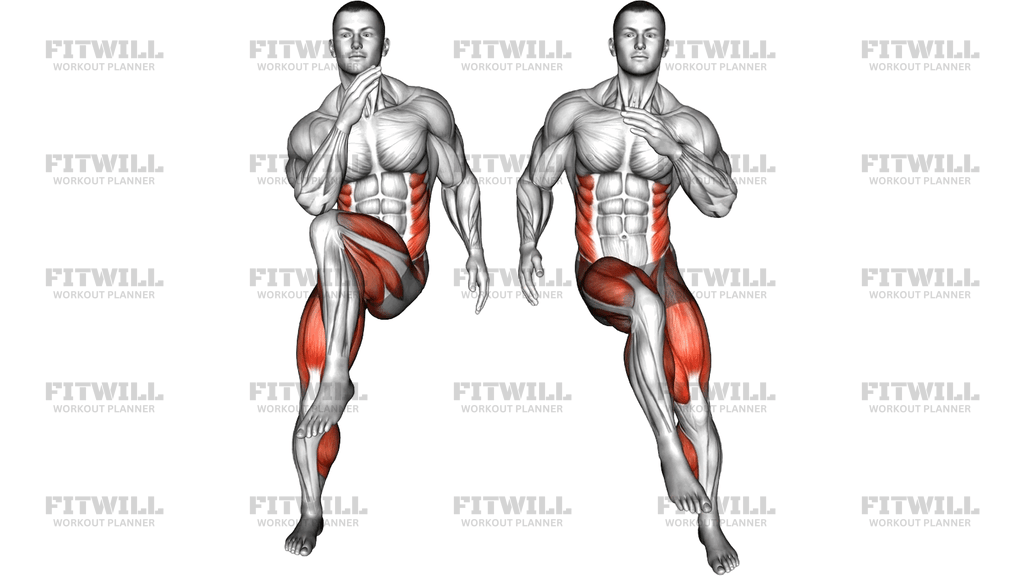
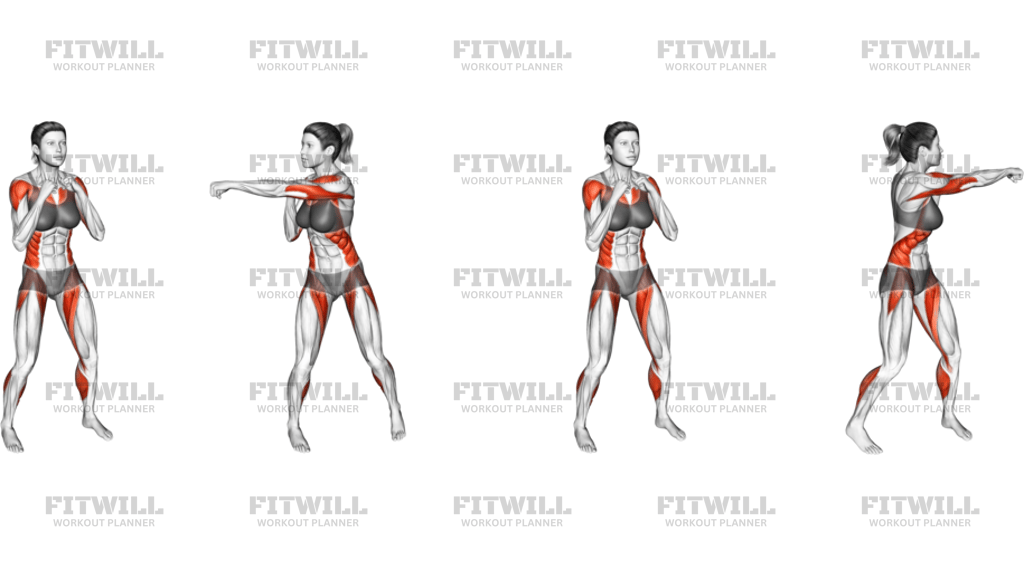
Single Leg Butt Kick
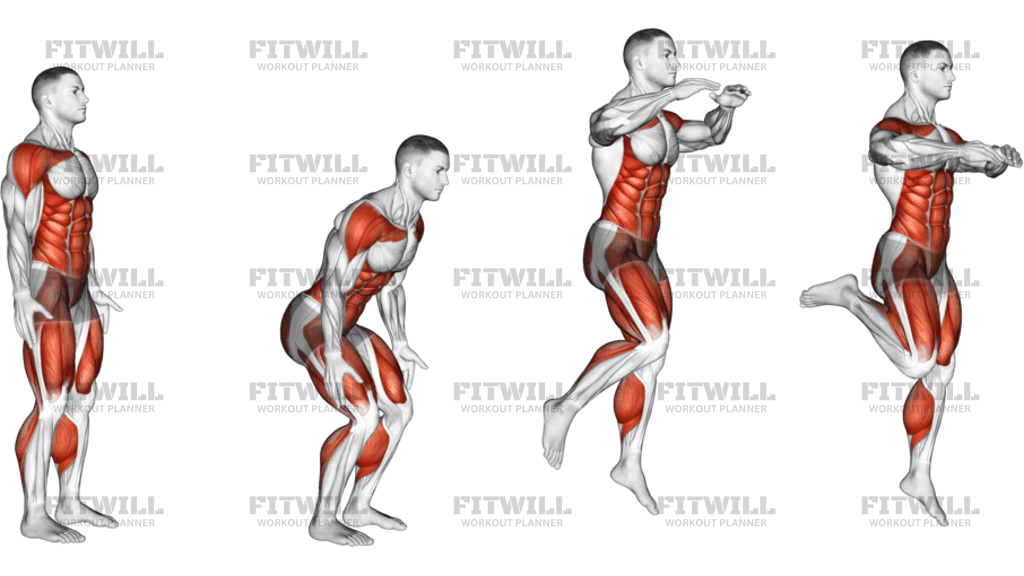
Single Leg Butt Kick is a bodyweight plyometric drill that uses a quick hop and a heel-to-glute action to build athletic rhythm, coordination, and lower-body reactivity. The exercise is less about brute force and more about clean timing: one leg supports the body, the other heel tucks toward the glute, and the torso stays stacked so each rep looks and feels springy instead of rushed.
The movement is useful when you want to wake up the ankles, calves, hamstrings, glutes, and core before faster running, jumping, or conditioning work. It also asks the hip stabilizers to keep the pelvis level while the support foot makes short, quiet contacts with the floor. That makes the drill valuable for learning how to absorb and repeat force without letting the knees cave, the chest drop, or the landing get loud.
The setup matters because this is a balance-and-timing drill, not a high jump. Start tall with a soft knee, a slight athletic lean, and your arms ready to counterbalance. From there, keep the hop small and quick, drive the heel toward the glute, and bring the foot back underneath you so the next contact stays under control. The cleaner the line from hip to foot, the more the drill teaches usable running and plyometric mechanics.
Use it in warmups, movement prep, plyometric circuits, or conditioning blocks where you want a fast drill without a lot of equipment or load. Beginners can use it as a low-amplitude rhythm drill, while more advanced lifters can increase pace only if the landings stay quiet and the trunk stays steady. If the torso tips forward, the knee collapses inward, or the heel never gets close to the glute, the drill has become too fast for the current skill level.
Treat each rep like a quick reset: spring up, tuck the heel, land softly, and immediately prepare the next contact. The goal is repeatable elasticity, not fatigue-driven sloppiness. When the contacts get noisy or the balance starts to drift, cut the set and keep the next round crisp.
[ Workout Log & Planner ]
Put your next workout in Fitwill
Keep your plan and training log ready when you are.


Instructions
- Stand tall with your feet about hip-width apart, then bring your arms in front of you or lightly out to the sides for balance.
- Brace lightly through your midsection and shift your weight onto one foot before you start the hop.
- Keep the support knee softly bent and let your chest stay tall instead of folding forward at the hips.
- Hop just high enough to leave the floor, keeping the bounce small and quick rather than trying to jump big.
- As you leave the floor, drive the free heel toward the glute while keeping the thigh under the hip line.
- Land softly on the ball of the supporting foot with the knee tracking in line with the toes.
- Rebound immediately into the next hop or switch sides on the next rep, depending on how the drill is programmed.
- Keep your breathing short and rhythmic so the pace stays controlled through the whole set.
Tips & Tricks
- Keep the hop low; this drill is about quick contacts, not height.
- Aim the heel toward the glute without letting the working knee flare outward.
- Use your arms as counterbalance if the support leg feels shaky or the torso starts to sway.
- Land on the forefoot first and let the heel kiss down softly instead of slapping the floor.
- If the heel never gets close to the glute, slow the cadence down and shorten the set.
- Think "spring and switch" rather than "jump and hold" to keep the rhythm athletic.
- A light forward lean from the ankles is fine, but do not let the chest collapse toward the floor.
- Stop the set when the contacts get loud, the knee caves in, or you start chasing balance instead of rhythm.
Frequently Asked Questions
What does Single Leg Butt Kick train most?
It is mainly a plyometric coordination drill that challenges the calves, hamstrings, glutes, and core to work together through quick, controlled contacts.
Do I need to jump high on the supporting foot?
No. Keep the hop small and quick so the support foot can rebound cleanly and the landing stays quiet.
Where should the kicking heel travel?
The heel should tuck toward the glute on each rep, but the thigh should stay under control rather than swinging wildly behind you.
What should my arms do during the drill?
Hold the arms in front or slightly out to the sides so they can counterbalance the hop and keep the torso from twisting.
Can beginners do this exercise safely?
Yes, if they keep the pace slow, the hop low, and the balance support light until the landing pattern feels stable.
What is the most common mistake with the support foot?
People often let the landing get loud or let the knee cave inward. The support foot should stay springy and line up with the toes.
Should I alternate legs or stay on one side?
Either works, depending on the workout. You can alternate each rep for rhythm, or complete a short set on one side before switching.
When should I stop the set?
Stop when the contacts get heavy, the torso starts pitching forward, or you can no longer reach the same heel-to-glute rhythm.