Single Leg Stride Jump
Single Leg Stride Jump is a bodyweight plyometric drill built around a low box or step and a fast switch from one single-leg landing to the other. It is used to train lower-body power, coordination, and elastic control, especially when you want each rep to look and feel sharp rather than heavily loaded. The emphasis is on a crisp takeoff, a balanced airborne switch, and a quiet landing that you can repeat without losing posture.
The movement stresses the quads, glutes, calves, and hip stabilizers while the trunk keeps the torso from folding or twisting as the legs change positions. Because one leg is always taking more of the load, setup matters more here than in a two-foot jump. A low step, a square stance, and a stable torso give you a cleaner line of force and reduce the chance of reaching, collapsing at the knee, or turning the jump into a scramble.
Think of this as an athletic stride pattern, not a max-height jump. The working leg should load, drive through the foot, and send you upward with enough force to switch legs cleanly in the air. The landing should be soft, controlled, and immediate enough to reset for the next rep, but not so fast that the knee caves in or the torso pitches forward. If the box is too high, the drill stops being a plyometric and becomes a compensation exercise.
This exercise fits well in a power block, warm-up, or athletic accessory session when you want to wake up single-leg mechanics before running, jumping, or lower-body strength work. It is most useful when the athlete can already control split-stance landings and step-ups, because quality matters more than volume. Keep the rep count modest, stay explosive, and stop the set as soon as the landing gets loud, sloppy, or asymmetrical.
[ Workout Log & Planner ]
Put your next workout in Fitwill
Keep your plan and training log ready when you are.


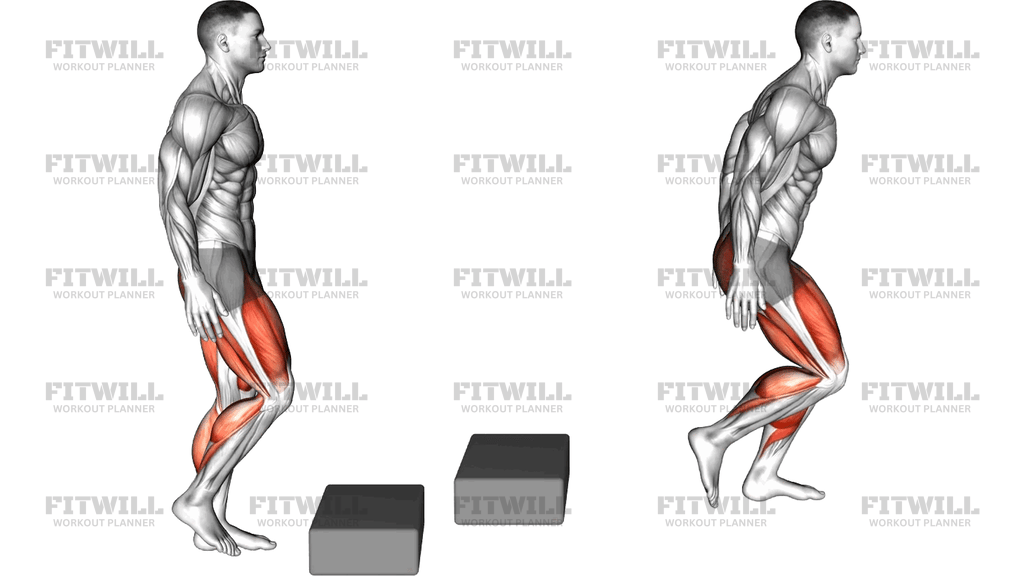
Instructions
- Place a low box or step in front of you and stand in a split stance with one foot on the box and the other foot on the floor.
- Square your hips and chest to the step, keep your front foot flat, and let your back heel stay light.
- Lower slightly into the front leg so the ankle, knee, and hip are loaded before you jump.
- Swing your arms and drive forcefully through the front foot to jump upward off the step.
- Switch the legs in the air so the opposite leg comes forward and the first leg moves back.
- Land softly on the new lead leg with the knee tracking over the toes and the torso stacked over the hips.
- Absorb the landing quietly, reset your balance, and repeat for the planned number of reps.
- Alternate sides only as long as each landing stays smooth and controlled.
Tips & Tricks
- Keep the box low; if you have to dive or reach for it, the step is too high for a plyometric rep.
- Push through the whole front foot, not just the toes, so the jump starts from the hip and knee instead of the ankle alone.
- Let the arms help the switch, but do not let the ribs flare or the lower back arch as you swing.
- Land with a soft knee and a stable hip; a noisy landing usually means you are falling instead of controlling the descent.
- Use a quick, athletic rhythm rather than a long pause on top of the box.
- Keep the front knee from drifting inward on takeoff and landing, especially when fatigue builds.
- Choose a rep count that lets every switch look identical; power work should stop before speed drops off.
- If balance is inconsistent, reduce the box height before you reduce the tempo.
Frequently Asked Questions
What does Single Leg Stride Jump train most?
It builds single-leg power, coordination, and landing control, with the quads, glutes, calves, and hip stabilizers doing most of the work.
Can beginners perform this exercise?
Yes, but only if they can already control a low split-stance landing. Start with a very low box and a small jump before adding speed.
How high should the box or step be?
Keep it low enough that you can jump, switch legs, and land quietly without reaching or twisting. Shin height is usually plenty.
Should I push off the back leg too?
The back leg should help with rhythm, but the front leg should be the main driver. If the back leg is doing most of the work, the drill loses its single-leg emphasis.
What are the most common mistakes?
Using a box that is too high, collapsing the landing knee inward, taking off with a loud stomp, and letting the torso rotate as the legs switch.
What is a good variation if I cannot switch cleanly yet?
Practice low split jumps, step-up jumps, or simple single-leg hops before adding the box switch. Those drills build the same control with less coordination demand.
When should I use this in a workout?
Put it early in a session, after the warm-up and before heavy strength work, when the legs are fresh and the jumps stay explosive.
How many reps should I do?
Keep sets short and powerful, usually just a few quality reps per side. Stop once the landing becomes heavy or the switch slows down.