Single Leg Hip Thrust Jump
Single Leg Hip Thrust Jump is a bench-supported plyometric bridge variation that trains explosive hip extension on one leg. The upper back stays anchored on the bench while one foot drives into the floor and the other leg stays lifted, which forces the working side to produce force without help from the other leg. The exercise is body-weight based, but the speed requirement makes it much more demanding than a standard single-leg hip thrust.
This movement is useful when you want to develop glute power, single-leg pelvic control, and the ability to produce force quickly from a stable bridge position. The jump element adds stretch-shortening demand at the hips and puts a premium on timing, trunk stiffness, and clean landing mechanics. If the pelvis twists, the ribs flare, or the lower back takes over, the rep stops being a hip exercise and turns into a compensation pattern.
The setup matters more here than in a slow bridge. Position the shoulder blades on the bench, plant the working foot so the shin is close to vertical at the top, and keep the non-working leg free rather than letting it push off the floor. That starting position lets you load the hip cleanly and keeps the force going through the glute and hamstring instead of dumping into the lumbar spine or the planted knee.
Each rep should begin with a controlled drop into the bottom position and finish with a sharp, explosive drive through the planted heel and midfoot. At the top, the hips extend hard and the free leg moves with the jump instead of lagging behind. Land softly, re-stack the ribs over the pelvis, and reset before the next rep. The goal is a crisp takeoff and a quiet, stable landing, not maximum height.
Use Single Leg Hip Thrust Jump in a power block, glute-focused accessory work, or conditioning circuits where you want unilateral hip drive without external load. It is best kept away from fatigue-heavy sets that would turn the landing sloppy. Start with the non-jumping single-leg hip thrust if you cannot keep the pelvis level or if you cannot land with control. The safest versions are the ones that keep the movement fast, clean, and repeatable.
[ Workout Log & Planner ]
Put your next workout in Fitwill
Keep your plan and training log ready when you are.


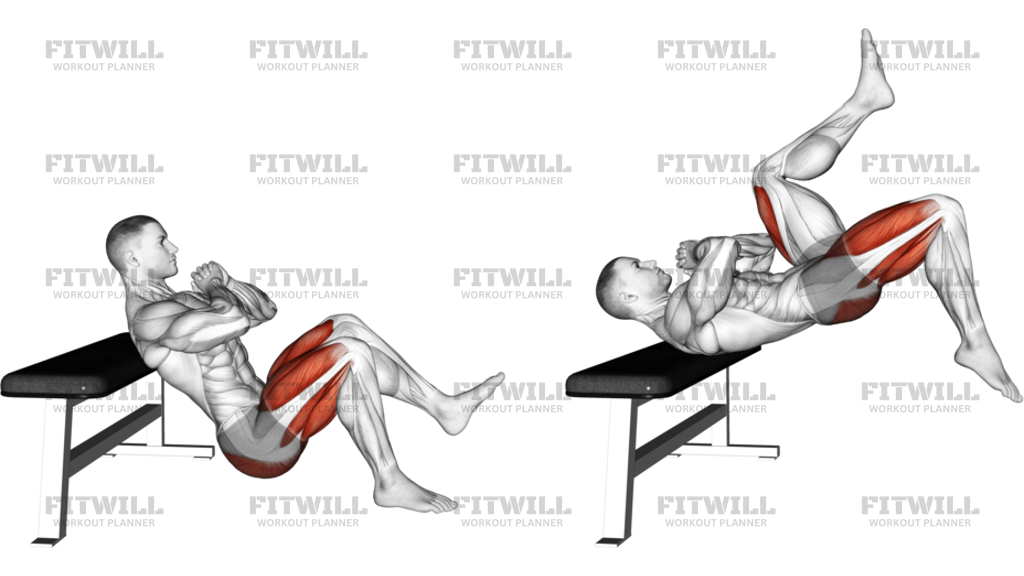
Instructions
- Sit on the floor in front of a bench and place your upper back and shoulder blades on the bench edge.
- Plant one foot on the floor so the shin is close to vertical, and keep the other leg lifted as shown in the setup.
- Cross your arms over your chest, tuck your chin slightly, and set your ribs down before you start.
- Lower your hips under control until the working glute is loaded and the pelvis stays square.
- Drive through the heel and midfoot of the planted foot and explode the hips upward.
- Let the free leg move with the jump while keeping the torso braced and the lower back from arching.
- Land softly back into the single-leg bridge position, absorbing through the hip and keeping the knee tracking steady.
- Reset the pelvis and breathing before the next rep, then complete all reps on one side before switching.
Tips & Tricks
- Set the bench high enough that your shoulder blades stay supported, not the middle of your back.
- Place the working foot far enough from the bench that the shin is nearly vertical when the hips are high.
- Keep the free leg truly unloaded; if it taps the floor to help, the set is no longer single-leg work.
- Think of the jump as a quick hip snap, not a big vertical leap.
- Keep your ribs stacked over your pelvis so the low back does not turn the top position into an arch.
- Drive through the heel and outer midfoot, but keep the whole foot stable instead of rolling onto the toes.
- Land quietly and immediately re-brace; a noisy landing usually means the pelvis dropped or the knee caved.
- Use fewer reps if power drops, because this exercise loses value once the jump slows down.
Frequently Asked Questions
What does Single Leg Hip Thrust Jump train most?
It primarily trains glute power on the working leg, with strong hamstring and core involvement for control.
Where should my upper body be on the bench?
Your shoulder blades and upper back should rest on the bench edge so the hips can move freely through the jump.
Should the working foot stay flat on the floor?
Yes. Keep the heel and midfoot planted through the drive so the force comes from the hip instead of the toes.
How high should the jump be?
Only as high as you can keep the pelvis level and land softly. A smaller, cleaner jump is better than a big, sloppy one.
Can beginners do this instead of a regular single-leg hip thrust?
Usually no. Most beginners should master the non-jumping single-leg hip thrust first, then add the jump once control is solid.
What happens if I feel it in my lower back?
That usually means the ribs are flaring or the hips are overextending. Reduce the jump and keep the ribs stacked over the pelvis.
How do I know if my setup is correct?
At the top of the rep, the working shin should be near vertical and the bench should still feel stable under the shoulder blades.
When should I stop the set?
Stop as soon as the jump slows down, the pelvis starts to rotate, or the landing gets noisy.