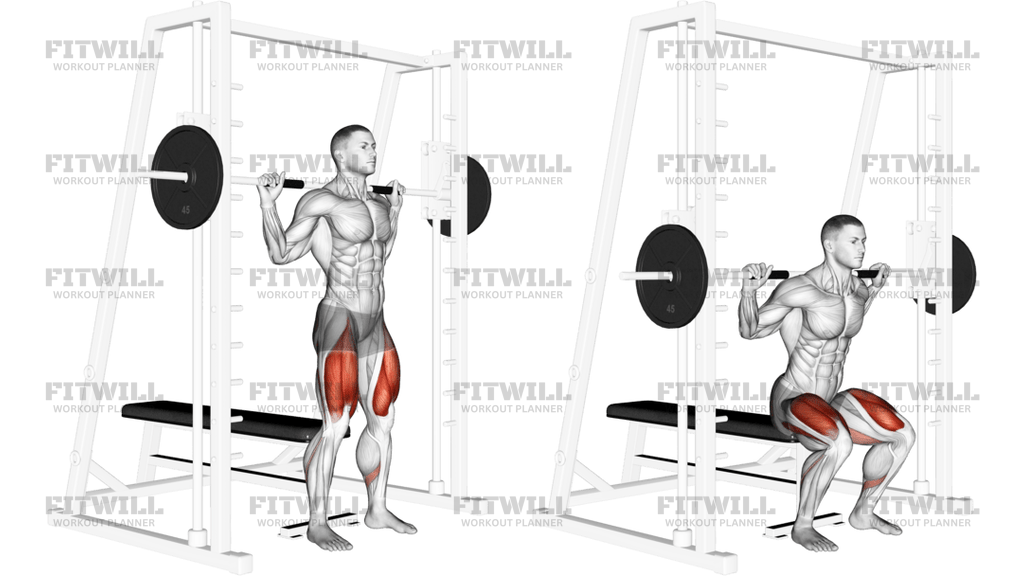
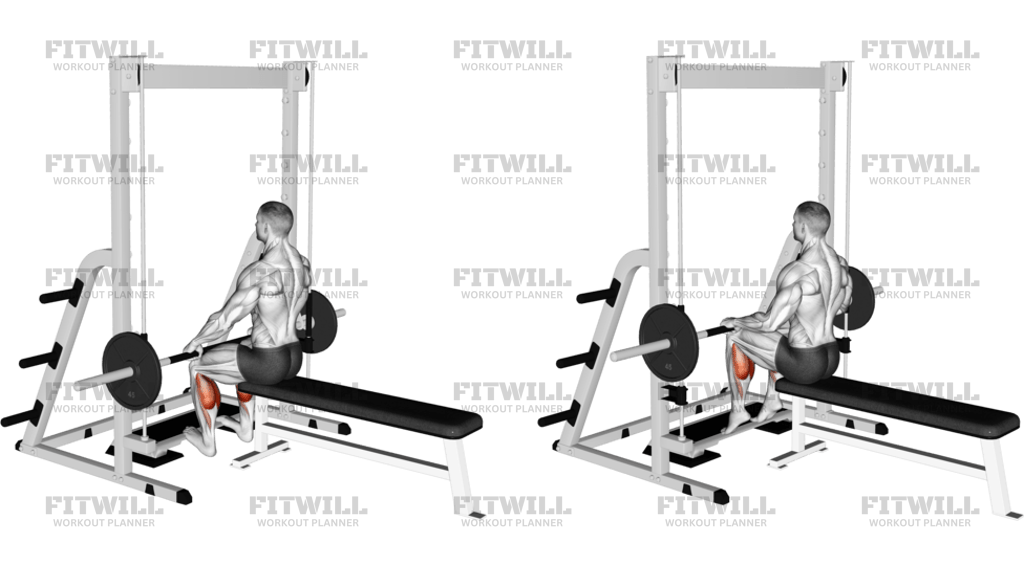
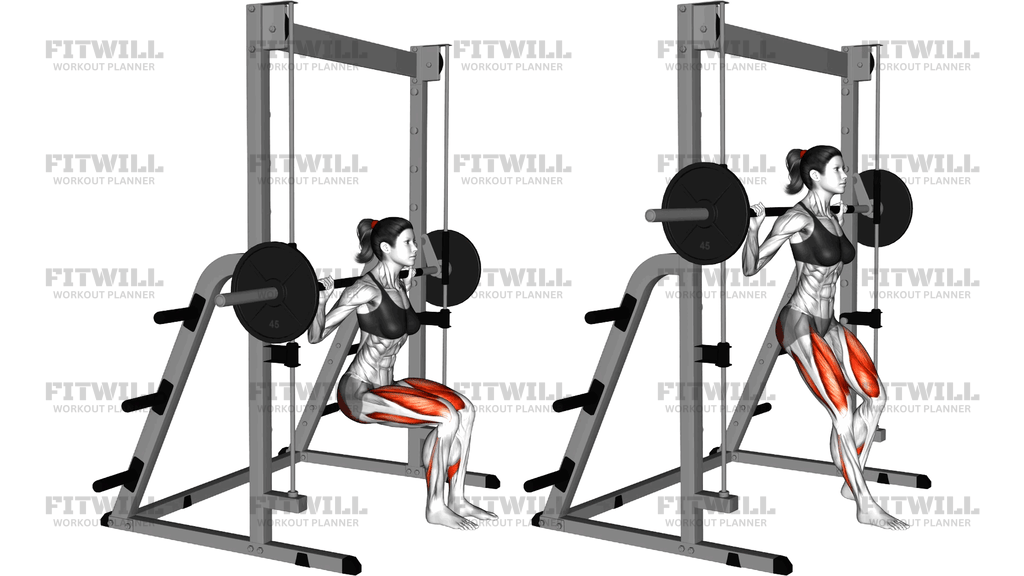
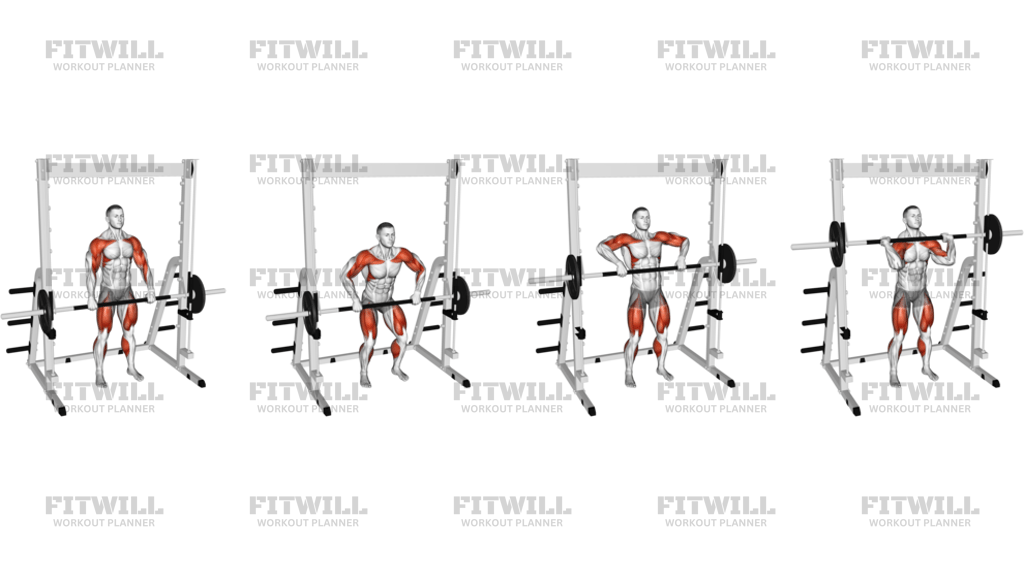
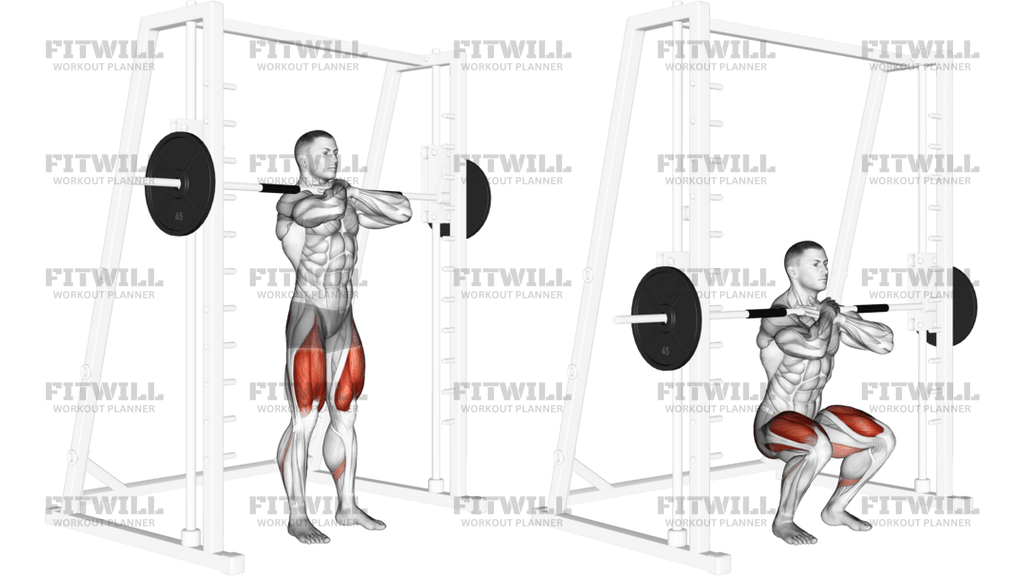
Smith Front Squat Clean-Grip
Smith Front Squat Clean-Grip is a guided front-squat variation performed on a Smith machine with the bar racked across the front of the shoulders. The clean grip keeps the elbows pointed forward and slightly up, which helps the torso stay tall while the quads take the main share of the work. Compared with a free barbell front squat, the fixed track reduces balance demand and lets you concentrate on leg drive, depth, and rack position.
The Smith machine changes the feel of the squat because the bar follows a preset path. That can be an advantage if you want a more stable front-squat pattern, need extra confidence under load, or want to emphasize the quads without having to fight bar drift. It also makes setup more important, because your feet need to be placed far enough forward for the knees to travel while the heels stay planted and the bar stays centered over the midfoot.
The front rack should be supported by the front delts, not held in the hands. If the wrists or shoulders are tight, the bar may want to roll forward, so the elbows have to stay lifted and the chest has to stay proud as you descend. The clean grip is there to help you keep that rack secure, and the squat should feel like a controlled sit down between the hips rather than a hinge or a forward fold.
At the bottom, aim for at least parallel with a steady pelvis and a neutral lower back. If the pelvis tucks under, the depth is too deep for that set or the load is too heavy. On the way up, press through the whole foot, keep the knees tracking with the toes, and finish by standing tall without leaning back into the machine.
This exercise fits well in lower-body strength blocks, quad-focused training, or accessory work when you want a squat pattern that is easier to repeat than a free-weight version. It is still demanding on the upper back, shoulders, and trunk because the front rack has to stay organized the whole time. Reduce the load if the elbows drop, the bar slides, or the heels come up, because those are signs the setup has lost its shape.
Fitwill
Log Workouts, Track Progress & Build Strength.
Achieve more with Fitwill: explore over 9600 exercises with images and videos, access built-in and custom workouts, perfect for both gym and home sessions, and see real results.
Start your journey. Download today!




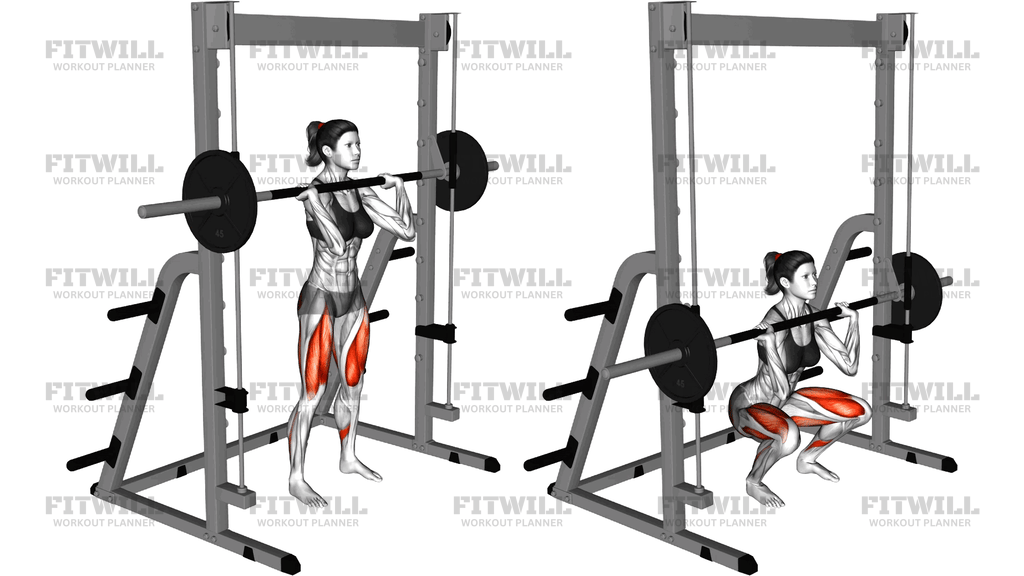
Instructions
- Set the Smith bar across the front of your shoulders and hold it in a clean grip with the elbows pointing forward and slightly up.
- Step your feet slightly in front of the bar so you can squat down with your heels flat and your torso upright.
- Unrack the bar, stand tall, and brace your midsection before starting the first rep.
- Sit down between your hips while letting your knees travel forward in line with your toes.
- Keep your chest lifted and your elbows high so the bar stays racked on the front delts instead of rolling forward.
- Lower until your thighs reach at least parallel, or deeper only if your pelvis and lower back stay steady.
- Drive up through the whole foot and stand tall without bouncing out of the bottom.
- Inhale on the way down, exhale through the hardest part of the ascent, and reset your breath before the next rep.
- After the final rep, guide the bar back into the hooks and step clear of the machine.
Tips & Tricks
- Set your feet far enough forward that the knees can move freely while the bar stays balanced over the midfoot.
- If the bar wants to slide forward, widen the clean grip slightly and think about lifting the elbows before every rep.
- Keep the chest stacked over the hips on the way down; letting the torso collapse shifts the set away from the quads.
- Let the knees travel forward on purpose so the fixed Smith path can load the quads instead of forcing an overly vertical shin angle.
- Stop the descent before the pelvis tucks under; chasing extra depth usually turns the bottom into a lumbar compensation.
- Use a controlled lowering phase so the fixed bar path does not pull you into the bottom.
- If your wrists feel limited, let the bar rest more on the front delts and keep the fingers relaxed instead of cranking the hands back.
- Drive through the midfoot and big toe together so the heels do not rise as the knees move forward.
- Choose a load that lets you keep the elbows high for every rep, not just the first few.
Frequently Asked Questions
What muscles does Smith Front Squat Clean-Grip work most?
The main emphasis is on the quads, with the glutes, adductors, upper back, and core helping keep the front-rack position stable.
Is Smith Front Squat Clean-Grip beginner-friendly?
Yes, if you start light and can hold the elbows up in the clean grip. The Smith machine gives you a fixed path, but the front rack still needs enough shoulder and wrist comfort to stay controlled.
Where should the bar sit during Smith Front Squat Clean-Grip?
It should rest across the front delts and upper chest area, not in the hands. The fingers help secure it, but the lifted elbows and rack position hold the bar in place.
How wide should my stance be on the Smith machine?
Usually about shoulder width to just outside shoulder width works best, with the feet slightly forward so the knees can track naturally while the torso stays upright.
How deep should I squat in Smith Front Squat Clean-Grip?
Go as deep as you can while keeping the heels down, the elbows up, and the lower back from tucking under. For many lifters that means at least parallel, but depth should never cost you rack position.
Why do my elbows drop during Smith Front Squat Clean-Grip?
Usually the grip is too narrow, the load is too heavy, or the upper back is losing tension. Reduce the weight and think about driving the elbows forward before you descend.
What is a common mistake in Smith Front Squat Clean-Grip?
Letting the chest collapse and the bar drift onto the hands is a big one. That usually shortens the quad work and makes the rep feel unstable.
Can I use this instead of a barbell front squat?
Yes, if your goal is a more stable front-squat pattern with extra quad focus. It is not the same balance challenge as a free barbell front squat, so it works better as a variation or accessory lift.