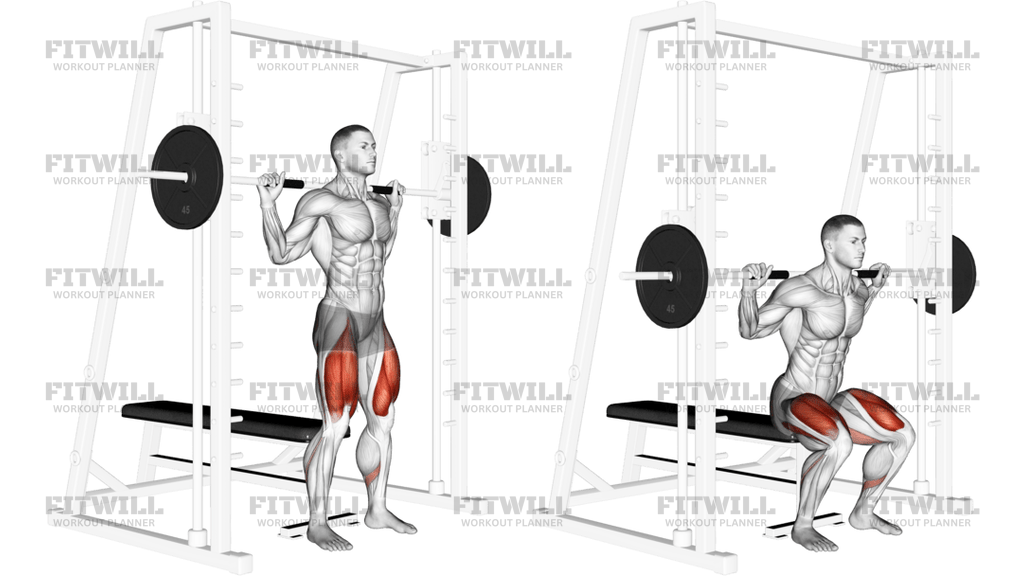
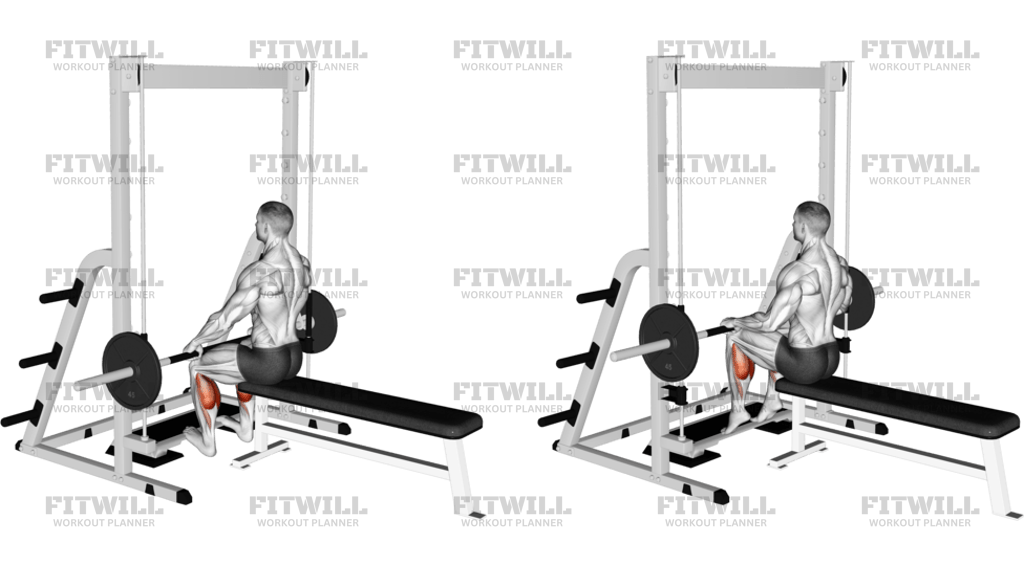
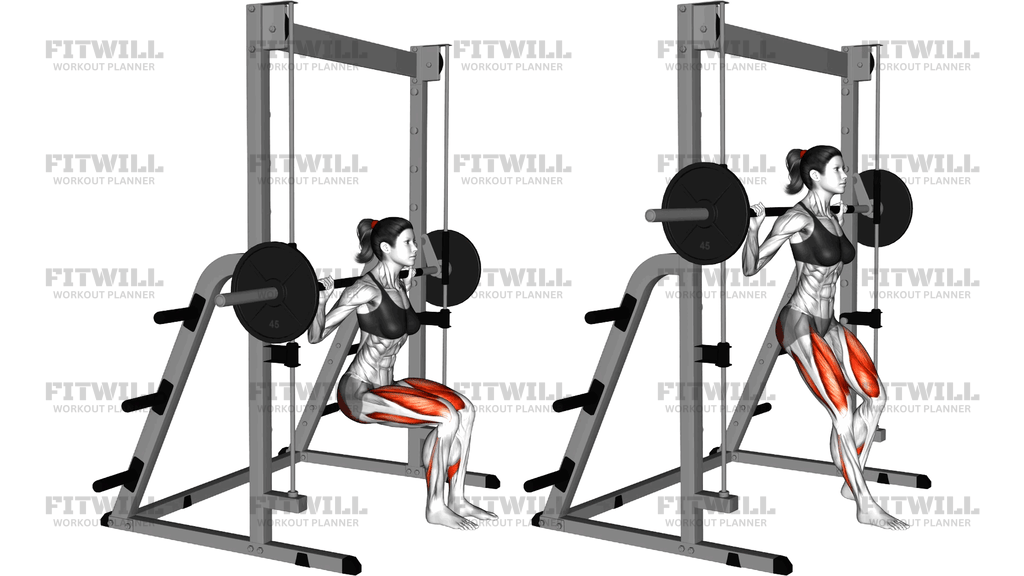
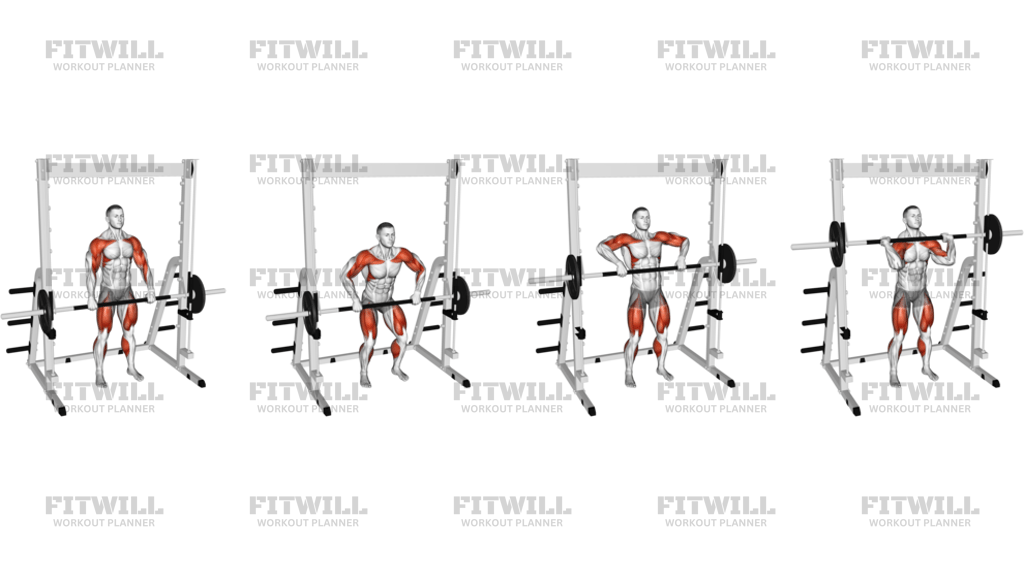
Smith Frankenstein Squat
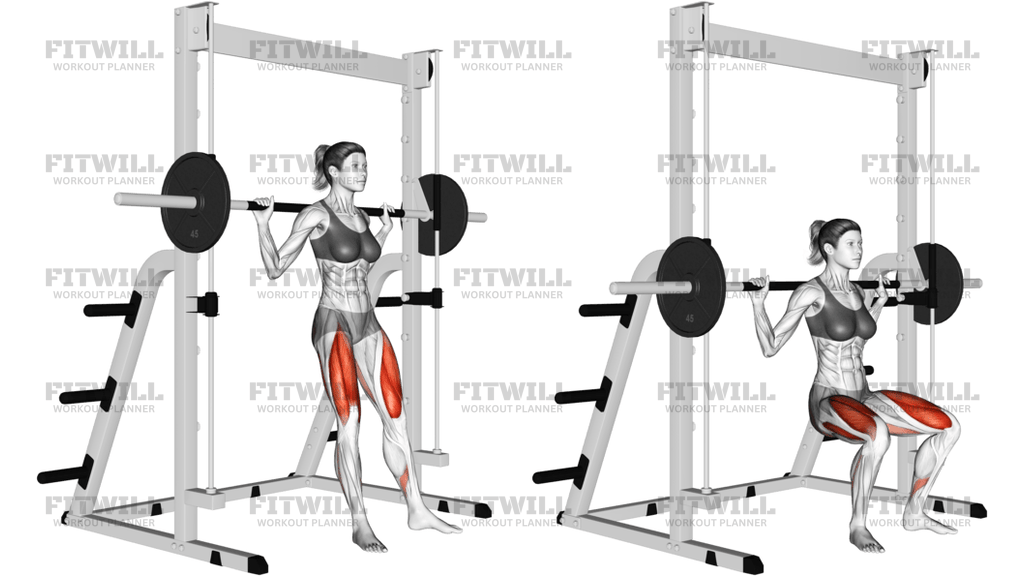
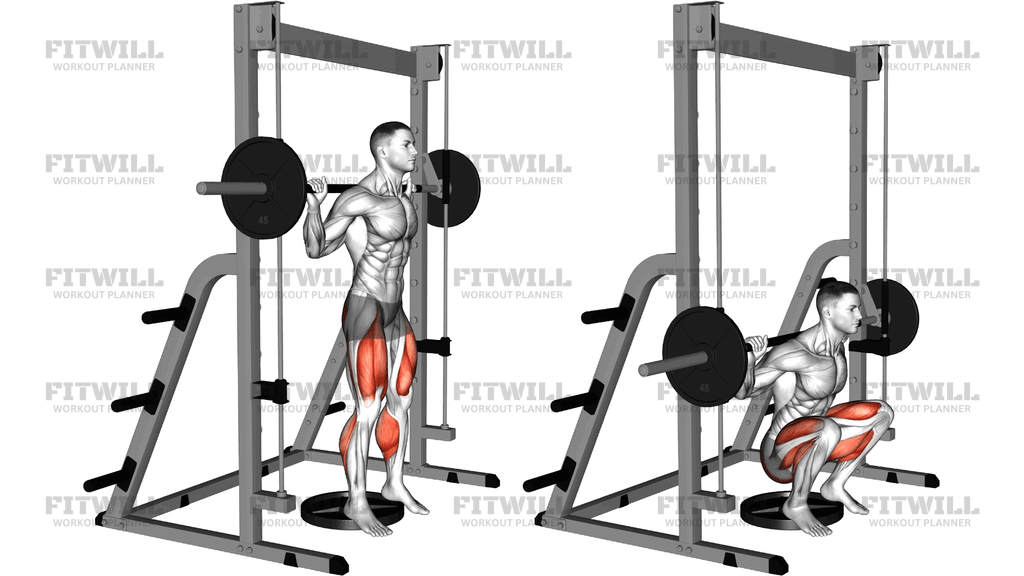
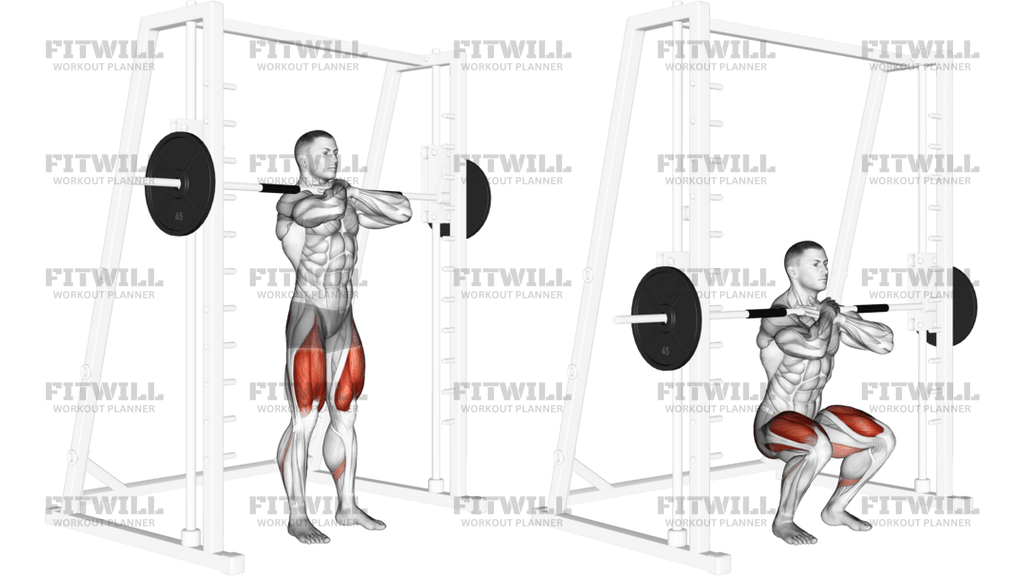
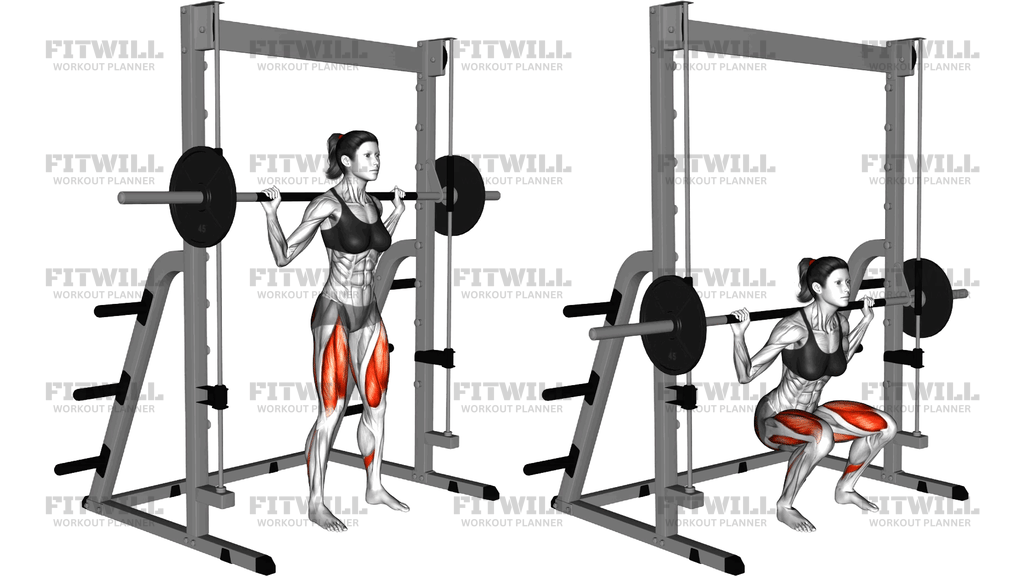
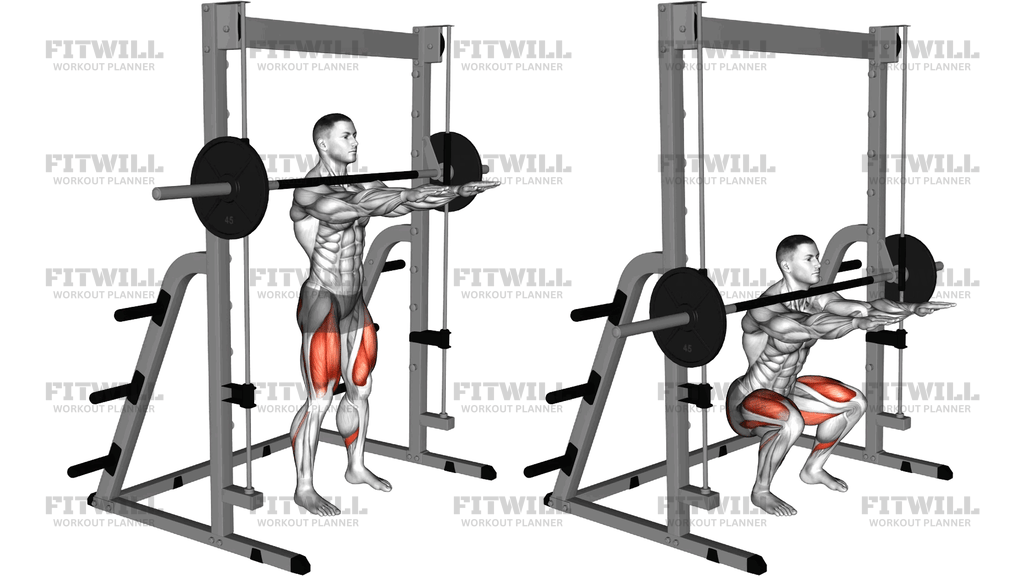
Smith Frankenstein Squat is a front-loaded squat variation performed in a Smith machine with the arms extended straight forward. The fixed bar path helps you stay upright, while the forward arm position shifts emphasis toward the quads and makes it easier to keep the torso from folding over. It is a controlled lower-body strength exercise, not a maximal load movement, and it works best when every rep looks deliberate from the top to the bottom.
The setup is what makes this variation unique. The bar should sit across the front of the shoulders and upper chest, not on the neck, and the feet usually need to stand a little in front of the bar so the knees can travel forward without the machine forcing you backward. Keeping the arms parallel to the floor acts as a counterbalance and also reinforces an upright chest, which is why the exercise feels different from a regular Smith squat or a barbell front squat.
During the descent, sit straight down between the feet instead of pushing the hips far behind you. Let the knees move forward and out in line with the toes, keep the heels rooted, and lower under control until you reach a depth you can own without the lower back rounding or the bar drifting across the throat. On the way up, drive through the whole foot and stand tall without bouncing out of the bottom or turning the rep into a hip-dominant good morning.
This movement is most useful for quad-focused hypertrophy, accessory work after compound lifts, or technique practice when you want a more stable squat pattern. Because the Smith machine removes most of the balance demand, the working muscles can get a strong stimulus with less technical noise, but the fixed track also means poor foot placement or a lazy brace shows up quickly. Use a load and range that keep the knees, hips, and trunk moving smoothly together, and stop the set if the bar starts to ride up onto the neck or the heels begin to peel off the floor.
Fitwill
Log Workouts, Track Progress & Build Strength.
Achieve more with Fitwill: explore over 9600 exercises with images and videos, access built-in and custom workouts, perfect for both gym and home sessions, and see real results.
Start your journey. Download today!




Instructions
- Set the Smith bar across the front of your shoulders and upper chest, then stand under it with your feet slightly in front of the bar.
- Extend both arms straight forward at shoulder height so they stay parallel to the floor and help you stay balanced.
- Unrack the bar, brace your trunk, and keep your chest tall before you begin the first descent.
- Sit straight down between your feet, letting your knees travel forward and out in line with your toes.
- Lower until your thighs are at least parallel if your mobility allows, while keeping your heels flat and your torso upright.
- Drive up by pushing through the midfoot and heels, keeping the knees tracking over the toes as you stand.
- Finish each rep tall without leaning back or letting the bar roll up into your neck.
- Rerack the bar only after the last repetition is complete and you are fully stable.
Tips & Tricks
- Place your feet a little farther forward than a normal squat so the Smith bar can travel straight down without trapping your knees.
- Keep the elbows and hands lifted forward; if the arms drop, the torso usually folds and the quads lose tension.
- Think about sitting between the heels, not reaching the hips back.
- Let the knees move forward freely, but keep them tracking in the same direction as the toes.
- Choose a depth that keeps the lower back neutral; don’t chase depth by tucking the pelvis under.
- Use a slower lowering phase so the bar stays controlled on the fixed track.
- If the heels lift, move the feet slightly and reduce the load before adding more weight.
- This variation loads the quads heavily, so stop the set when the upright torso starts collapsing forward.
Frequently Asked Questions
What muscle does Smith Frankenstein Squat target most?
The quads take the lead, with the upper back and trunk working to keep the bar and torso stable.
Can beginners perform this exercise?
Yes, beginners can use it if they start light and learn the upright squat pattern before adding load.
Where should the bar sit on my body?
It should rest across the front of the shoulders and upper chest, not on the neck or collarbones.
Why are my arms held straight out in front?
The extended arms act as a counterbalance and help keep the torso upright during the squat.
Why do my feet need to stay a little in front of the bar?
That foot placement gives your knees room to travel forward while the Smith machine keeps the bar path straight.
What are the most common mistakes?
Letting the chest collapse, lifting the heels, drifting the knees inward, and turning the rep into a hip hinge are the big ones.
How deep should I squat?
Go as deep as you can while keeping the heels down, knees tracking well, and the lower back neutral.
Is this better for strength or muscle building?
It is especially useful for quad-focused hypertrophy and accessory strength work with controlled technique.