Standing Long Jump
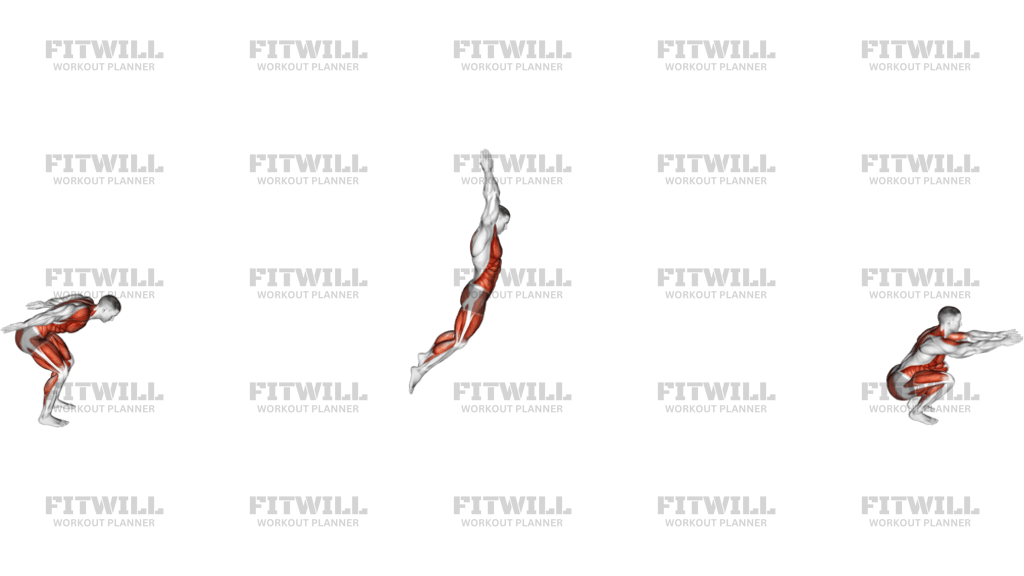
Standing Long Jump is a bodyweight plyometric drill built to produce horizontal power from a dead stop. It is also commonly called a broad jump, and the goal is simple: load quickly, jump forward with both feet, and land in a balanced athletic position. The exercise rewards coordination and timing as much as raw force, so the best reps look smooth, compact, and repeatable rather than frantic.
Standing Long Jump is useful for athletes, recreational lifters, and anyone training explosive lower-body output. It emphasizes glutes, quads, hamstrings, calves, and the trunk while the upper body helps with arm swing and balance. Because the movement starts from standing, the setup matters more than people expect. A clean preload, a quiet torso, and a stable landing all determine whether the jump travels well or leaks power through excess motion.
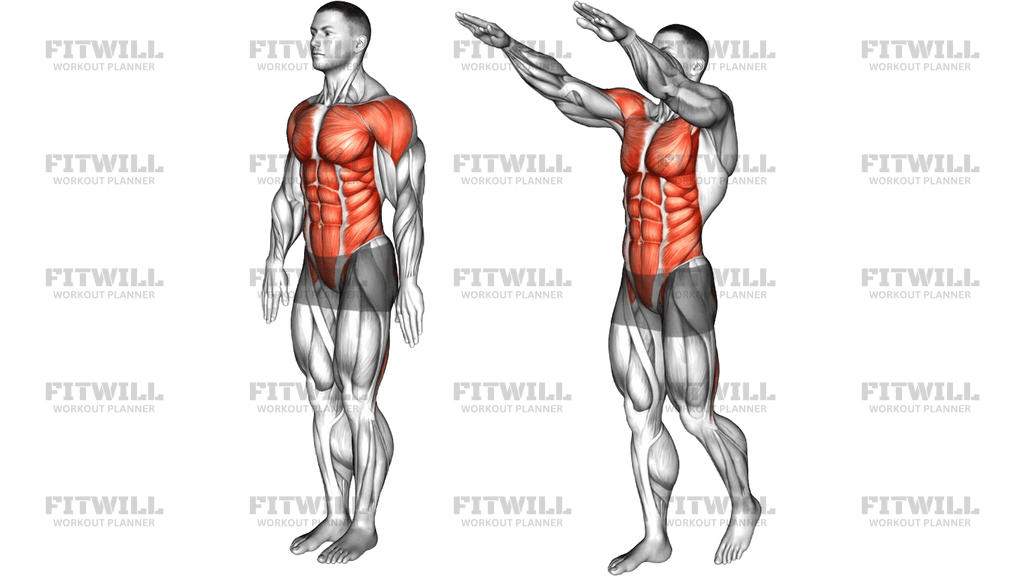
The preload should feel like a quick athletic hinge, not a deep squat. Sit the hips back, keep the chest ready to move, and swing the arms behind you so you can reverse direction aggressively. Then drive the arms forward as the hips, knees, and ankles extend together and project the body forward. The takeoff is about creating force into the ground; the landing is about accepting that force with both feet, knees tracking over the toes, and hips dropping just enough to absorb impact.
A good Standing Long Jump is not judged only by distance. It should also land quietly, with the feet under control and the torso staying organized instead of collapsing forward. If the landing is unstable, shorten the jump and own the stick before chasing more distance. That keeps the drill useful for power development and reduces sloppy repetitions that turn the movement into a fatigue test.
Use Standing Long Jump early in a session, during power work, or as a warm-up jump drill when freshness and coordination are high. It works well for repeated singles with full reset between reps, or for low-volume sets where every jump is treated like a quality effort. Beginners can learn it by jumping a shorter distance and holding the landing for a second or two before standing back up. The safest version is the one that keeps the takeoff crisp and the landing clean.
[ Workout Log & Planner ]
Put your next workout in Fitwill
Keep your plan and training log ready when you are.


Instructions
- Stand with your feet about hip- to shoulder-width apart and leave enough open space in front of you to land safely.
- Set your arms behind your hips, soften your knees, and sit back into a quick quarter squat with your chest angled slightly forward.
- Brace your trunk, keep both feet flat, and load your weight through the midfoot and heel before you jump.
- Swing your arms forward as you drive through the ankles, knees, and hips to launch both feet off the floor at the same time.
- Project your body forward rather than upward, aiming for a balanced landing on both feet.
- Land with your knees tracking over your toes, hips back, and chest controlled so you can absorb the impact quietly.
- Hold the landing for a second if needed, then reset your stance before the next rep.
- Take a full breath between jumps and repeat for the planned number of quality reps.
Tips & Tricks
- Use a quick quarter squat for the preload; sinking too deep steals speed from the takeoff.
- Throw the arms forward hard, because a weak arm swing usually shortens the jump and makes the torso pitch forward.
- Land with both feet at the same time; a staggered landing often means one side is taking over the jump.
- Stick the landing quietly. A loud landing is usually a sign that the hips are not absorbing enough force.
- Keep the knees from caving inward as you land; push them out in line with the toes.
- Reset fully between reps instead of bouncing into the next jump when the goal is power.
- Shorten the jump if you cannot hold the landing for a brief pause without stepping or wobbling.
- Measure your best jumps with a floor marker so you can repeat the same takeoff distance instead of guessing.
Frequently Asked Questions
What muscles does Standing Long Jump train?
Standing Long Jump trains the glutes, quads, hamstrings, calves, and core, with the arms helping drive momentum through the takeoff.
Is Standing Long Jump the same as a broad jump?
Yes. Standing Long Jump is commonly used to describe the broad jump, where you jump forward from a standing start and stick the landing.
How should I land on the Standing Long Jump?
Land on both feet with the knees bent, hips back, and the torso stacked enough to absorb force without folding over.
Should I swing my arms during Standing Long Jump?
Yes. A strong arm swing helps drive the jump forward, as long as it stays coordinated with the leg extension and does not throw you off balance.
Can beginners do Standing Long Jump?
Yes, but they should use a shorter jump and practice holding the landing before trying to cover more distance.
How far should my feet travel on Standing Long Jump?
Far enough that you can land under control. If distance makes the landing noisy or unstable, the jump is too aggressive for that rep.
Where should I place Standing Long Jump in a workout?
Put it early, when you are fresh, so the jump stays explosive and the landing mechanics do not break down from fatigue.
What is the most common mistake on Standing Long Jump?
Reaching for distance at the expense of the landing is the biggest error. A powerful jump should still end in a stable, athletic position.