Swimmer
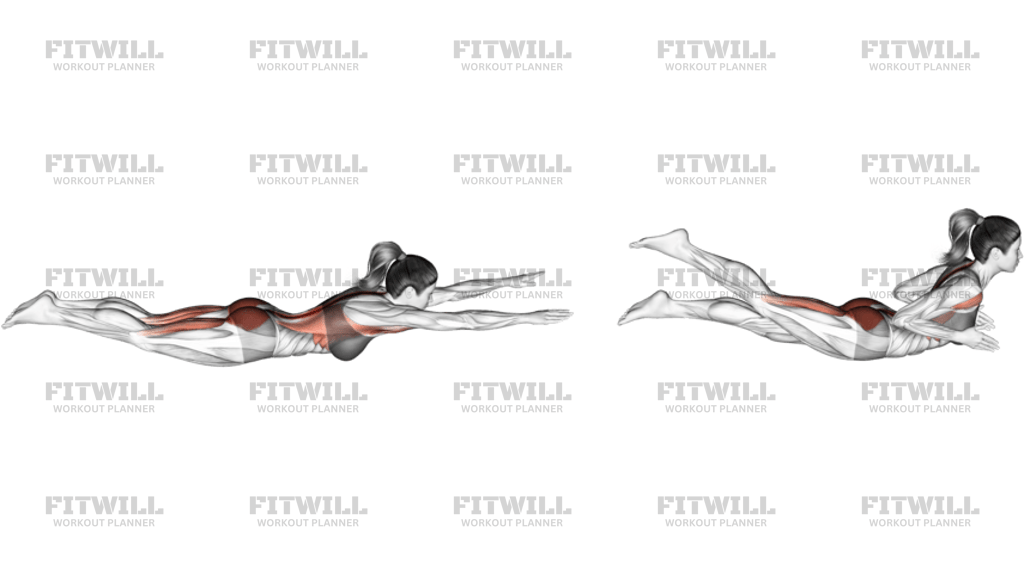
Swimmer is a prone floor exercise where you lie face down and alternately lift opposite arm and leg while keeping the torso long and controlled. It is usually used to train posterior-chain endurance, spinal control, and shoulder and hip coordination without needing external load. The pattern looks simple, but the quality of the rep depends on how well you keep the ribs down, the neck relaxed, and the pelvis steady while the limbs move.
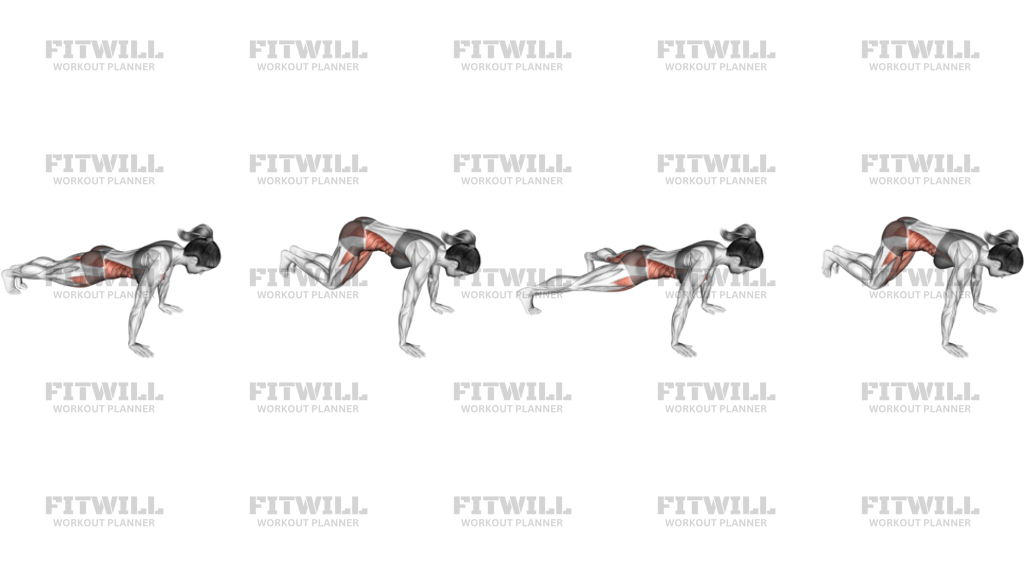
The exercise is built around a small, precise lifting action rather than a big arch through the lower back. In the image, the body stays close to the floor while the arms reach forward and the legs extend behind, which is a good cue for keeping tension in the glutes, upper back, and deep core instead of dumping the work into momentum. That makes Swimmer useful for warm-ups, posture work, rehabilitation-style accessory work, and low-load conditioning.
Setup matters because the floor position gives you very little room to cheat. Lie on a mat with the legs long, arms reaching overhead, and the forehead or chin softly angled toward the floor. Before you start, brace the abdomen, lightly squeeze the glutes, and press the pelvis into the mat so the low back stays supported. If you lose that shape, the movement turns into a back extension instead of a coordinated swimmer pattern.
Each repetition should feel smooth and alternating, almost like a controlled flutter in the air. Lift one arm and the opposite leg just high enough to clear the floor, then switch sides without jerking the torso. Keep the reach long through the fingertips and toes, and let the movement travel through the shoulders and hips rather than the neck. A good rep feels organized, not explosive.
Because this is a bodyweight drill, the goal is repeatable quality, not height or speed. Use it for short intervals or crisp reps, stop when the lower back starts taking over, and reduce the range if the chest or thighs cannot stay controlled. Swimmer works best when you want cleaner body positioning, better cross-body coordination, and a stronger endurance base for floor-based core and posterior-chain training.
[ Workout Log & Planner ]
Put your next workout in Fitwill
Keep your plan and training log ready when you are.


Instructions
- Lie face down on a mat with your legs long behind you and your arms reaching overhead.
- Keep your forehead close to the floor and lightly press your pelvis into the mat so the low back does not overarch.
- Brace your abdomen, squeeze your glutes, and lengthen through your fingertips and toes before you lift.
- Raise one arm and the opposite leg just a few inches off the floor while keeping the other side long.
- Switch to the other arm and leg in a smooth alternating pattern without rocking your torso.
- Keep the lift small and controlled so the movement stays in the shoulders, hips, and upper back rather than the neck.
- Breathe out as you switch sides and keep the airflow steady through the set.
- Lower with control, reset the long body position, and continue for the planned time or repetitions.
Tips & Tricks
- Keep the movement low to the floor; if your chest or thighs are flying up, the rep is too big.
- Think about reaching long rather than lifting high, because length keeps the torso more stable than force.
- Turn the thumbs slightly up or keep the palms neutral if that feels better on the shoulders.
- If your lower back starts pinching, shorten the range and squeeze the glutes harder before each switch.
- Hold the chin slightly tucked so the neck does not crane forward to chase the floor.
- Use a steady rhythm instead of rushing; the exercise is about control across the whole set.
- Keep the pelvis heavy on the mat so the hip extension comes from the glutes, not from momentum.
- Stop the set when your torso begins to roll side to side or the alternating pattern breaks down.
Frequently Asked Questions
What does the Swimmer exercise train?
It primarily trains posterior-chain endurance, core control, and shoulder-hip coordination in a face-down position.
Can beginners perform this exercise?
Yes, beginners can do it as long as they keep the lift small and avoid arching the low back.
Should my chest and legs lift high off the floor?
No. A small lift is usually better because it keeps tension in the glutes, upper back, and core instead of turning the rep into a back bend.
What is a common mistake in Swimmer?
The biggest mistake is swinging the arms and legs so fast that the torso rocks and the lower back takes over.
Does Swimmer work the glutes and lower back?
Yes, the glutes help keep the legs lifted and the spinal erectors help hold the prone position, but the core should keep everything organized.
Is Swimmer the same as Superman?
They are similar, but Swimmer usually uses an alternating arm-and-leg pattern instead of a long static hold.
Why does my neck get tired during this movement?
Usually the head is being lifted too much or the chin is reaching forward; keep the forehead close to the floor and the neck long.
How can I make Swimmer harder without weights?
Increase the time under tension, slow the alternating switch, or hold each reach for a brief pause while keeping the pelvis steady.