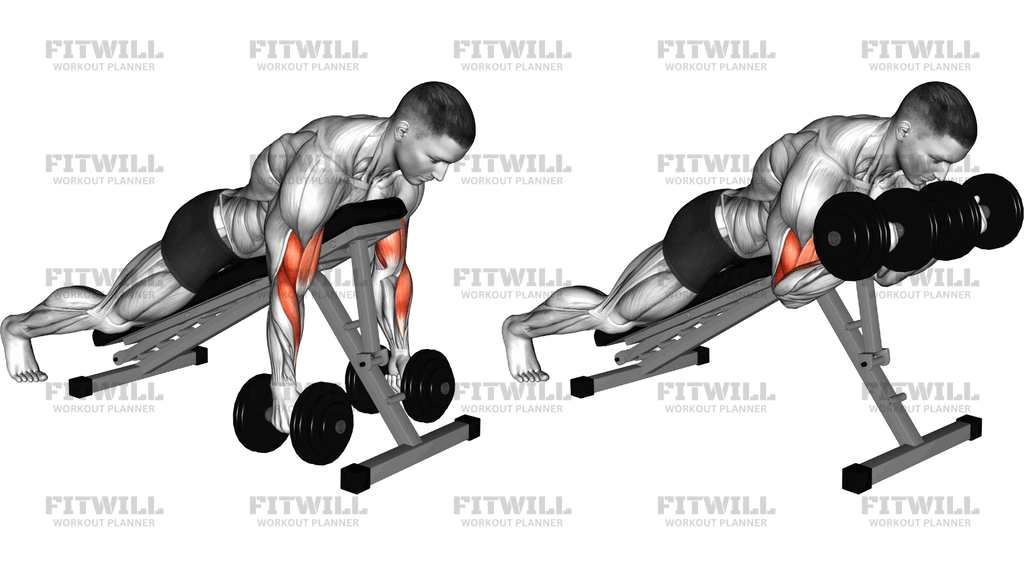
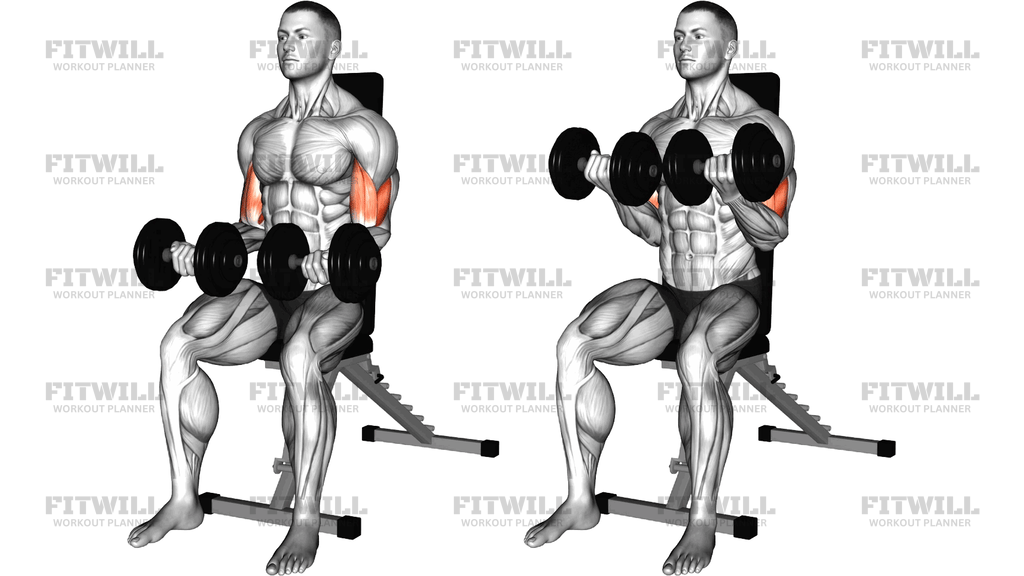
Dumbbell Alternate Preacher Curl
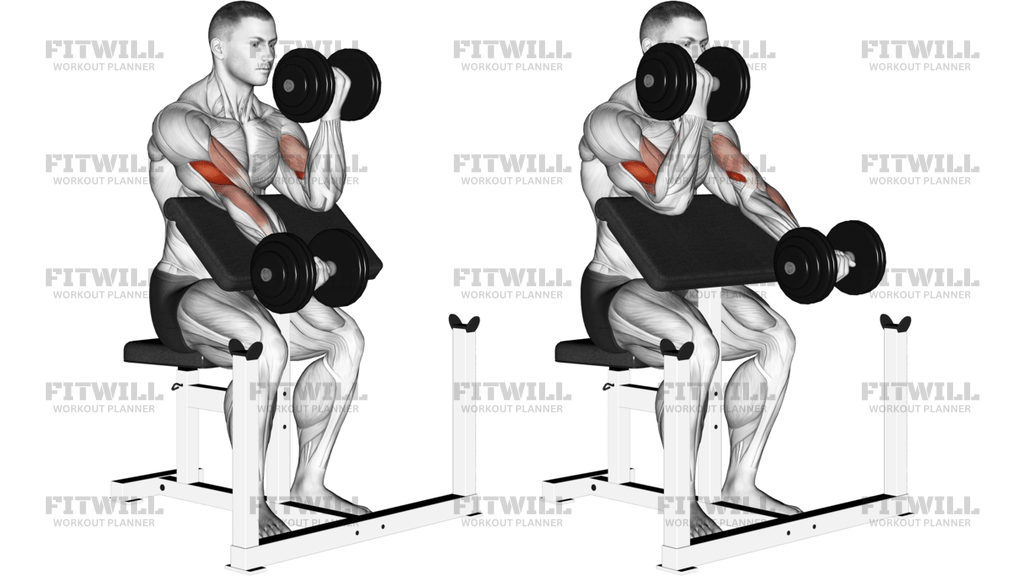
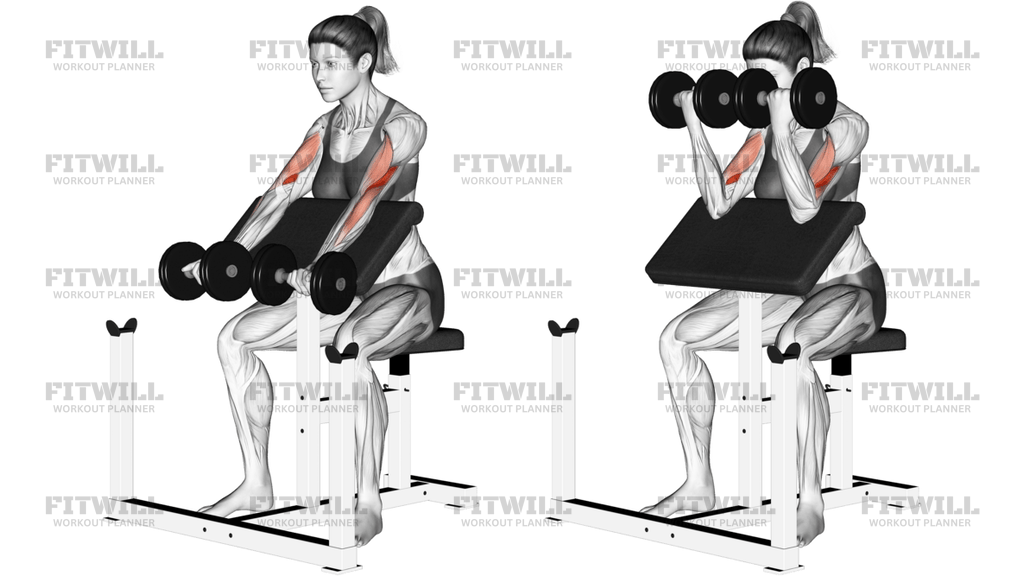
Dumbbell Alternate Preacher Curl is a strict biceps isolation exercise performed with the upper arm supported on a preacher bench while one dumbbell is curled at a time. The angled pad removes most of the body swing that people use to cheat a standing curl, so the rep stays focused on elbow flexion and the biceps have to do the work through a very controlled arc.
The support from the preacher pad changes the feel of the movement in an important way. With the shoulder fixed against the pad, the biceps work hardest when the forearm is moving from the stretched lower position into the top of the curl, and the brachialis and brachioradialis help finish the rep. Alternating arms also lets you keep attention on each side individually, which is useful if one arm tends to twist, drift, or finish reps with momentum.
The setup matters as much as the curl itself. Your chest should stay in contact with the pad, the armpit should sit just above the top edge of the bench, and the elbow should remain planted so the upper arm does not slide forward on the way up. If the bench is set too high or too low, the shoulder angle changes and the curl becomes harder to control. A solid position lets you keep the wrist stacked, the forearm smooth, and the movement honest from the first rep to the last.
Use a slower lowering phase than you would with a free standing curl. The bottom position should be controlled, not dropped, because that is where the biceps lengthen under tension and the elbow joint is most likely to get irritated if the load is too heavy. Curl one arm until the dumbbell approaches shoulder height, squeeze briefly, then lower it with control before repeating on the other side.
This exercise works well as an accessory movement for arm hypertrophy, finishing work after pulling sessions, or technique-focused biceps training when you want tension without much body involvement. It is usually a good option for lifters who want cleaner curls, a stronger mind-muscle connection, or a safer way to train the biceps without leaning back or heaving the torso to complete the rep.
[ Workout Log & Planner ]
Put your next workout in Fitwill
Keep your plan and training log ready when you are.


Instructions
- Set the preacher bench so the pad supports your upper arm just below the armpit when you sit down, and place your chest firmly against the top of the pad.
- Sit tall with both feet flat, hold a dumbbell in each hand, and let your elbows rest on the pad with your wrists stacked over your forearms.
- Start with one arm lowered and the other arm ready near the top or midrange, keeping both upper arms pinned to the pad.
- Curl the working dumbbell by bending only at the elbow, bringing the handle in a smooth arc toward the front of the shoulder.
- Keep the wrist neutral and avoid rolling the shoulder forward as the dumbbell rises.
- Squeeze the biceps briefly at the top without letting the elbow leave the pad.
- Lower the dumbbell slowly until the arm is almost straight, keeping tension on the biceps instead of dropping into the bottom position.
- Alternate sides for each rep or each pair of reps, keeping the non-working arm quiet and controlled on the pad.
- Exhale as you curl and inhale as you lower, then stop the set if you have to lift your chest, swing the dumbbell, or lose elbow position.
Tips & Tricks
- Choose a preacher bench height that lets your armpit sit just above the pad edge; if you have to reach or shrug to make contact, the curl will feel awkward and unstable.
- Keep the back of the upper arm glued to the pad. If the elbow slides forward, the rep turns into a front-delt assisted curl instead of a strict preacher curl.
- Use a grip that keeps the dumbbell handle centered in the palm. Letting the wrist bend back usually shifts stress into the forearm and makes the top half of the curl sloppy.
- Lower the dumbbell under control to a nearly straight elbow. Dropping straight to lockout can pull on the elbow and remove the tension that makes the preacher position useful.
- Let the non-working arm stay still while the other side curls. Turning the torso or helping with the free hand defeats the alternating setup and hides side-to-side strength differences.
- Keep the chest in contact with the pad instead of leaning back to finish the rep. The bench is there to remove cheating, not just to support your body.
- A short squeeze at the top is useful here, but do not force the dumbbell higher by shrugging the shoulder. The forearm should finish the curl, not the upper trap.
- Pick a load that lets every rep look the same. On this exercise, even a small amount of momentum changes the line of pull and makes the bottom position much less effective.
- If your elbows ache at the bottom, shorten the range slightly and slow the lowering phase. The goal is tension on the biceps, not a hard bounce off the joint.
Frequently Asked Questions
What does the preacher bench change in a dumbbell alternate preacher curl?
The pad fixes your upper arm in place, which reduces torso swing and forces the biceps to do more of the work through the curl.
Why alternate arms instead of curling both dumbbells together?
Alternating gives each biceps more attention and makes it easier to keep the elbow planted, the wrist stacked, and the rep strict on both sides.
How high should the dumbbell go on the preacher pad?
Curl until the handle approaches shoulder height and the biceps are fully shortened, but do not let the shoulder roll forward to chase extra range.
Should my elbow stay on the pad the whole time?
Yes. If the elbow lifts or slides forward, the movement loses the preacher curl position and starts turning into a regular standing curl pattern.
What muscles are working most in this exercise?
The biceps are the main driver, with the brachialis and brachioradialis helping during the curl and the forearm muscles stabilizing the wrist.
Is this a good beginner biceps exercise?
Yes, if the load is light and the bench is set correctly. The fixed pad can make it easier to learn strict elbow flexion without swinging.
Why does the bottom half of the rep feel harder here?
The biceps are lengthened near the bottom and have less help from body momentum, so control and patience matter more in that range.
Can I use this exercise if my wrists feel sensitive?
Often yes, as long as you keep the wrist neutral and use a moderate load. If the wrist keeps bending back, reduce the weight or stop the set.
What is the most common mistake on alternating preacher curls?
Letting the chest come off the pad or throwing the dumbbell up with the shoulder instead of curling cleanly at the elbow.