Dumbbell Alternating Bicep Curl With Leg Raised On Exercise Ball
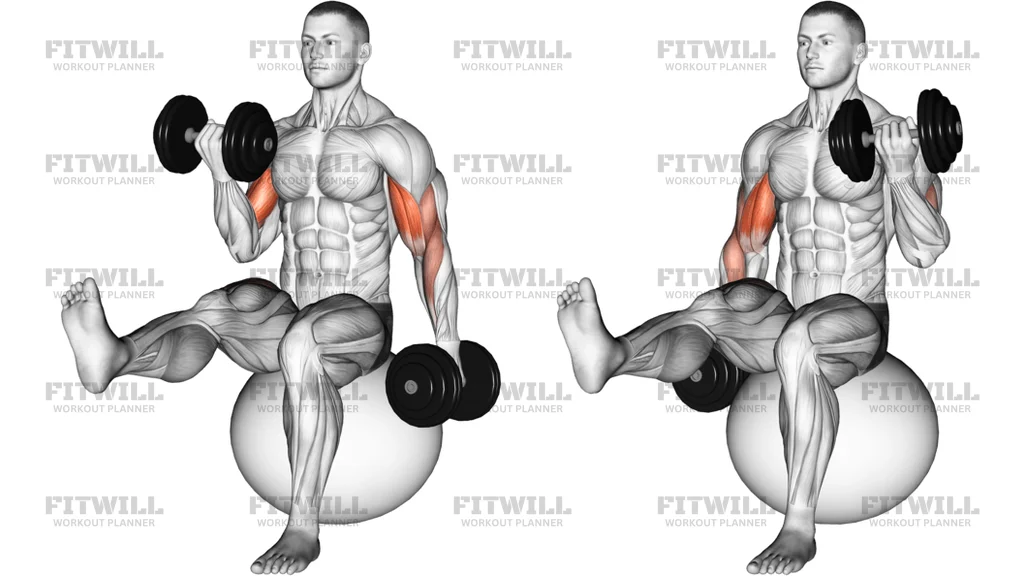
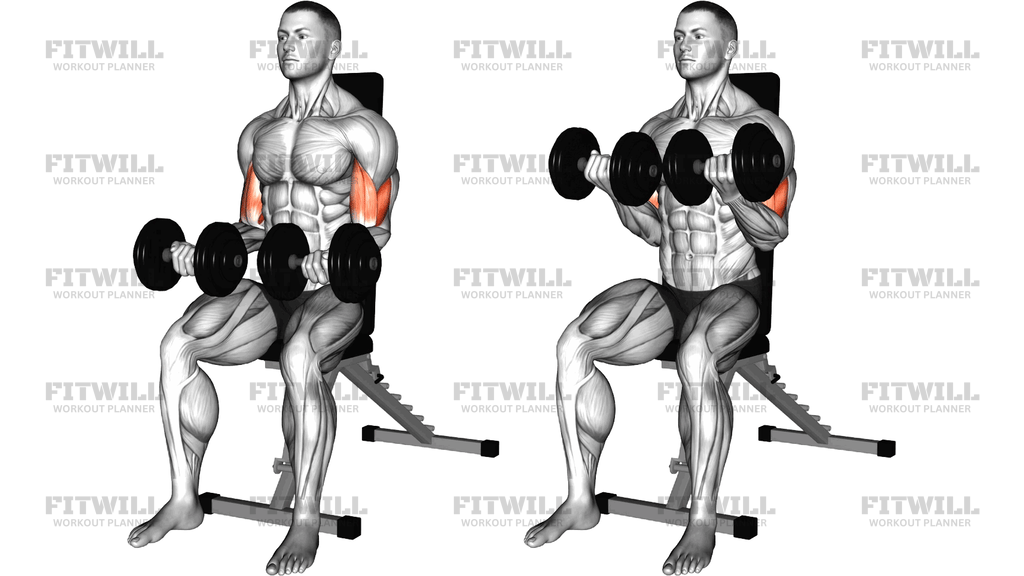
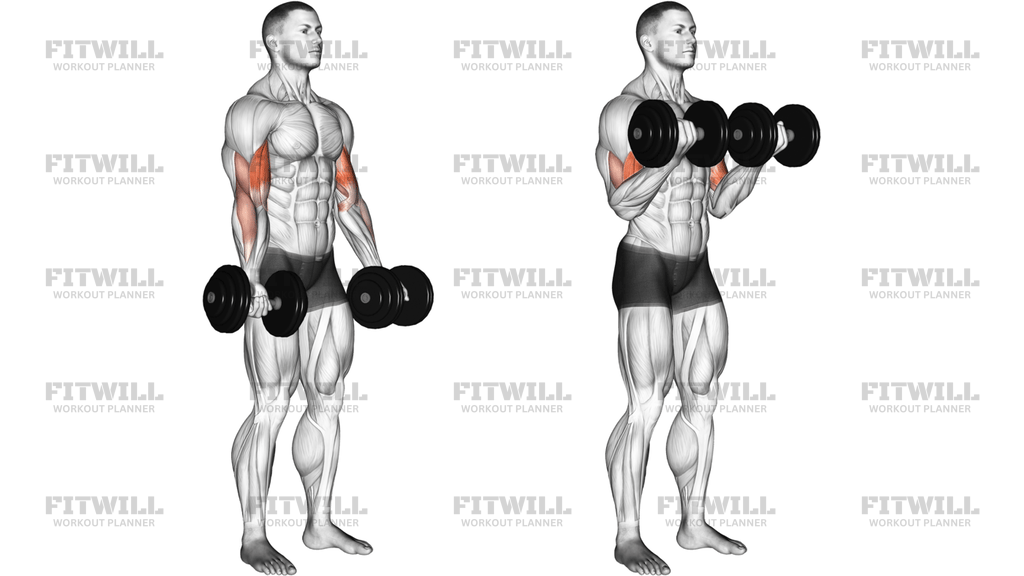
Dumbbell Alternating Bicep Curl With Leg Raised On Exercise Ball is a seated biceps exercise performed on a stability ball with one leg lifted to make the torso work harder to stay balanced. The image shows a classic alternating curl pattern: one dumbbell travels up toward the shoulder while the other arm stays quiet at the side, and the raised leg reduces the easy bracing you would get from a bench or chair. That instability is the point, so the exercise should feel controlled and slightly demanding even with modest weight.
The main muscles are the biceps, with the brachialis and brachioradialis assisting every rep. Because you are sitting on a ball instead of a fixed seat, the forearms, shoulders, and trunk also have to stabilize the body while the working arm curls. That makes the movement useful when you want arm training that also asks for posture control, but it also means the load should usually be lighter than a standard seated curl.
Set up with the ball under your hips, one foot planted, and the other leg lifted as shown. Sit tall with your ribs stacked over your pelvis, shoulders level, and both dumbbells hanging straight down beside the thighs. From there, curl one dumbbell without leaning back, twisting, or letting the elbow drift forward. The upper arm should stay close to your side while the forearm rotates and closes toward the shoulder. Lower the weight slowly, then switch arms and repeat with the same steady body position.
This exercise works best when the curl path is clean and the ball stays still. If you start bouncing, rocking, or using the raised leg to counterbalance every rep, the set becomes more about survival than biceps work. Use it as accessory training, a home-workout arm movement, or a balance-heavy curl variation when you want strict tempo and good shoulder position. The safest version is the one you can control through the full range without losing the ball position or arching your lower back.
[ Workout Log & Planner ]
Put your next workout in Fitwill
Keep your plan and training log ready when you are.


Instructions
- Sit on the center of the exercise ball with one foot planted and the other leg lifted in front as shown, holding a dumbbell in each hand at your sides.
- Sit tall with your chest open, ribs stacked over your pelvis, shoulders down, and palms facing forward.
- Let both arms hang straight with the elbows close to your torso and the wrists neutral.
- Curl one dumbbell toward the same-side shoulder without leaning back or twisting on the ball.
- Squeeze the biceps briefly at the top while keeping the non-working arm still.
- Lower the dumbbell slowly until the elbow is straight again and the arm is long.
- Alternate to the other arm and keep the ball steady by pressing lightly through the planted foot and the lifted leg.
- Breathe out on each curl, breathe in as you lower, and stop if the ball starts to roll or your torso starts to swing.
Tips & Tricks
- Use lighter dumbbells than you would for a seated curl on a bench because the ball removes a lot of stability.
- Keep the raised leg still; kicking it forward or dropping it changes the balance demand and invites cheating.
- If your elbow drifts backward, the rep turns into a shoulder swing instead of a curl.
- Keep your wrist stacked over the forearm so the dumbbell does not fold the wrist back at the top.
- Lower each rep under control for 2 to 3 seconds to keep tension on the biceps.
- Press the planted foot into the floor and gently brace the lifted leg to keep your pelvis level.
- Stop the set once the ball starts bouncing or you need to rock your torso to finish a curl.
- If alternating feels messy, slow the tempo first before you add more weight or more reps.
Frequently Asked Questions
What muscle does Dumbbell Alternating Bicep Curl With Leg Raised On Exercise Ball target most?
The biceps do most of the work, with the brachialis, brachioradialis, forearms, and trunk stabilizers helping to control the ball position.
Why raise one leg while curling on the exercise ball?
The raised leg makes it harder to brace and forces you to keep your hips and torso steady while you curl.
Where should my elbows stay during the curl?
Keep them close to your sides and mostly fixed so the upper arm does not swing the dumbbell up for you.
Should I lean back to finish the rep?
No. Stay tall on the ball and let the forearm move while the upper arm stays quiet.
Is this exercise beginner friendly?
Yes, if you start with very light dumbbells and first learn to sit steadily on the ball without wobbling.
Can I curl both dumbbells at the same time instead of alternating?
You can, but alternating usually makes it easier to keep the torso still and maintain a cleaner curl path.
What if the exercise ball feels unstable?
Reduce the load, slow the tempo, and use a quieter leg position before you add more weight.
Where should I feel the movement?
You should feel a stretch in the biceps and forearms at the bottom and a strong squeeze at the top of the curl.