Dumbbell Alternating Seated Bicep Curl On Exercise Ball
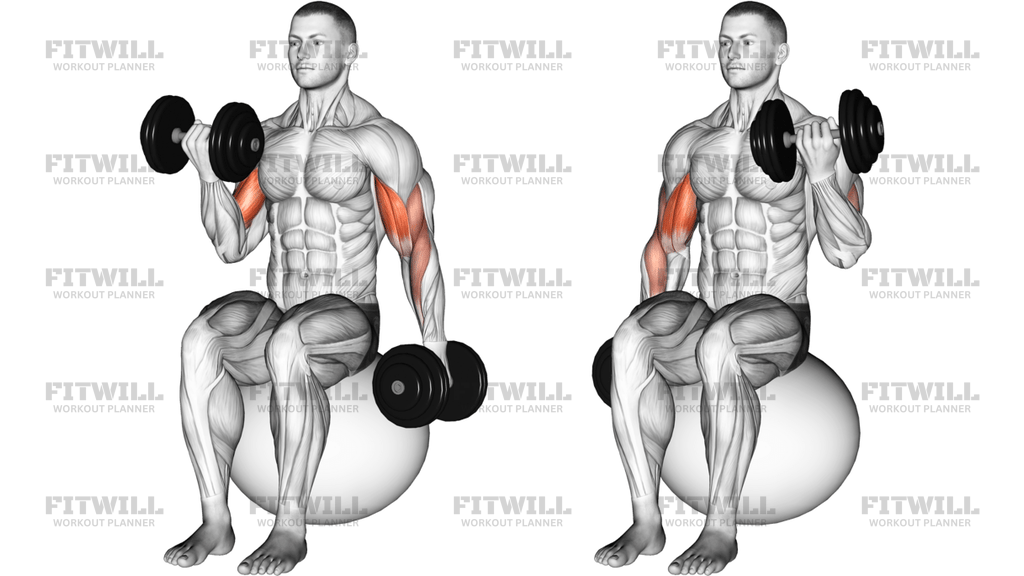
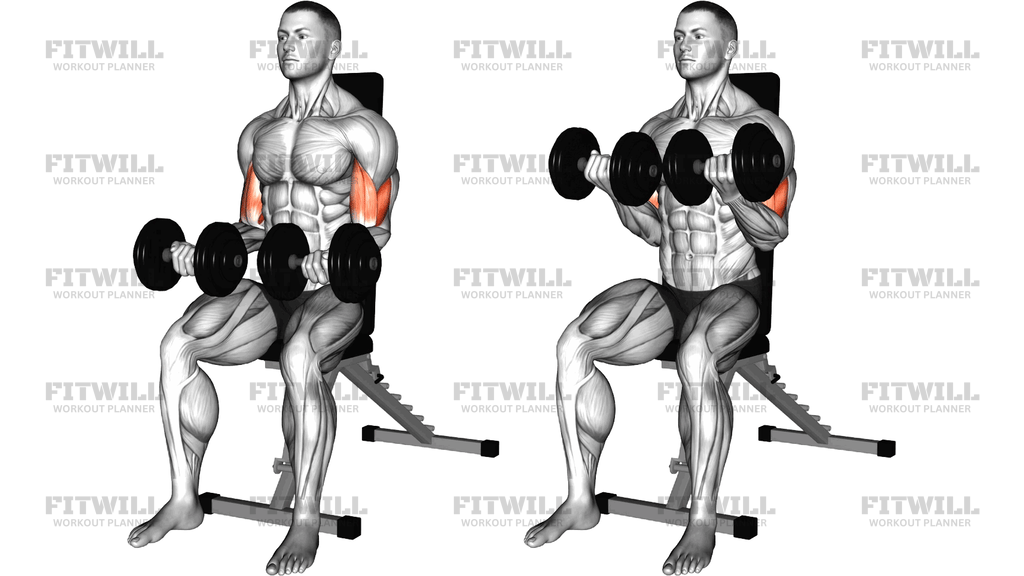
Dumbbell Alternating Seated Bicep Curl On Exercise Ball is a seated arm-strength exercise that combines a classic single-arm curl with the instability of an exercise ball. Because you are balancing on the ball while curling one dumbbell at a time, the movement trains the biceps while also asking your trunk, hips, and shoulder girdle to stay quiet and organized.
The exercise is most direct for the biceps brachii, with the brachialis, brachioradialis, and forearm flexors helping through the grip and elbow control. The ball does not make the curl harder by magic; it makes sloppy setup more obvious. If your feet are planted firmly and your torso stays tall, the curl becomes a clean arm movement. If you lose balance, the set turns into a whole-body sway.
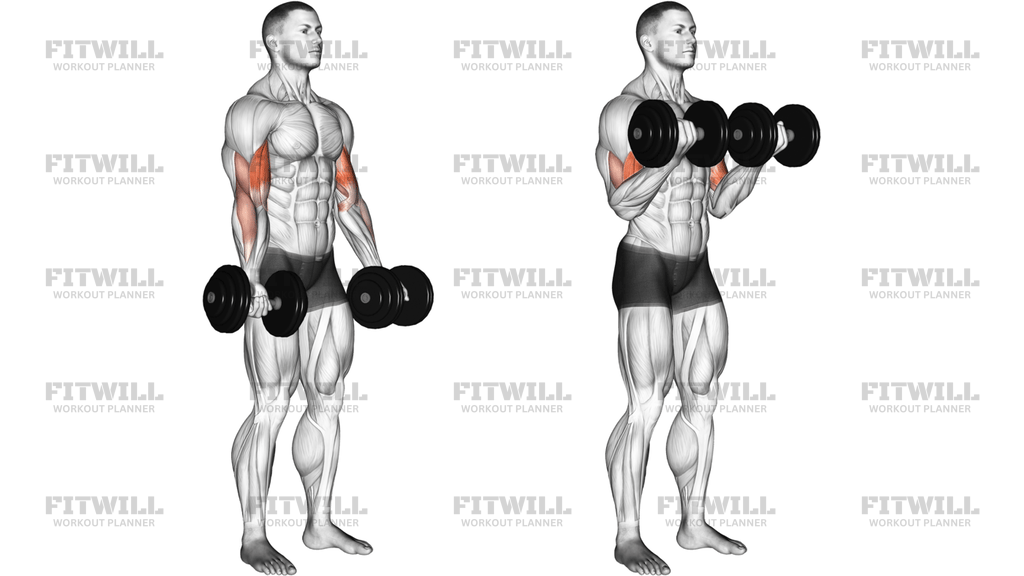
Set up by sitting near the center of the ball with both feet flat and a dumbbell in each hand hanging beside the thighs. Your shoulders should stay level, your chest open, and your ribs stacked over your pelvis. From there, curl one arm without letting the elbow drift forward, then lower it under control before repeating on the other side. The alternating pattern lets you focus on each arm individually and makes it easier to notice differences in strength, range, or control.
This movement works well when you want arm isolation without lying on a bench or using a machine. It is also useful for beginners learning to keep the elbow still, control the lowering phase, and resist swinging the torso. The exercise ball adds a balance demand, so a lighter load is usually better than chasing weight. The right repetition should feel like the biceps are doing the work while the rest of the body stays calm.
Watch for the common mistakes: bouncing on the ball, leaning back to finish the curl, letting the shoulder roll forward, or twisting the torso to help the dumbbell move. If balance is the limiting factor, reduce the load or move to a firmer seat. Keep the range pain-free and controlled, and stop the set before your posture starts to collapse or the ball begins to slide.
Fitwill
Log Workouts, Track Progress & Build Strength.
Achieve more with Fitwill: explore over 9600 exercises with images and videos, access built-in and custom workouts, perfect for both gym and home sessions, and see real results.
Start your journey. Download today!




Instructions
- Sit on the center of the exercise ball with both feet flat, knees about hip-width apart, and a dumbbell in each hand hanging beside your thighs.
- Sit tall with your ribs stacked over your pelvis, shoulders level, and palms facing forward or slightly inward before you start the first curl.
- Brace lightly so the ball stays still, then keep your upper arm close to your side as you curl one dumbbell toward the shoulder.
- Rotate the palm so the dumbbell finishes near shoulder height without letting the elbow travel forward or the torso lean back.
- Lower that arm slowly until the elbow is almost straight and the dumbbell returns beside the thigh.
- Repeat the same curl on the other arm, keeping the non-working side quiet instead of twisting to help the weight up.
- Alternate sides for the planned reps while maintaining even tempo, steady breathing, and a stable seat on the ball.
- End the set by lowering both dumbbells to your sides and standing up carefully if the ball feels unstable.
Tips & Tricks
- Pick a dumbbell that lets you keep the ball still; if you have to rock to finish a curl, the load is too heavy.
- Keep the working elbow close to your ribs so the front delt does not take over the lift.
- Let the wrist stay straight instead of bending it back, especially near the top of the curl.
- Lower each rep with control for at least as long as the curl up; the descent is where a lot of the training effect lives.
- Press your feet into the floor to help you stay centered on the ball without gripping the ground or bouncing.
- Do not let the dumbbell drift across the body; the hand should travel in a clean arc toward the same-side shoulder.
- If your shoulders shrug, reset your posture before the next rep and shorten the set if needed.
- Use a slightly lighter load than you would on a bench because the ball adds a balance demand.
- Breathe out as the weight comes up and inhale as it lowers so you do not brace so hard that your torso stiffens and sways.
Frequently Asked Questions
What muscles does Dumbbell Alternating Seated Bicep Curl On Exercise Ball work most?
The biceps are the main target, with help from the brachialis, brachioradialis, and forearm flexors for grip and elbow control.
Why use an exercise ball for a bicep curl?
The ball adds a balance challenge, so you have to keep your torso and hips steady while the arms do the work.
How should I sit on the ball before curling?
Sit near the middle of the ball with both feet planted, ribs stacked over the pelvis, and the dumbbells hanging straight down beside your thighs.
Should I swing or lean back to finish the rep?
No. If you need to lean back or swing the torso, the dumbbells are too heavy or the set is too fatigued.
What should my elbow do during the curl?
Keep the elbow close to your side and mostly fixed so the forearm moves through the curl instead of the shoulder drifting forward.
Is this a good beginner bicep exercise?
Yes, if the load is light and the person can keep balance on the ball without bouncing or collapsing their posture.
What range of motion should I use?
Curl until the dumbbell is near shoulder height, then lower until the elbow is almost straight without locking out hard or losing control.
What are the most common mistakes with this exercise?
Rocking on the ball, shrugging the shoulders, letting the wrists bend back, and using the lower back to help the curl are the main ones to watch for.