Dumbbell Biceps Curl Squat
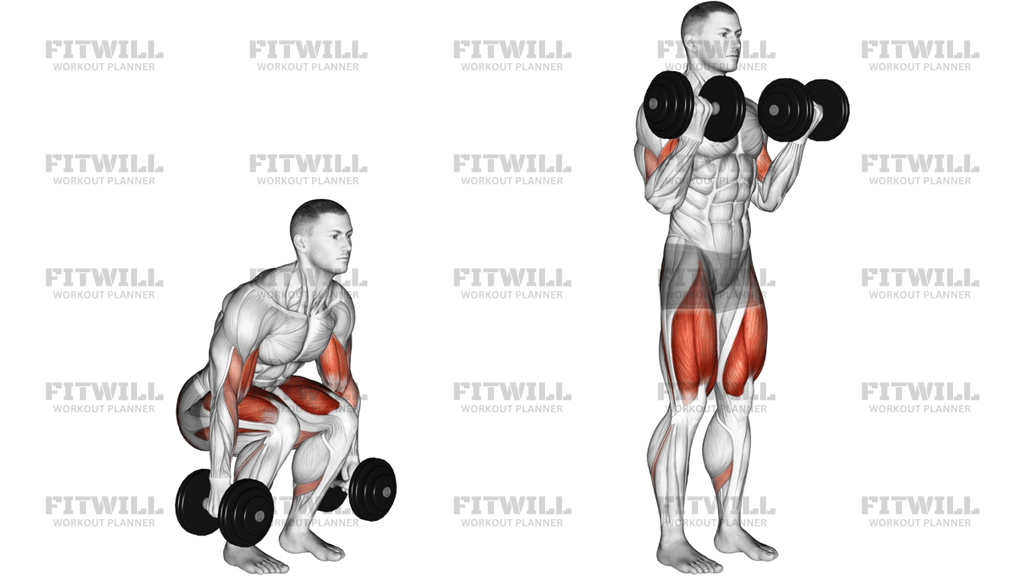
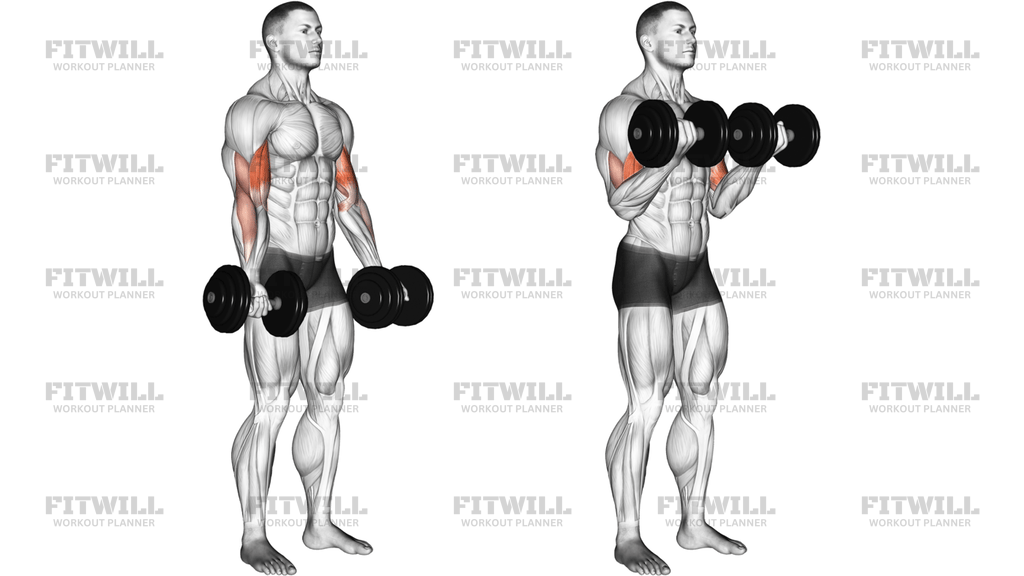
Dumbbell Biceps Curl Squat combines a lower-body squat with a dumbbell curl so you train your legs and arms in the same repetition. The image shows a standing athlete lowering into a squat with the dumbbells hanging by the sides, then returning to standing and finishing with the elbows bent and the dumbbells near shoulder height. That makes the setup important: if your stance is too narrow, your torso folds forward; if the weights drift away from your body, the curl becomes sloppy and the squat loses control.
The squat portion stresses the quads, glutes, and trunk, while the curl portion shifts work to the biceps, brachialis, brachioradialis, and forearms. In practice, this is a coordination drill as much as a strength exercise. You need enough stability to sit into the squat without collapsing through the knees or heels, and enough upper-arm control to keep the curl smooth instead of swinging the dumbbells up with your shoulders and back.
Use a stance that lets you squat deeply while keeping your chest tall and your feet flat. Start with the dumbbells at your sides, descend under control, then drive through the feet to stand. As you finish the stand, curl the dumbbells toward the front of the shoulders without rocking the torso or shrugging the traps. Lower the weights slowly, reset your brace, and repeat with the same rhythm on every rep.
Because this movement asks the legs and arms to share the workload, load selection matters more than it would on a pure curl or pure squat. A weight that is fine for one part of the rep may be too much once the two patterns are combined. Keep the reps clean, do not turn the standing phase into a back extension, and stop the set before the curl gets loose or the squat turns into a shallow dip.
Dumbbell Biceps Curl Squat works well as accessory work, a conditioning block, or a higher-rep full-body movement when you want a simple dumbbell drill that still demands coordination. It is useful for beginners learning how to keep the elbows still during curls and how to keep the torso organized during squats, as long as the load stays light enough to preserve control from the bottom of the squat to the top of the curl.
[ Workout Log & Planner ]
Put your next workout in Fitwill
Keep your plan and training log ready when you are.


Instructions
- Stand tall with a dumbbell in each hand, arms straight at your sides, feet about shoulder-width apart, and toes slightly turned out.
- Keep your chest lifted, ribs stacked over your pelvis, and your weight centered through the whole foot before you begin.
- Lower into a controlled squat by sending your hips back and bending your knees while the dumbbells stay close to your thighs.
- Pause briefly at the bottom only if you can stay balanced and keep your heels down.
- Drive through your feet to stand up, keeping your torso from pitching forward as the dumbbells travel straight up with your body.
- As you finish standing, curl both dumbbells toward the front of your shoulders without swinging your elbows forward.
- Squeeze the biceps at the top for a short moment, then lower the dumbbells slowly back to your sides.
- Reset your brace before the next rep and repeat for the planned number of repetitions.
Tips & Tricks
- Choose dumbbells that let you squat without leaning the chest far forward just to get the weights moving.
- Keep the dumbbells beside the legs on the way down so the curl does not start early.
- Let the legs do the squat first; do not turn the curl into a front raise.
- Keep your elbows pinned near your ribs during the curl so the biceps, not the shoulders, finish the rep.
- If your heels lift in the squat, shorten the depth before you add load.
- Use a smooth standing tempo so you do not snap the dumbbells up with momentum.
- Exhale as you stand and curl, then inhale on the way back into the squat.
- Stop the set when the curl becomes a body swing or the squat turns into a partial rep.
Frequently Asked Questions
What does Dumbbell Biceps Curl Squat train?
It trains the quads, glutes, and trunk during the squat, then adds a strong biceps and forearm demand during the curl.
Can beginners perform this exercise?
Yes, beginners can use it if they keep the dumbbells light and focus on clean squats before they try to load the curl.
Where should my dumbbells be at the bottom of the squat?
They should hang close to your outer shins and ankles, not drift in front of your knees.
Should the curl happen before or after the squat?
Use the squat first, then finish the rep with the curl as you stand tall.
Why do my shoulders feel involved?
Some front-shoulder help is normal, but the movement should not become a shrug or a front raise.
How can I keep from swinging the weights?
Keep your ribs stacked, elbows close to your sides, and use a lighter load if the dumbbells travel forward.
What is the biggest form mistake?
The biggest mistake is turning the stand-up and curl into a momentum lift with the lower back and shoulders.
Is this more of a strength or conditioning exercise?
It can serve both, but it is usually best as a moderate- to high-rep accessory movement with controlled tempo.