Dumbbell Hammer Curl On Exercise Ball
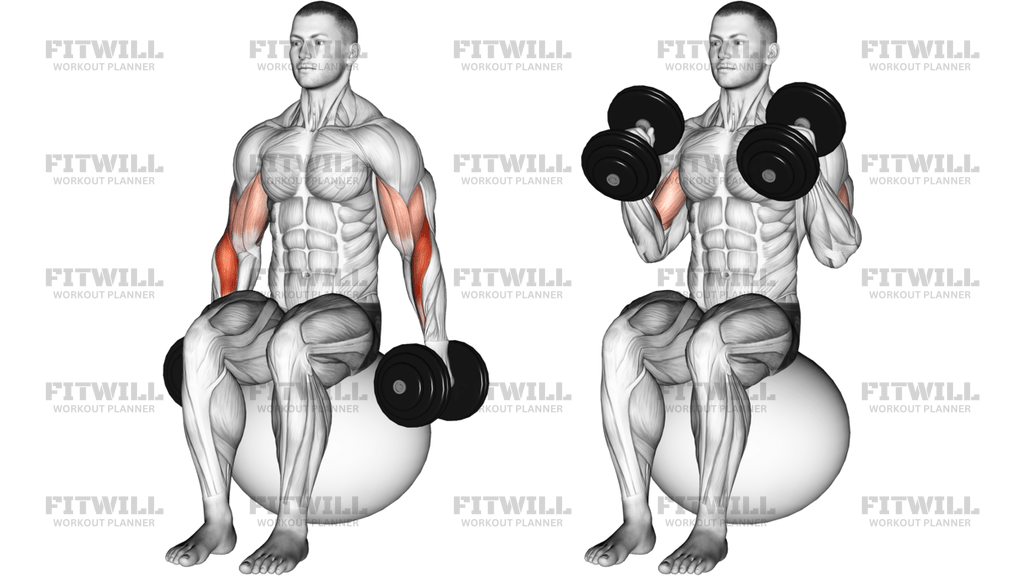
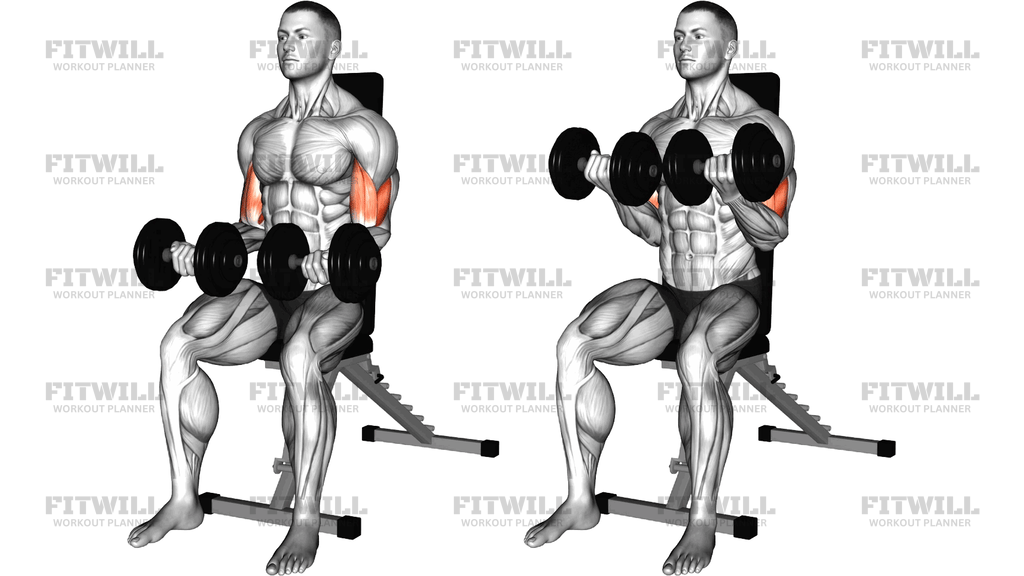
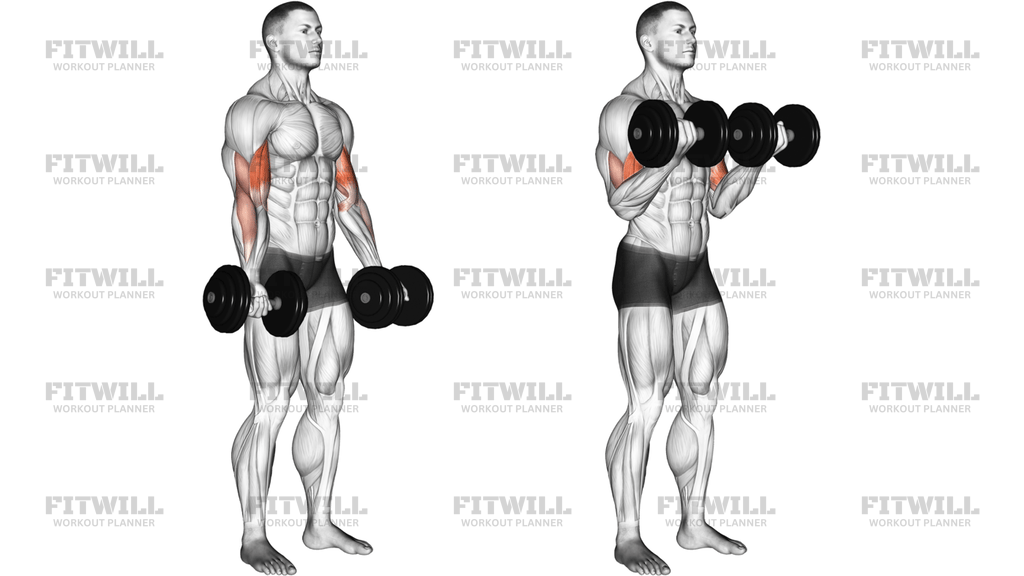
Dumbbell Hammer Curl On Exercise Ball is a seated arm-strength exercise that combines a neutral-grip curl with a stability challenge from the exercise ball. The dumbbells are held with the palms facing each other, which shifts the emphasis toward the biceps, brachialis, and brachioradialis while the forearms work hard to keep the wrists and grip steady.
The ball changes the feel of the movement even though the arm action stays simple. Because you are balancing on an unstable base, your torso, hips, and trunk have to stay organized so the curl does not turn into a lean-back rep. That makes setup important: feet planted, knees bent, chest tall, and the spine stacked before the first rep.
At the top, the dumbbells should come toward the shoulders without the elbows drifting forward or the shoulders shrugging. On the way down, the weights should lower under control until the arms are nearly straight and the biceps stay engaged. The goal is a smooth curl path, not a swing from the hips or a bounce off the ball.
This variation is useful when you want direct arm work with a little more balance demand than a seated bench curl. It fits well in upper-body accessories, arm-focused sessions, or a full-body workout where you want the core to stay lightly involved without turning the exercise into a core drill. Choose a load that lets you keep the ball still and the wrists neutral from start to finish.
If the ball feels too unstable, reduce the load or switch to a more stable seated position first. The exercise should feel controlled and clean, with the forearms and upper arms doing the work while your torso stays quiet. That is the sign the hammer curl is being loaded correctly.
Fitwill
Log Workouts, Track Progress & Build Strength.
Achieve more with Fitwill: explore over 9600 exercises with images and videos, access built-in and custom workouts, perfect for both gym and home sessions, and see real results.
Start your journey. Download today!




Instructions
- Sit tall on the exercise ball with your feet flat, about hip-width apart, and hold a dumbbell in each hand with a neutral grip.
- Let your arms hang beside your thighs, keep your chest lifted, and stack your shoulders over your hips before the first rep.
- Brace your midsection just enough to keep the ball steady and stop your torso from leaning back.
- Curl both dumbbells upward by bending your elbows, keeping your palms facing each other the whole time.
- Keep your upper arms close to your sides so the elbows do not drift forward as the weights rise.
- Squeeze the dumbbells near shoulder height without shrugging or bouncing off the top position.
- Lower the dumbbells slowly until your arms are nearly straight and the forearms are long again.
- Keep your wrists neutral, breathe out as you curl up, and inhale as you lower under control.
- Repeat for the planned number of reps while staying balanced and upright on the ball.
Tips & Tricks
- Keep both feet flat and slightly wider than the hips if the ball feels wobbly.
- Do not let the lower back arch as the dumbbells come up; stay stacked over the ball.
- Choose a lighter pair than you would use on a bench because the balance demand reduces how much you can control.
- Keep the elbows pinned near the ribs so the curl stays on the biceps and forearms instead of turning into a front-delt raise.
- If the shoulders start to roll forward, shorten the range and reset the posture before the next rep.
- Lower the weights slowly; the controlled descent is where the brachioradialis and brachialis work hard.
- Keep the wrists straight instead of letting the dumbbells tilt inward or outward.
- Stop the set when the ball starts to shift or you need to kick your torso back to finish a rep.
Frequently Asked Questions
What muscles does Dumbbell Hammer Curl On Exercise Ball work most?
It mainly targets the biceps, brachialis, and brachioradialis, with the forearms helping to keep the neutral grip steady.
Can beginners perform this exercise?
Yes, but it is smarter to start with light dumbbells and learn to sit balanced on the ball before adding load.
Why use an exercise ball instead of a bench?
The ball adds a balance challenge, so you have to stay more controlled through the torso while still training the arms directly.
What is the most common mistake on this curl?
The biggest error is leaning back or swinging the torso to lift the dumbbells instead of bending the elbows cleanly.
Should my palms face forward on this movement?
No. Keep a neutral hammer grip with the palms facing each other from the bottom to the top of the rep.
Can I alternate arms instead of curling both together?
Yes, alternating works fine if it helps you stay balanced, but keep the same upright seated position and neutral grip.
How low should I lower the dumbbells?
Lower until the arms are nearly straight and the biceps are stretched, but do not let the shoulders roll forward or the ball shift.
Where does this exercise fit in a workout?
It works well as accessory arm work after compound lifts or as part of an upper-body or arm-focused session.